
Covered pedestrian walkway between SM North and Trinoma set for 2026
Margret Dianne Fermin • Ipinost noong 2025-12-24 09:38:56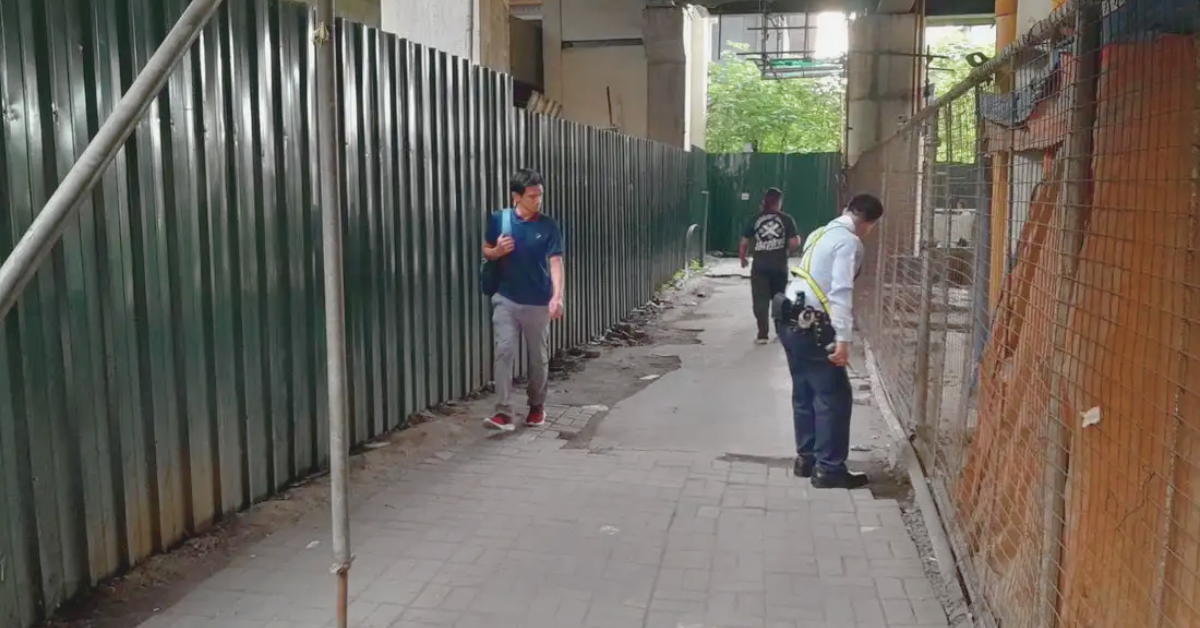
QUEZON CITY — The Department of Transportation (DOTr) announced plans to construct a covered pedestrian walkway linking SM North EDSA and Trinoma along EDSA, aiming to provide safer and more convenient passage for thousands of commuters and pedestrians.
Transportation Secretary Giovanni Lopez said the project was ordered by President Ferdinand Marcos Jr. to prioritize pedestrian safety and accessibility, particularly during the holiday season when foot traffic in the area significantly increases. Lopez cited the current condition of the walkway as severe, noting that flooding during rains causes serious hardship for commuters.
At present, pedestrians crossing between the two malls pass through an uncovered and flood-prone path near the construction sites of Metro Rail Transit Line 7 and the Unified Grand Central Station. The DOTr said the poor condition of the walkway has long posed safety risks, especially during periods of heavy rainfall.
The planned covered walkway will also connect directly to the Common Station, which will serve as an interchange for MRT-3, MRT-7, and LRT-1, allowing easier access between major transit lines. According to Lopez, the project supports broader government efforts to improve the overall commuter experience and promote public transport use.
The DOTr said it will coordinate with mall operators SM and Ayala to ensure smooth project implementation. Construction is scheduled to begin in early 2026, with completion targeted before the end of the year.
A Roof Is Welcome, but Pedestrian Safety Needs More Than Shelter
The planned covered walkway between SM North and Trinoma is a practical fix to a long-standing problem. Anyone who has crossed that stretch during a downpour understands how unsafe and exhausting the experience can be. A roof offers relief from rain and flooding, and for daily commuters, that already feels like progress.
Still, this project highlights a deeper issue in Metro Manila’s transport planning. Pedestrians are often treated as an afterthought, squeezed between construction zones, traffic barriers, and poor drainage. A covered walkway addresses discomfort, but it does not fully solve questions of safety, accessibility, and dignity for people on foot.
Busy transport hubs deserve pedestrian infrastructure that is well-lit, properly drained, wide enough for heavy foot traffic, and friendly to seniors and persons with disabilities. When walkways feel unsafe or inconvenient, commuters are pushed toward risky alternatives such as jaywalking or avoiding public transport altogether.
The integration with the Common Station is a step in the right direction. Seamless connections encourage public transit use and reduce road congestion. But this should not be a one-off solution limited to high-profile areas.
If the government is serious about improving commuter experience, pedestrian safety must be treated as core infrastructure, not a seasonal fix. A roof helps. A system that truly puts people first would do far more.
Image from Department of Transportation - Philippines/ Facebook