
Classes suspended in Himamaylan due to 40°C heat index — Are local governments ready for a hotter future?
Robel A. Almoguerra • Ipinost noong 2026-03-01 23:56:17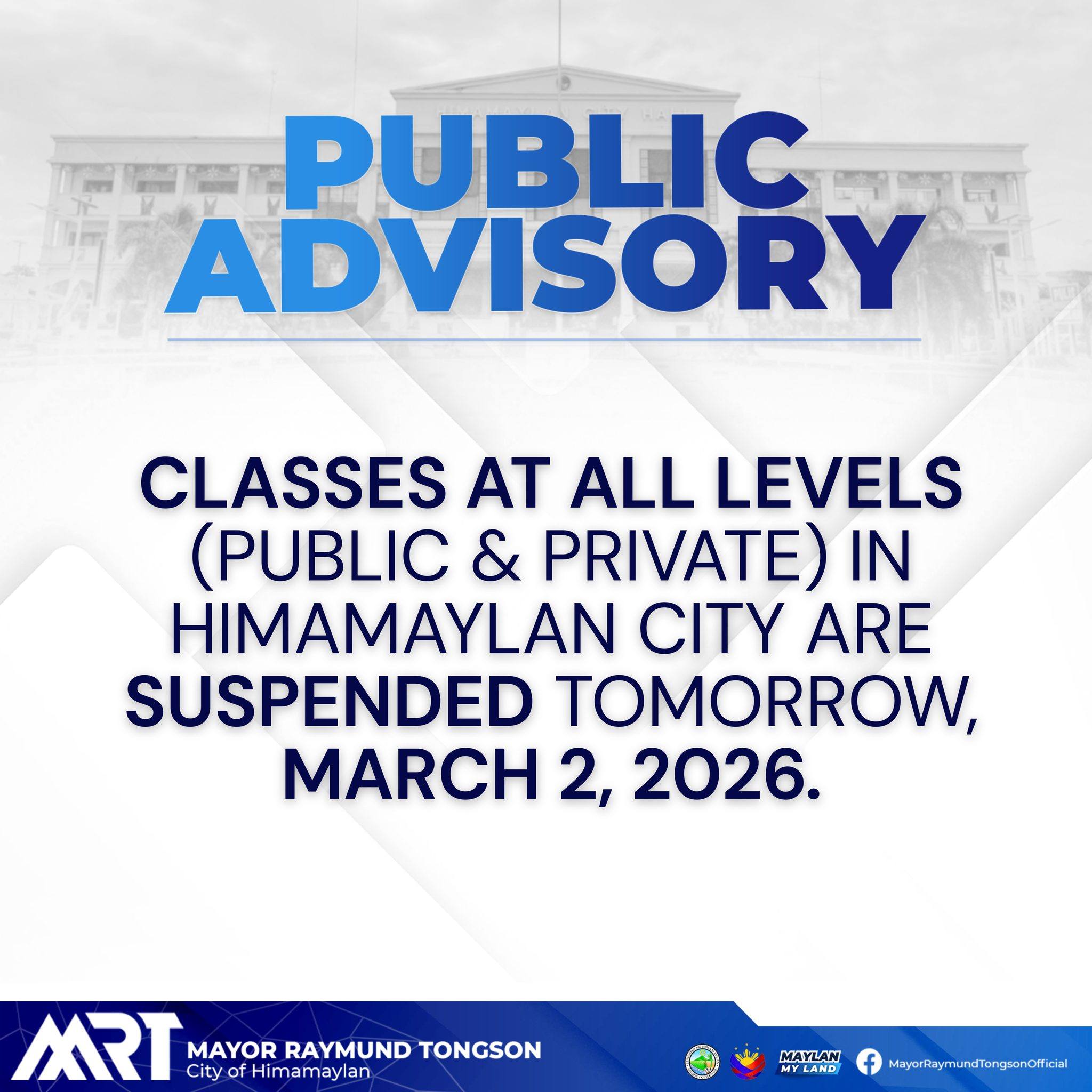
HIMALAYAN CITY, Negros Occidental — Local officials in Himamaylan City have declared the suspension of classes at all levels, both public and private, on March 2, 2026, due to the expected 40°C heat index. The announcement, covering schools across Negros Occidental, comes amid forecasts placing the city under an “extreme caution” category for heat-related health risks.
A heat index of 40°C falls within a range that can trigger heat cramps, heat exhaustion, and even heat stroke, especially among children and vulnerable populations. Local authorities urged residents to stay hydrated, limit outdoor exposure, and take precautionary measures as temperatures continue to climb.
While suspending classes is a preventive move aimed at safeguarding students, the recurring need for heat-related cancellations raises deeper concerns. Extreme heat events are becoming more frequent and intense, disrupting not only education but also livelihoods, productivity, and public health systems.
The Philippines, long accustomed to tropical weather, now faces a shifting climate reality. Urban areas with limited tree cover and concrete-heavy infrastructure often experience intensified heat through the “urban heat island” effect. In provinces like Negros Occidental, where many schools rely on natural ventilation instead of air-conditioning, prolonged exposure to high heat index levels poses significant risks.
Class suspensions offer short-term relief, but they also expose gaps in long-term preparedness. Are schools structurally equipped for rising temperatures? Do communities have sufficient cooling centers and public health responses in place? And how can local governments balance safety with continuity of learning? As Himamaylan takes precautionary steps against the sweltering heat, a broader question lingers beyond tomorrow’s suspension: Are we merely reacting to extreme temperatures—or are we truly preparing for a future where this may become the norm?
(Larawan mula: Mayor Raymond Tongson / Facebook)