
Kiko underscores need for an emergency response to address the looming food crisis amid the Middle East conflict
Cesar Patrick F. Bonales • Ipinost noong 2026-03-27 14:56:48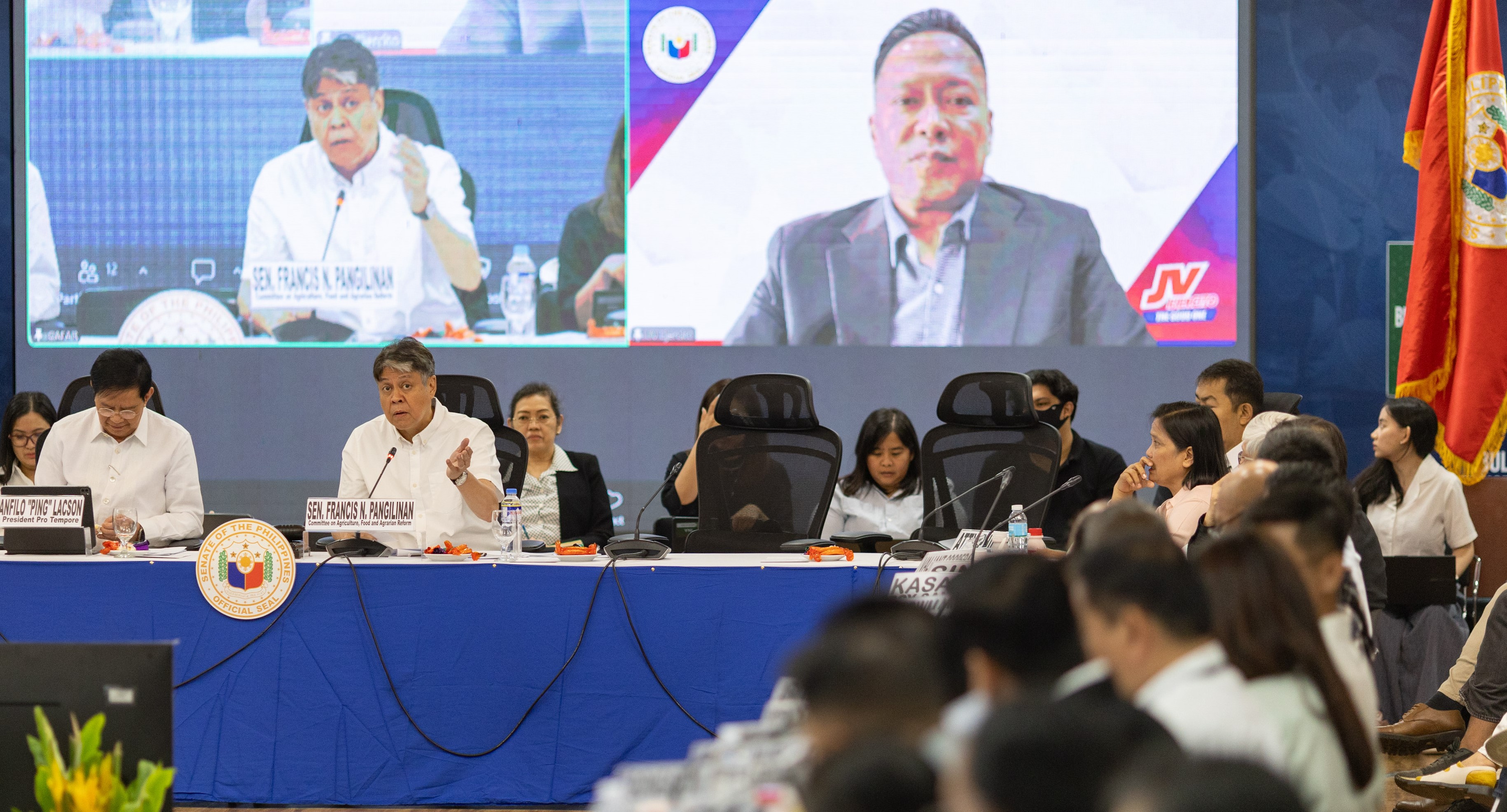
Senator Francis “Kiko” Pangilinan has called for an immediate emergency response to mitigate the potential impact of the escalating conflict in the Middle East on the country’s food security.
During the Committee on Agriculture, Food, and Agrarian Reform’s joint hearing with the Committees on Local Government and Ways and Means on Thursday, March 26, at the Philippine Carabao Center in Muñoz, Nueva Ecija, the senator led the inquiry into the “systematic collapse” of onion farm-gate prices based on the Proposed Senate Resolution No. 344 by Senator Loren Legarda.
As chairperson of the agriculture committee, Pangilinan pointed out several measures and interventions that government agencies—in particular, the Department of Agriculture—can mobilize to support Filipino farmers amid the impact of the Middle East conflict, which has driven up the prices of fuel and other basic commodities.
“Alam ninyo, krisis ngayon, may declaration of state of (national energy) emergency. Lahat ng mga magsasaka ngayon sa pataba, sa gasolina, sa krudo, lahat yan tatamaan,” he said.
“[G]umawa na kayo ng task force. May emergency declaration na, alamin kung paano niyo haharapin itong mga isyu na kinakaharap ngayon based on your own public pronouncement,” he indicated to the DA.
The senator was referring to the State of National Energy Emergency declared by President Ferdinand “Bongbong” Marcos Jr. to address issues caused by the Middle East conflict.
The announcement, made through Executive Order No. 110, stated the “imminent danger” that comes from the vulnerability of the country’s energy supply.
During the hearing, Pangilinan—who was the DA’s budget sponsor—said that key government agencies can tap certain items under their 2026 allocations to support local food producers.
Among those he mentioned were the P3.11-billion budget of the Agricultural Credit Policy Council (ACPC), the P2.4-billion budget for high-value crops under the DA, the P6.5-billion budget of the Philippine Crop Insurance Corporation, and the P1-billion budget for the Quick Response Fund of the DA.
“[K]ung meron tayong emergency situation, may pondo kayo sa DA, gamitin ninyo para matiyak and then we will work on—if mauwi sa ganon bayanihan type legislation—para dito sa krisis eh ilalaban natin,” the senator said.
Pangilinan likewise criticized the continued importation of onions despite the harvest season and the energy crisis, lamenting that this could have been addressed if violators of the 2024 Anti-Agricultural Economic Sabotage Act had been brought to justice.
He also raised the idea of using his 2019 Sagip Saka Act, which allows national government agencies and local government units to purchase food items directly from farmers and fisherfolk without public bidding, for onion growers.
While acknowledging that supplying onions to government agencies may be more “complicated” compared to fish products, rice, and other vegetables, the senator said that this could expand the onion farmers’ market and address oversupply that leads to a significant drop in the crop’s farm-gate price.
The senator, who is a champion of rural development, national food security, and farmers’ and fisherfolk’s empowerment, also called on the DA and the Philippine Statistics Authority (PSA) to harmonize their data and conduct a food consumption survey to better understand the country’s food needs and food sufficiency goals.
In addition, the senator called for targeted subsidies and assistance programs for farmers, fisherfolk, and the transport sector to cushion the impact of the spike in fuel prices.
Aside from looking into the impact of rampant importation and agricultural smuggling, Pangilinan has also been pushing for major legislation that will reform and modernize the country’s agriculture and fisheries sector.
Among these measures are the renationalization of agricultural extension services, the strengthening of agricultural cooperatives, and the creation of the Agricultural Commission (AGRICOM).
The hearing was also attended by Senator Ping Lacson and Senator JV Ejercito. Lacson stressed the need for reliable agricultural data to guide importation decisions, while Ejercito called for stronger measures to protect farmers and address smuggling and market issues.