
Trump hails Khamenei's death in Iran strikes — vows more strikes until ‘peace’ is won
Marijo Farah A. Benitez • Ipinost noong 2026-03-01 08:54:18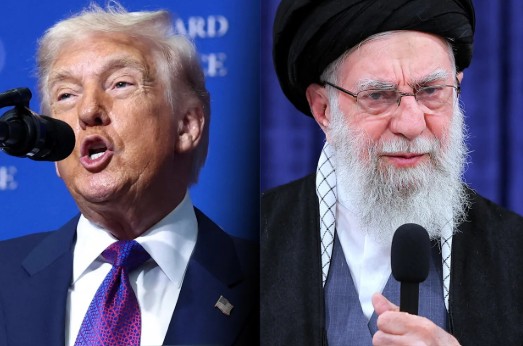
MARCH 1, 2026 — Donald Trump has once again shaken the global stage, this time with a claim that Iranian Supreme Leader Ayatollah Ali Khamenei was killed in joint U.S.-Israeli airstrikes. The announcement, made from Trump’s Mar-a-Lago resort, has sent shockwaves across the Middle East and beyond.
“Khamenei, one of the most evil people in History, is dead,” Trump declared on Truth Social, calling it the “single greatest chance for the Iranian people to take back their Country.”
Iran has not confirmed Khamenei’s death. State-backed outlets insist he remains “steadfast and firm in commanding the field.”
The fog of war is thick, and truth is the first casualty. For us watching from afar, the question is not just whether Khamenei is alive or dead — it’s what this escalation means for ordinary people caught in the middle of superpower games.
What happened and why it matters
The strikes reportedly targeted Iranian missile systems and naval assets, with Trump promising that bombing “will continue, uninterrupted throughout the week or, as long as necessary” to achieve “peace throughout the Middle East and, indeed, the world.”
This is the second major strike on Iran since Trump returned to the White House last year. The first, in June, hit nuclear facilities. Officials in Washington argue that Iran’s refusal to abandon its nuclear enrichment program and its growing missile capabilities left the U.S. with no choice but to act preemptively.
“If we sat back and waited to get hit first, the amount of casualties and damage would be substantially higher,” one senior official explained.
In short, Trump is betting on shock and awe, not diplomacy.
The global ripple effect
European allies are urging restraint, calling for a return to negotiations. But Trump’s allies in Congress, including Senator Lindsey Graham, are cheering the strikes.
Graham lashed out at Europe, saying, “To our European allies: you have gone pathetically soft and lost your zeal for confronting evil apparently unless it’s on your front porch.”
Meanwhile, critics in Washington warn that this is a “war of choice with no strategic endgame.” Representative Jim Himes bluntly said the administration must seek congressional authorization for what is essentially an act of war.
This debate may feel distant to us here, but the consequences are not. Oil prices, regional stability, and the safety of overseas Filipino workers in the Middle East are all on the line. Every missile fired in Tehran echoes in Manila’s gas stations and remittance centers.
The human angle
Trump’s rhetoric is not just about military might but about regime change. In a video message, he urged Iran’s Revolutionary Guard to lay down their arms, promising immunity. The alternative, he warned, is “certain death.”
He told the Iranian people, “It will be yours to take. This will be probably your only chance for generations.”
This is classic Trump: framing war as liberation, painting himself as the champion of oppressed people. But history tells us regime change is rarely neat. Iraq, Libya, Afghanistan — each promised freedom, each delivered chaos.
The Philippine lens
Here’s where it hits even closer to home. The Philippines has thousands of workers in the Middle East, many in Iran’s neighboring countries. Any escalation threatens their safety and livelihoods. A prolonged conflict could spike oil prices, squeezing Filipino households already struggling with inflation. And geopolitically, Manila is caught between its long-standing alliance with Washington and its growing ties with other powers like China.
WE know too well the cost of being pawns in bigger geopolitical games. We’ve seen how foreign wars ripple into our economy, our politics, and our daily lives. The question is whether we will simply watch from the sidelines or demand a stronger, clearer foreign policy stance that prioritizes Filipino interests above all.
Peace on the brink
Trump’s celebration of Khamenei’s alleged death is a reminder of how fragile global peace really is. Whether Khamenei is dead or alive, the strikes mark a dangerous escalation. For the U.S., it’s about preemptive defense. For Iran, it’s about survival. For Europe, it’s about diplomacy. And for the Philippines, it’s about bracing for the fallout.
The world is once again at a crossroads. Are we prepared for the shockwaves of a war we did not choose?
(Image:Yahoo)