
Trump demands global action to secure strait as Iran stands its ground — but why drag the world into America's war?
Marijo Farah A. Benitez • Ipinost noong 2026-03-17 12:08:16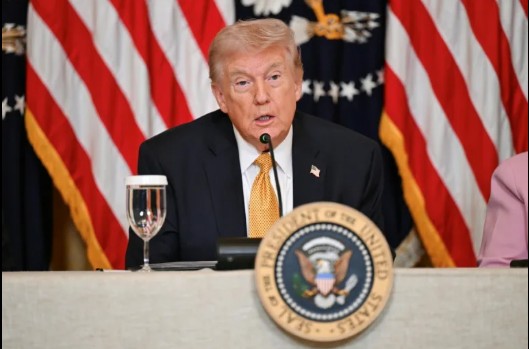
MARCH 17, 2026 — Donald Trump is barking orders again — this time telling nations to send warships to the Strait of Hormuz, the world’s most critical oil chokepoint. His demand? Guard the passage, keep the tankers moving, and stop Iran from choking off global energy. But the thing is, Iran isn’t budging. Tehran vows defiance, declaring it will fight “as long as it takes.” And now the world is caught in the middle of America’s war.
The Strait of Hormuz is no ordinary waterway. It’s the artery that carries nearly 20% of the world’s oil. Since the U.S. and Israel launched strikes on Iran late February, tanker traffic has been crippled. Oil prices are hovering around $100 a barrel — Brent crude at $103.27, U.S. crude at $97.99 — and every Filipino commuter, jeepney driver, and household budget feels the squeeze.
Trump, speaking aboard Air Force One, insisted, “I’m demanding that these countries come in and protect their own territory because it is their territory. It’s the place from which they get their energy.”
He didn’t name names, but hinted at China, Japan, South Korea, France, Britain, and others. The bottom line is, America wants backup, and fast.
Iran’s response? A flat-out rejection. Foreign Minister Abbas Araqchi told CBS, “We have never asked for a ceasefire, and we have never asked even for negotiations. We are ready to defend ourselves for as long as it takes.”
In short, don’t expect Tehran to fold.
Meanwhile, Trump is dangling threats. He bragged that U.S. strikes had “totally demolished” Kharg Island, Iran’s main oil export hub, and even quipped, “We may hit it a few more times just for fun.”
Fun? For us, that “fun” means higher gas prices, steeper fares, and tighter wallets.
U.S. officials are trying to calm markets, predicting the war will end “within weeks.” Energy Secretary Chris Wright told ABC, “This conflict will certainly come to the end in the next few weeks — could be sooner than that.”
Trump himself promised oil prices “are going to come tumbling down as soon as it’s over.” But until then, the world economy is on edge.
Here in the Philippines, the ripple effect is brutal. We import nearly all our oil, and every spike in global prices hits us hard. Transport fares rise, food costs climb, electricity bills swell. We are left asking: Why should we pay the price for a war we didn’t start?
Trump’s demand also exposes a bigger question: Why is the world expected to take sides in America’s fight? NATO allies are being pressured, Asian economies are jittery, and smaller nations like ours are left scrambling to absorb the fallout. We may not have warships to send, but we’re already paying the cost at the pump.
Iran, for its part, insists it is “stable and strong enough” to withstand U.S. and Israeli attacks. But with more than 2,000 people killed — mostly in Iran and Lebanon — the human toll is staggering. And the longer the Strait remains blocked, the more the global economy trembles.
We don’t need to be foreign policy experts to understand what’s happening. Every time oil prices climb, tricycle drivers raise fares, food delivery riders struggle to make ends meet, and families cut back on essentials. The Strait of Hormuz may be thousands of miles away, but its chokehold is already tightening around our daily lives.
And now Trump is demanding nations to take sides, while Iran refuses to yield. The clash is clear, but for a country like ours, the bigger dilemma is whether choosing a side even matters.
Should the Philippines take sides in America’s fight, and if we do, will it even make any difference for a nation as small as ours?
(Image: Yahoo News)