
Food prices, corruption dominate list of urgent issues for Filipinos in new survey
Margret Dianne Fermin • Ipinost noong 2026-01-03 08:59:07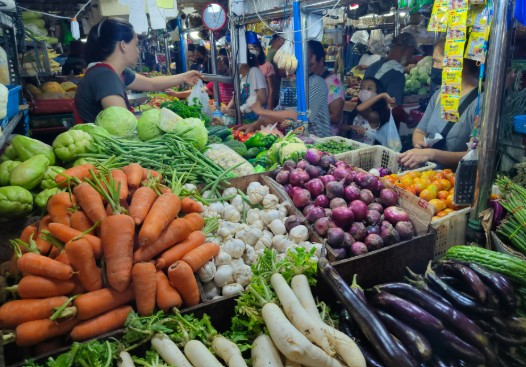
MANILA — A new nationwide survey revealed that Filipinos consider affordable food prices and reducing corruption as the most urgent priorities for government leaders in 2026.
The poll, commissioned by the Stratbase ADR Institute and conducted by Pulse Asia from December 12 to 15, 2025, asked respondents what government leaders should primarily do to address concerns in their local communities.
Thirty-eight percent of respondents identified making food prices more affordable as the top priority. This was followed by 31 percent who cited reducing or eliminating corruption to improve service delivery, and 21 percent who pointed to creating more jobs and livelihood opportunities.
“These findings highlight the pressing need for government leaders to focus on economic issues that directly affect the daily lives of Filipinos,” Stratbase said in a statement. The think tank emphasized that corruption is widely understood not only as a moral issue but also as an economic one, since it undermines public trust and hampers service delivery.
Stratbase President Victor Andres Manhit noted that the survey results reflect the public’s demand for accountability and transparency. “Corruption is not just about morality, it is about economics. It deprives citizens of services and opportunities,” he said.
The survey also showed that these concerns cut across regions and socioeconomic classes, underscoring the broad consensus among Filipinos.
The results come amid rising food costs and continuing reports of graft in infrastructure projects. In September 2025, construction firms testified that lawmakers were allegedly paid off to secure government contracts, fueling public frustration over corruption.
Analysts said the survey underscores the urgency for government leaders to prioritize food security, anti-corruption measures, and job creation as Filipinos enter the new year facing economic challenges.
Filipinos Have Been Clear for a Long Time
There is nothing surprising about these survey results. That, perhaps, is the most telling part. Filipinos have been consistent, even patient, in naming their priorities. Affordable food. Honest governance. Stable work. The message has not changed. Only the year has.
Poll after poll, across administrations, the same concerns rise to the top. This is not confusion. It is clarity. The public knows exactly what hurts the most, because it shows up at the market, at the dinner table, and in the search for decent work.
What surveys increasingly reveal is not just public preference, but public weariness. Filipinos are no longer asking for bold visions or grand promises. They are asking for relief that can be felt, not explained. Lower prices that actually stay low. Anti-corruption efforts that go beyond headlines and hearings. Jobs that last longer than campaign slogans.
The danger is not that leaders misunderstand the public. It is that they understand, but move on anyway. When the same priorities resurface year after year, surveys begin to feel less like guidance and more like reminders of stalled progress. Data becomes documentation of delay.
This gap between knowing and doing feeds cynicism. It trains people to expect speeches instead of solutions. It lowers expectations until survival replaces aspiration. That erosion is quiet, but it is deeply political.
The challenge for leaders in 2026 is not identifying what Filipinos want. That work has been done repeatedly. The challenge is proving that listening leads somewhere.
At some point, the question stops being “What do the people want?” and becomes “Why does it keep staying the same?” Until that question is answered honestly, surveys will continue to confirm what Filipinos already know, and what they are still waiting for.