
‘Sleep, eat, TV’: Duterte marks New Year simply while detained in The Hague
Margret Dianne Fermin • Ipinost noong 2026-01-03 08:59:08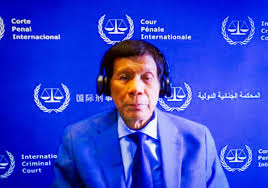
MANILA — Former president Rodrigo Duterte welcomed the New Year in a quiet and simple manner, spending the holiday resting, eating, and watching television, according to his daughter Veronica “Kitty” Duterte.
In an interview with vlogger Alvin & Tourism in the Netherlands, Kitty described her father’s routine as unchanged despite the occasion. “Walang bago sa kanya (Nothing new with him),” she said in a video uploaded to Facebook late Friday, January 2. “Sinabi niya, ‘Wala. Tulog, kain, TV.’ Yun yung kasiyahan niya (He said, ‘Nothing. Sleep, eat, TV.’ That’s what makes him happy),” she added.
Kitty also relayed Duterte’s New Year greetings to Filipinos, particularly those who gathered outside the International Criminal Court (ICC) detention center in The Hague, where the former president has been incarcerated since March 2025. “Tatay Digong sent his greetings to everyone now, every Filipino here today,” she said.
The former president has been detained in the Netherlands as part of ongoing proceedings related to his administration’s anti-drug campaign. Despite his situation, Kitty emphasized that her father remains in good spirits and continues to find joy in his simple habits.
Supporters of Duterte marked the New Year with solidarity activities outside the ICC facility, echoing his message of resilience and hope.
How Legacies Are Quietly Rewritten
Political legacies are rarely shaped in one dramatic moment. More often, they are softened slowly through repetition, familiarity, and selective storytelling. A former president spending the New Year sleeping, eating, and watching television may sound trivial, but narratives like this play a subtle role in how power is remembered.
Image-making does not stop when someone leaves office. In many ways, it intensifies. Stripped of podiums and policy announcements, what remains is character portrayal. Routine becomes symbolism. Simplicity becomes humility. Silence becomes composure. Over time, these images compete with, and sometimes replace, the harder chapters of public memory.
Family voices are especially powerful in this process. They humanize. They protect. They redirect attention from institutions to individuals. A legal case becomes a personal journey. Detention becomes daily habit. The focus shifts from consequence to endurance. This is not propaganda. It is something more subtle, and often more effective.
Supporters gathering outside an international court reinforce this reframing. The visuals matter. They suggest loyalty, persistence, and a cause that outlives circumstance. What fades into the background is complexity. The long timelines of justice do not lend themselves to daily updates. Personal routines do.
This is how political memory evolves. Not through official statements alone, but through small, relatable stories that slowly settle into public consciousness. Over time, the extraordinary risks being absorbed into the ordinary. What once demanded attention becomes part of the background noise of news cycles.
None of this erases history. But it does influence which parts are recalled first, and which are left to footnotes. Legacy is not only written by courts or historians. It is shaped by tone, repetition, and what audiences are invited to focus on while waiting for outcomes.
The question is not whether former leaders deserve humanity. They do. The question is how much space everyday imagery should occupy while unresolved chapters remain open. In the long arc of political memory, what is normalized today often defines how power is remembered tomorrow.