
DepEd Fake News on Extended Christmas Break Raises a Bigger Question: Are We Learning to Think Critically?
Margret Dianne Fermin • Ipinost noong 2026-01-05 09:14:37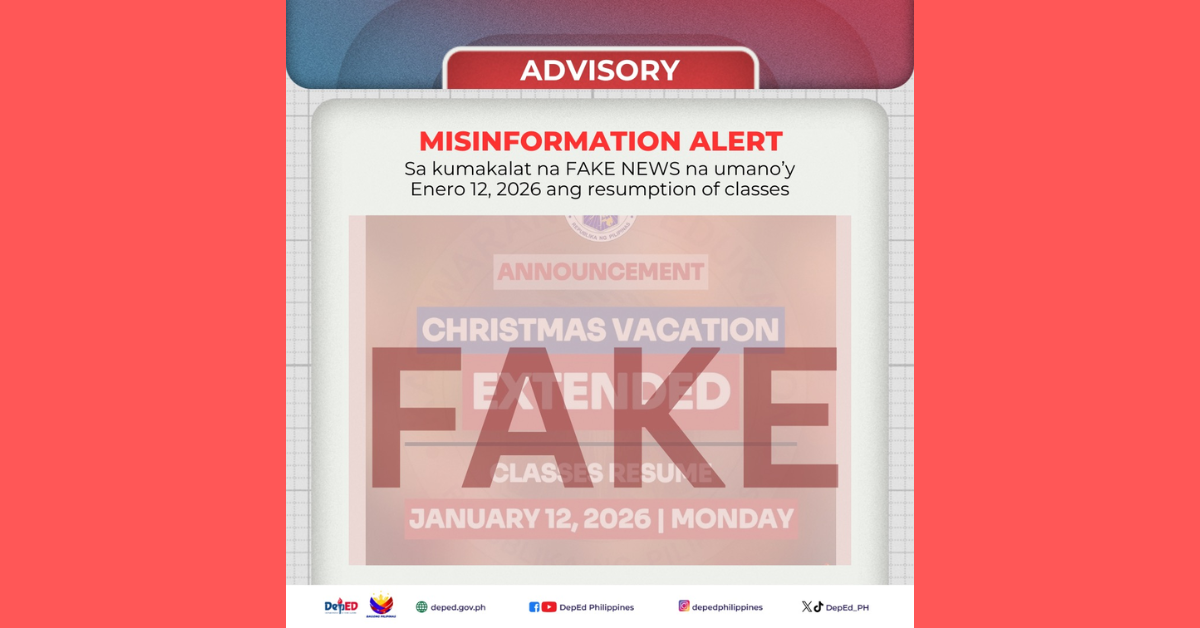
January 6, 2026 - The Department of Education (DepEd) has denied viral claims that public schools would have an “extended” Christmas break, calling the circulating posts false and misleading. Classes, the agency clarified, resumed as scheduled on January 5, 2026, in line with the official school calendar.
The clarification followed the spread of screenshots and forwarded messages online suggesting that the holiday break was prolonged due to weather conditions and other factors. DepEd stressed that no such announcement was made and reminded the public to rely only on official channels for school updates.
Why This Kind of Fake News Spreads So Fast
At first glance, the rumor felt harmless. A few more days of rest. A message passed along in group chats. But fake news spreads not because it is accurate, but because it is appealing.
An extended break sounds pleasant and believable. It aligns with what people want to hear. That emotional pull often overrides the habit of checking sources, especially in digital spaces where speed matters more than verification.
How Misinformation Affects Students Directly
When false school announcements circulate, students adjust their behavior. Some delay returning to class. Others question legitimate instructions when reality contradicts what they saw online.
Over time, this creates confusion and weakens trust. Not just in institutions, but in the idea that information needs to be confirmed. For learners, that habit carries long-term consequences beyond a single school day.
Why Fake News Is Hard to Stop
DepEd’s clarification was necessary, but it was also reactive. Fake news travels faster than corrections. By the time an advisory is released, the rumor has already shaped expectations.
This cycle repeats because digital platforms reward speed and sharing, not accuracy. Corrections arrive later and spread more slowly. The damage, however small, has already been done.
Are We Measuring Critical Thinking in Real Time?
Every hoax believed is a quiet test of critical thinking. When large numbers of students and parents accept unverified posts, it shows how uneven that skill still is.
Critical thinking is not just about spotting lies. It is about pausing, questioning, and asking where information came from before believing or sharing it. When misinformation thrives, it exposes gaps in how that skill is taught and practiced.
What This Says About Learning Today
This issue goes beyond school calendars. It raises a deeper question. Are students learning how to think in an information-heavy world, or only how to consume what appears on their screens?
Until digital literacy and source verification become everyday habits, fake news will keep returning. Not as obvious deception, but as convenient, hopeful, and familiar claims.
The real lesson is not whether DepEd can deny false announcements. It is whether audiences are learning to pause before believing them.