
Good Samaritans Hurt After Taxi Hits Those Helping in Oton Accident: Is It Still Safe to Help?
Margret Dianne Fermin • Ipinost noong 2026-01-05 09:14:36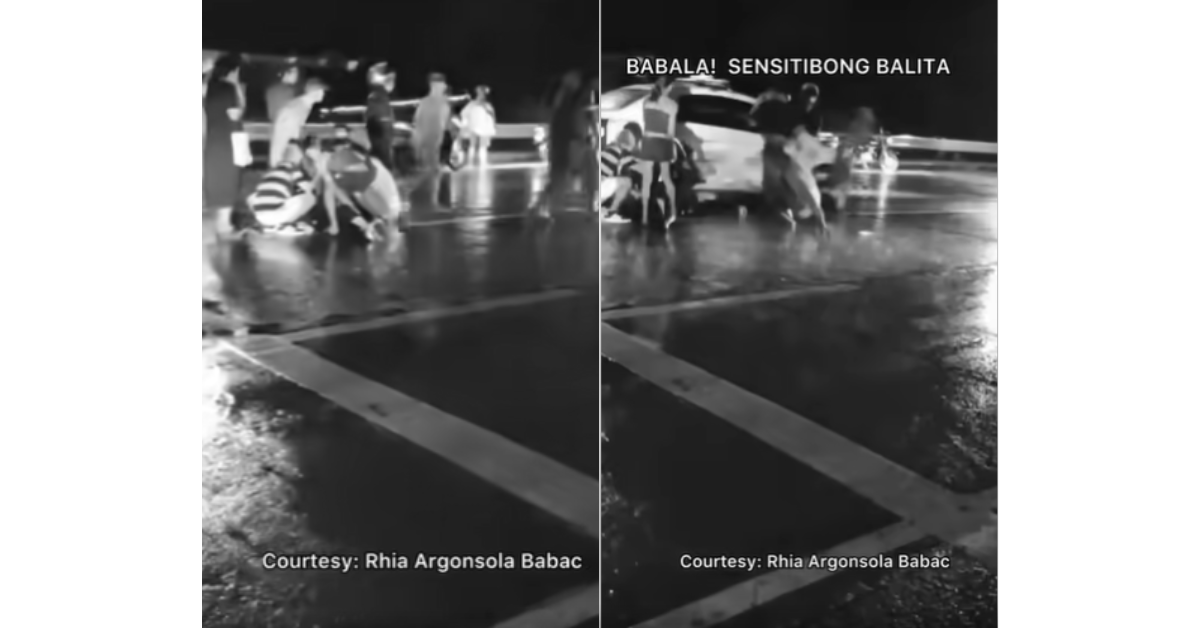
January 6, 2026 - A tragic sequence of events in Barangay Taytay Butong, Oton, Iloilo has shaken residents and sparked a deeper conversation about safety, not just for victims of road accidents, but for those who rush in to help.
The incident began when a woman was struck by a motorcycle along the road. As seen in a video circulating online, passersby and motorists quickly gathered around the injured woman, responding with urgency and concern. But what followed turned a rescue effort into another emergency.
While people were assisting the victim, a taxi suddenly passed through the area and ran over several of those trying to help. What started as an act of compassion escalated into a chain of accidents, leaving multiple individuals injured. Authorities have yet to confirm the exact number of casualties, as the Oton Municipal Police Station continues its investigation.
Local officials reminded motorists to exercise extreme caution, especially near accident scenes. Warnings like these are familiar. Yet incidents like this expose a harsher reality. Roads do not pause for emergencies. Traffic does not automatically slow for compassion.
Beyond questions of enforcement and accountability lies a quieter, more unsettling impact. Stories like this change behavior. They plant hesitation. They make strangers pause before stepping forward, not because they lack concern, but because helping has suddenly become dangerous too.
For generations, Filipinos have taken pride in bayanihan, the instinct to help without hesitation. Accidents on the road often draw immediate assistance from people who barely know one another. But when helpers themselves become victims, that instinct is shaken.
In moments like this, the question becomes painfully practical. How do you help without putting yourself in harm’s way? Should you rush in, or wait for authorities? Should compassion override caution?
The danger is not that people will stop caring. The danger is that fear will quietly replace instinct. That hesitation will cost precious seconds. That victims may lie waiting because those nearby are unsure if helping will make things worse.
This is not a call to discourage aid. It is a call to rethink how roads are managed during emergencies. Accident scenes need immediate traffic control. Drivers must be trained to slow down, stop, and recognize that an accident zone is not just another stretch of road.
Road safety is not only about preventing collisions. It is about protecting those who respond when collisions happen.
The incident in Oton reminds us that compassion should not require courage. Helping should not feel like a gamble. Until roads become safer and drivers more aware, every accident carries a second risk. Not just to those who fall, but to those who choose to stand up and help.
Image from Rhia Argonsola Babac