
In Guimba, Nueva Ecija a ₱48-Million Flood Control Project Exists—but Progress Doesn’t
Margret Dianne Fermin • Ipinost noong 2026-01-05 09:14:35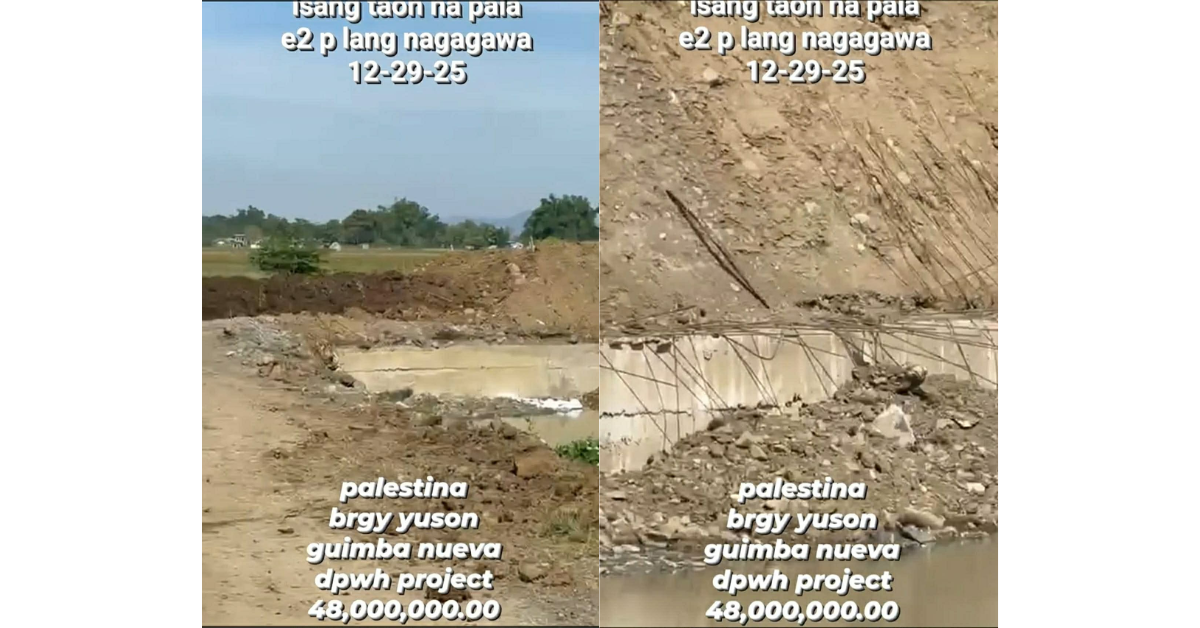
January 6, 2026 - A DPWH flood control project in Guimba, Nueva Ecija, intended to protect farms and communities from flooding, is once again under public scrutiny. More than a year after construction reportedly began, residents are asking a simple but unsettling question. Why does a ₱48-million flood control project still look unfinished?
The concern surfaced after a video posted by netizen Angel R. Santos showed the current condition of the project in Palestina, Barangay Yuson. Exposed steel bars, mounds of soil, and segmented concrete structures dominate the scene. Construction is visible, yes, but progress appears frozen in time.
Online reactions quickly followed. Some pointed out that Palestina plays a critical role as a water catchment and irrigation source for rice farmers in nearby areas. In an agricultural town like Guimba, delays in flood control infrastructure are not just aesthetic issues. They directly affect livelihoods, planting schedules, and food security.
To be clear, residents are not calling the project a ghost. Work has started. Materials are present. What troubles them is something more ambiguous. A project that exists, but does not move forward, sits in a gray zone that invites doubt. When public works linger unfinished, they begin to feel invisible to the very agencies meant to deliver them.
Questions have emerged about management and coordination. How many contractors are involved? Which areas are covered? Why does progress appear uneven across San Agustin, Bagong Barrio, and Yuson? These are not accusations. There are gaps in information that, when left unanswered, widen public suspicion.
Infrastructure projects carry a unique burden. Unlike policies or programs, they are physical promises. People see them every day. They pass by them on the way to work or the fields. When those promises stall, frustration grows quietly, reinforced by each rainy season that arrives without protection in place.
The absence of an official response from the Department of Public Works and Highways only deepens that frustration. Silence does not neutralize concern. It amplifies it. Transparency, in cases like this, is not about defending a budget figure. It is about explaining timelines, setbacks, and next steps in a language that communities can understand.
Flood control systems are not optional luxuries in agricultural areas. They are safeguards. Delays do more than inconvenience residents. They risk turning public investment into public doubt.
The people of Guimba are not asking for spectacle. They are asking for clarity. When will construction resume? What remains unfinished? How will the ₱48-million DPWH flood control project fulfill its purpose?
Public trust does not collapse overnight. It erodes slowly, one unfinished structure at a time. Completing the project matters, but so does explaining why it looks the way it does now. In the end, visibility without progress is not reassurance. It is a reminder that accountability begins long before a project is declared complete.
Image from Angel R. Santos