
PH bets big on AI as DepEd launches AGAP.AI — will this truly make Filipino students globally competitive?
Marijo Farah A. Benitez • Ipinost noong 2026-01-11 10:09:35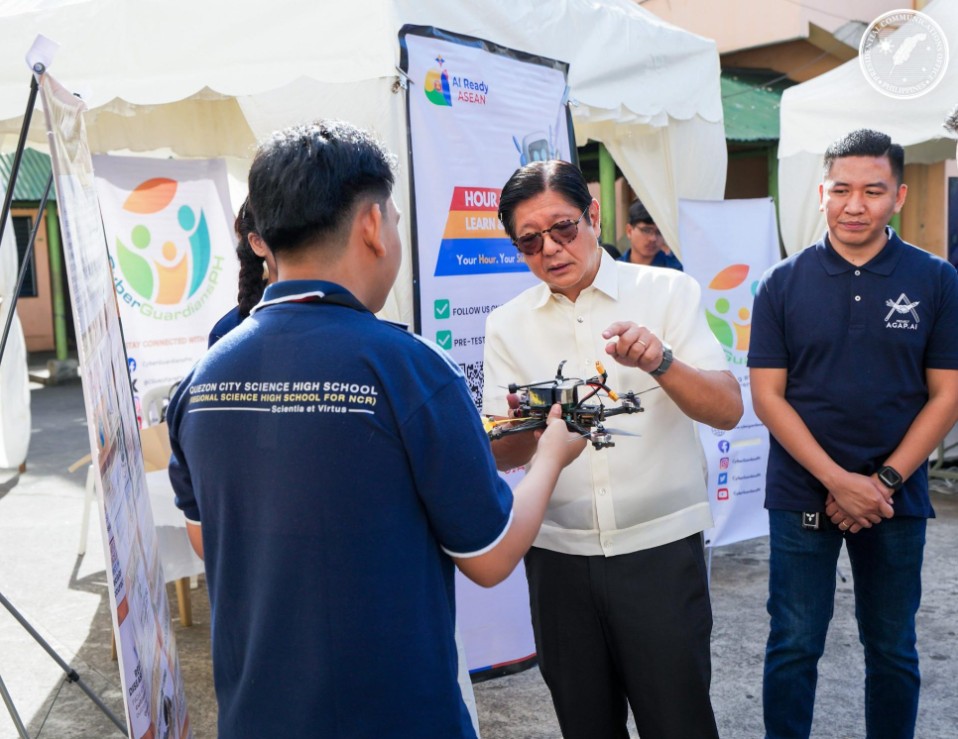
JANUARY 9, 2026 — Artificial intelligence has officially entered the classroom. With the launch of DepEd’s Project Accelerating Governance and Adaptive Pedagogy through Artificial Intelligence, or AGAP.AI, President Ferdinand Marcos Jr. declared that the Philippines is ready to harness AI for national development.
Big words, bold promises — but what does this mean for ordinary Filipinos?
Speaking at Quezon City Science High School, the President emphasized: “At the national level, we are leveraging AI as an engine for development. We are establishing the Philippine AI Program Framework for the future-proofing of our economy.”
The message is clear: AI is not just a buzzword — it’s being positioned as a driver of economic growth and long-term competitiveness.
But are we truly prepared to embrace this technology? The framework promises robust infrastructure, high-performance computing systems, and sustained investment in AI research and development. It also highlights upskilling workers and educators. Sounds promising, but the challenge lies in execution.
How do we ensure that these investments don’t just stay on paper but actually transform classrooms, workplaces, and communities?
AI literacy for all
AGAP.AI is designed to integrate AI into basic education. Students will learn how AI works, teachers will be trained to use it responsibly, and parents will be guided on how to help their children navigate this new digital frontier.
Marcos explained the program’s name: “Agapay means to support or to bridge, as the government works to narrow the gap between technology and education.”
It’s a powerful metaphor, but can AI really bridge the gap between our struggling education system and the demands of a fast-changing world?
DepEd is also crafting the country’s first national framework for ethical and responsible AI use in schools. Consultations with students, parents, teachers, and experts are underway. With support from the ASEAN Foundation and Google.org, a national AI skills training program will reach up to 1.5 million Filipinos. These courses will cover responsible AI use, detecting misinformation, privacy, security, and AI literacy.
Imagine the impact if every Filipino learner, teacher, and parent had the tools to spot fake news, protect their data, and understand how algorithms shape their world.
The President stressed, “This means that students will learn how AI works, teachers can learn how to integrate AI into their lessons, and parents can guide their children in using AI safely and wisely at home.”
So this is not just about gadgets or apps but about shaping a generation that can thrive in a digital economy.
Bridging the digital divide in Philippine education
Yet, questions remain. Will our teachers — already burdened with paperwork and outdated resources — be given enough support to adapt? Will rural schools with limited internet access benefit from these programs, or will AI widen the digital divide? And most importantly, will Filipinos see AI as a tool for empowerment, or just another government project that fades after the headlines?
Beyond education, Marcos pointed out that the Philippines, as ASEAN chair, is pushing for a harmonized, human-centered AI ecosystem across Southeast Asia. Agriculture, finance, healthcare, manufacturing, and education are all on the table. This is a bold ambition, but can we catch up with our neighbors who are already ahead in AI adoption?
Marcos himself admitted, “AI should support learning and problem-solving but must not replace discipline, effort, and hard work.”
That’s a crucial reminder. Technology is only as powerful as the people who use it. AI can accelerate progress, but it cannot substitute grit, creativity, and the Filipino spirit.
So here’s the challenge: Will AGAP.AI truly empower our students, teachers, and parents—or will it remain another acronym in the long list of government initiatives?
The future of AI in the Philippines depends not just on policy but on participation. It depends on whether we, as citizens, demand accountability, embrace innovation, and ensure that technology serves the people, not the other way around.
AI will not wait for us. Filipinos must choose to run with it, or risk being left behind.
Is this the leap Filipino students have been waiting for? What do you think?
(Image: Presidential Communications Office)