
Counterfeit ₱1,000 notes hit Kalibo markets amid festivities — Who bears the cost of fake money?
Margret Dianne Fermin • Ipinost noong 2026-01-17 10:14:25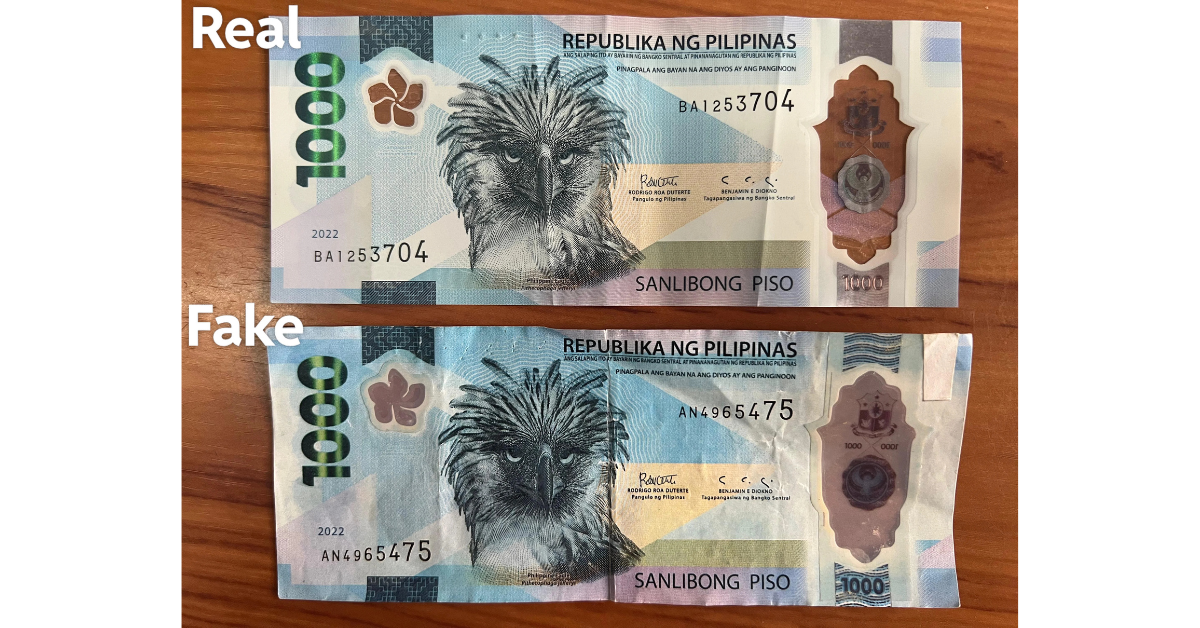
January 17, 2026 – Kalibo, Aklan, Philippines. Local vendors in Kalibo have fallen victim to counterfeit ₱1,000 bills, prompting authorities and the Bangko Sentral ng Pilipinas (BSP) to issue warnings as festival season continues.
Police reported that one vendor in Barangay Poblacion was duped when a man purchased cigarettes and paid with a fake ₱1,000 note. CCTV footage showed the suspect handing over the counterfeit bill before quickly leaving the store. The incident has raised alarm among small businesses, especially during the Ati-Atihan Festival, which draws large crowds and heavy cash transactions.
Authorities said counterfeiters often exploit busy events where vendors are distracted and less likely to scrutinize money. Iloilo City Police Director Col. Wilbert Parilla also reminded the public ahead of the Dinagyang Festival that “usually, fake bills come out during festivities. Not only during elections, but also during festivals.”
The BSP has urged vendors and consumers to use the “feel, look, tilt” method to verify genuine polymer ₱1,000 bills. Authentic notes have embossed prints, transparent windows, and color-shifting security features visible when tilted.
Local police are investigating the incident and have advised victims to immediately report counterfeit currency. Officials stressed that vigilance is crucial to prevent further losses, especially for small vendors who rely heavily on cash transactions.
The case underscores the vulnerability of businesses during high-volume events and highlights the need for stronger awareness campaigns and stricter monitoring to protect the public from counterfeit money.
The Weakest Pay the Price
Fake money rarely hurts big businesses. It hits sari-sari stores, cigarette vendors, and daily wage earners first.
For a small vendor, a counterfeit ₱1,000 bill is not an inconvenience. It can erase a day’s income, wipe out capital, or force a choice between restocking and eating. During festivals, when crowds surge and transactions move fast, vigilance becomes a luxury vendors simply don’t have. Every second spent inspecting a bill risks losing the next customer.
Counterfeiters know this. They target chaos, distraction, and people who can least afford mistakes. Warnings to “check carefully” sound reasonable, but they shift the burden to those already stretched thin.
If festivals are meant to boost local livelihoods, protection cannot stop at crowd control. Financial safety matters too. Until small vendors are actively shielded from counterfeit crime, celebration will keep coming with silent losses that no one compensates.
Image from Reddit