
Fatal e-bus accident jolts Camp John Hay — What went wrong with safety oversight?
Margret Dianne Fermin • Ipinost noong 2026-01-17 10:14:21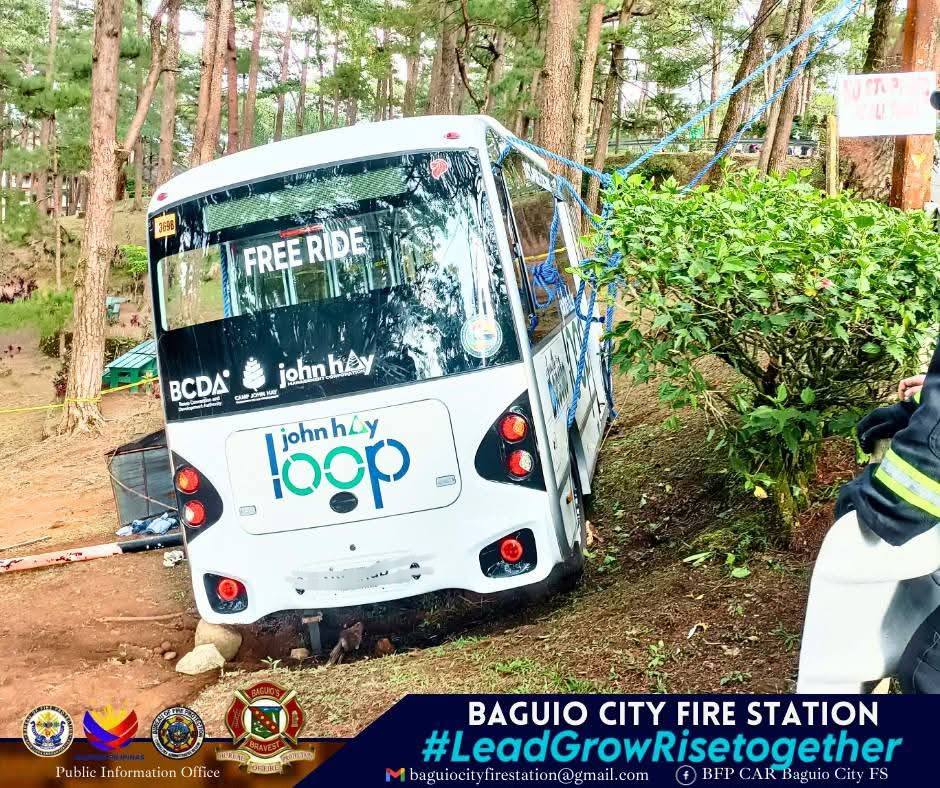
January 17, 2026 – Baguio City, Philippines. A fatal accident inside Camp John Hay claimed the life of a 63-year-old woman and left four others injured after an electric bus lost control and rammed into pedestrians along Scout Hill Road on Friday afternoon.
Police identified the victim as Rowena Andrion, who died instantly at the scene. Her companions, Susan Robles, Jessica Dacpano, Angelica Castro, and Levy Serrano Pacleb, sustained injuries and were rushed to nearby hospitals for treatment. Authorities confirmed that the group had traveled from Manaoag, Pangasinan and were preparing for a picnic when the incident occurred at around 3:20 p.m.
The driver of the bus, Johnny Algayan Dumanni Jr., 52, a resident of Ucab, Itogon, Benguet, was arrested and is facing charges of reckless imprudence resulting in homicide and multiple physical injuries. Investigators said Dumanni was driving the electric bus uphill when it suddenly swerved left and struck the pedestrians. Emergency responders provided immediate aid before transporting the victims to hospitals.
Baguio City Police Director Col. Ruel Tagel said the investigation is ongoing to determine whether mechanical failure or driver negligence caused the crash. The electric bus involved was part of the Bases Conversion and Development Authority’s eco-friendly transport program inside Camp John Hay, which has been promoted as a sustainable alternative for tourists and residents. The incident has raised concerns about safety standards and maintenance of electric vehicles operating in public areas.
Witnesses described the accident as sudden and shocking, with the bus appearing to lose control before hitting the pedestrians. Families of the victims have called for accountability and urged authorities to ensure stricter safety measures. The Land Transportation Office and Department of Transportation are expected to review safety protocols for electric buses following the incident.
Camp John Hay, a former U.S. military facility turned tourist destination, is one of Baguio’s most visited sites. The introduction of electric buses was intended to reduce pollution and modernize transport within the area. However, the accident has cast a shadow over the program and highlighted the risks of lapses in safety oversight.
As of press time, the injured victims remain under medical care, while Dumanni is in police custody. Authorities said they will release more information once the investigation is completed. The incident has drawn widespread attention on social media, with netizens expressing sympathy for the victims and calling for stricter regulation of public transport in tourist zones.
When Tourist Zones Become Danger Zones
Tourist zones are sold as places of rest. Safe. Predictable. Carefully managed. That promise collapses the moment safety standards loosen in the name of convenience or innovation.
Camp John Hay is not a highway. It is a leisure space where families picnic, seniors walk, and visitors assume protection is built into every system operating around them. That assumption is precisely why transport standards there must be higher, not relaxed. New technology, like electric buses, should reduce risk, not introduce new ones through weak oversight, poor maintenance, or inadequate route controls.
When a life is lost in a space designed for leisure, it signals more than an accident. It exposes gaps in planning, approval, and accountability.
If tourist destinations cannot guarantee safety, then what exactly are they inviting the public into?
Image from Baguio City Public Information Office