
Twelve years in school, zero skills to show — What exactly are we teaching?
Marijo Farah A. Benitez • Ipinost noong 2026-01-18 13:42:33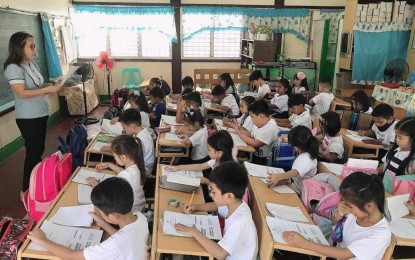
JANUARY 18, 2026 — Filipino students are tumbling down a cliff — and it’s not just a metaphor. The latest findings from EDCOM 2 paint a grim picture: from Grade 3 to Grade 12, proficiency rates collapse from 30.52 percent to a shocking 0.47 percent. In plain terms, only four out of every 1,000 senior high school students can actually demonstrate the skills expected of them after more than a decade in school.
Let’s pause there. Four out of a thousand. Imagine a classroom of 50 students — statistically, not even one will reach proficiency by the time they graduate.
What does that say about the system that’s supposed to prepare them for college, jobs, and life?
The fragile foundation
At Grade 3, nearly one in three children can read, count, and solve problems at a “proficient” level. But the majority — 70 percent — are already struggling with basics like recognizing letters, reading short passages, or doing simple math. By Grade 6, proficiency drops to 19.56 percent. That’s one in five.
The cracks widen in high school. By Grade 10, only 1.36 percent of students are proficient. By Grade 12, the number nosedives to 0.4 percent. At this stage, proficiency isn’t about ABCs or multiplication tables — it’s about problem-solving, analyzing data, and communicating ideas. And yet, almost no one is reaching that bar.
Not new, but sobering
EDCOM 2 Executive Director Dr. Karol Mark Yee said, “In fact, for years now, we have seen the low performance of our students in National Achievement Tests, and recently, it has also been confirmed by international assessments at Grades 4, 5, and 10.”
Sen. Bam Aquino, co-chair of EDCOM 2, added“, We cannot fix what we do not acknowledge, and this transparency is the first step toward prioritizing and securing resources — from textbooks to classrooms — that our learners have gone without for too long.”
Transparency, yes. But acknowledgment alone won’t save a generation already slipping through the cracks.
The learning gap that hardens
So here’s the cruel truth: nearly half of learners aren’t reading at grade level by Grade 3. By age 15, that disadvantage translates into a learning gap of 5.5 years. Literacy underpins everything — science, math, history. If you can’t read well, you can’t learn well.
International studies echo the same warning. UNICEF and World Bank data show 91 percent of Filipino children of late primary age cannot read and understand a simple story. By Grade 10, PISA found that 76 percent of Filipino students scored below minimum proficiency in reading.
So, are we surprised that by senior high school, proficiency is practically zero? Or are we simply numb to the numbers?
Inequality deepens the crisis
The situation is even worse in Geographically Isolated and Disadvantaged Areas (GIDA). In these schools, only 0.13 percent of Grade 12 students reached proficiency. None were classified as highly proficient. Overcrowded classrooms, lack of teachers, and scarce resources — these are not just statistics, they are lived realities.
How do we expect children in these conditions to compete with peers globally when they don’t even have the basics?
Rethinking proficiency
There’s also the question of how we define “proficient.” The Philippine Institute for Development Studies (PIDS) suggests that the current 75 percent cut-off may be unrealistically high. Adjust the threshold, and more students qualify. But even then, the downward trend remains. Lowering the bar won’t change the fact that the system is failing to lift students up.
What now?
DepEd has rolled out interventions: decongesting the curriculum, ramping up textbook procurement, and expanding literacy programs like ARAL. Project BUKAS aims to make assessment data public so parents, LGUs, and civil society can act.
Noble steps, yes. But will they be enough to reverse a crisis this deep?
The bigger question is, how long will we tolerate a system where twelve years of schooling leaves students with almost nothing to show for it?
Education is supposed to be the ladder out of poverty, but right now, it looks more like a trapdoor. How many more Filipino children must be left behind before we finally treat this as a national emergency?
(Image: Philippine News Agency)