
₱43.4M worth of cocaine seized at NAIA Terminal 3 — gateway secured or still tested?
Margret Dianne Fermin • Ipinost noong 2026-01-30 09:46:58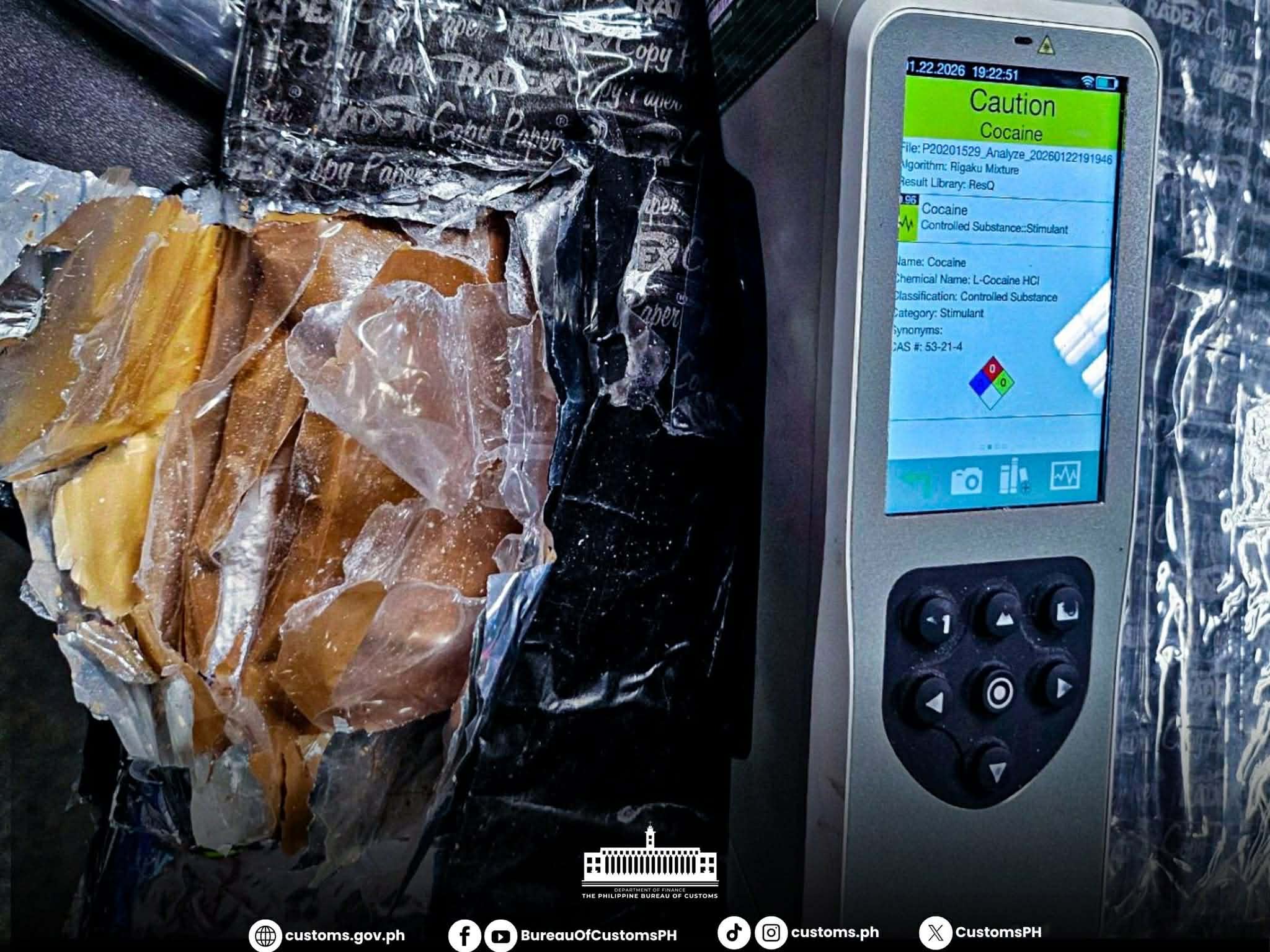
MANILA, Philippines — January 22, 2026 — Authorities intercepted more than eight kilos of suspected cocaine valued at ₱43.4 million from a passenger arriving at Ninoy Aquino International Airport (NAIA) Terminal 3, the Bureau of Customs–NAIA (BOC-NAIA) confirmed.
The seizure was made after x-ray screening flagged suspicious images in the checked-in baggage of the passenger. Customs officers immediately subjected the luggage to a 100% physical examination, which led to the discovery of white crystalline substances weighing approximately 8.194 kilograms.
BOC-NAIA quickly coordinated with the Philippine Drug Enforcement Agency (PDEA) and the NAIA Inter-Agency Drug Interdiction Task Group (NAIA-IADITG) for immediate action. Field testing confirmed the substance as cocaine, and it was promptly turned over to PDEA for confirmatory laboratory examination, proper disposition, and further investigation.
The passenger now faces charges for violating Republic Act No. 9165, also known as the Comprehensive Dangerous Drugs Act of 2002, and Republic Act No. 10863, or the Customs Modernization and Tariff Act.
In a statement, BOC-NAIA emphasized that it continues to strengthen inspection protocols in support of the government’s campaign against illegal drugs. The bureau reiterated its commitment to safeguarding the public by preventing the entry of dangerous substances into the country.
This latest interception highlights the ongoing vigilance of airport authorities and underscores the importance of strict border security measures in combating drug trafficking in the Philippines.
NAIA as a Gateway and a Target
Another large cocaine seizure proves airport screening can work. But it also raises a harder question. Traffickers keep testing Philippine airports because they believe the odds still favor them. High passenger volume creates cover. One successful run can offset many losses.
Authorities point to improved x-ray systems and tighter coordination as proof of vigilance. That matters. Yet repeated attempts suggest confidence in exploitable gaps, human fatigue, or overwhelmed checkpoints that cannot inspect everything equally.
Airports are gateways for people and trade. They become targets when criminals see scale as camouflage. If smugglers keep coming back to NAIA, is it because defenses are strong but stretched, or because weaknesses remain profitable enough to gamble on again?
Image from BOC Facebook