
President Marcos flags impeachment risks — accountability or economic scare?
Margret Dianne Fermin • Ipinost noong 2026-02-03 10:35:08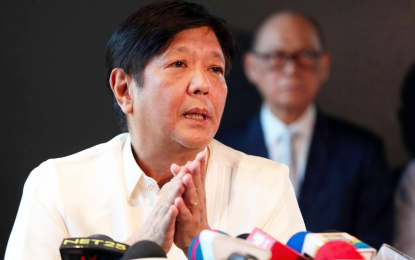
President Ferdinand “Bongbong” Marcos Jr. has expressed concern over the economic repercussions of the impeachment complaints filed against him, emphasizing that the issue extends beyond politics and could affect the entire nation’s stability.
MANILA, Philippines — February 2, 2026 — President Ferdinand Marcos Jr. said he is troubled by the impact of the impeachment raps lodged against him, not for his personal standing, but for the Philippine economy. Speaking through Malacañang officials, Marcos underscored that the complaints could undermine investor confidence and slow down economic momentum at a time when the country is striving to recover from global financial pressures.
At a Palace press briefing, Press Officer and Communications Undersecretary Claire Castro explained that the President is deeply concerned about the broader consequences of the impeachment proceedings. “Una ko na pong sinabi, ang pagsasampa po ng impeachment complaint laban po sa Pangulo, hindi Pangulo lamang ang maapektuhan nito, kung hindi ang buong bansa at pati ekonomiya,” Castro said. She reiterated that Marcos views the complaints as disruptive to governance and potentially damaging to the country’s economic outlook.
The impeachment complaints were filed by lawyer Andre de Jesus and members of the Makabayan bloc, with the first complaint endorsed by Deputy Minority Leader from the Pusong Pinoy Party-list. The House of Representatives has already transmitted the complaints to the Committee on Justice, officially beginning the process. While Marcos has firmly denied committing any impeachable offense, he acknowledged that the mere existence of such proceedings could create uncertainty in the markets and among foreign investors.
Malacañang clarified that Marcos is not worried about his personal position but about the ripple effects on the economy. “The filing of impeachment complaints against the President would not only affect the official but the entire country and its economy. Thus, Marcos is concerned,” Castro said in another statement. The Palace emphasized that political instability often translates into economic volatility, which could hinder the administration’s ongoing programs on infrastructure, agriculture, and digital transformation.
The impeachment complaints come at a sensitive time, as the Philippines continues to navigate inflationary pressures and global economic challenges. Analysts have noted that political controversies can weaken investor sentiment, delay policy implementation, and affect the peso’s performance against major currencies. Marcos, who delivered his fourth State of the Nation Address in July 2025, has repeatedly highlighted economic resilience and growth as priorities of his administration.
Despite the political noise, Malacañang assured the public that the President remains focused on governance and economic recovery. Marcos has vowed to continue pushing for reforms aimed at strengthening industries, creating jobs, and ensuring fiscal stability. However, the Palace admitted that the impeachment proceedings could distract from these goals and cast uncertainty over the country’s trajectory.
The unfolding situation has drawn mixed reactions from political observers and the public. Supporters of the President argue that the complaints are politically motivated and could derail progress, while critics insist that accountability must be upheld regardless of economic consequences. For now, Marcos has chosen to highlight the broader national interest, stressing that the impeachment raps are not just about him but about the Philippines’ economic future.
When Accountability Is Framed as Economic Risk
Impeachment exists to test power within a constitutional system, not to destabilize it. When its mere filing is framed as an economic threat, the debate shifts from legal standards to market sensitivity.
By warning of investor unease, the presidency signals how accountability is weighed against continuity. The concern is less about guilt or innocence and more about which institutions are expected to absorb disruption.
Under Ferdinand Marcos Jr., the question extends beyond personalities, and public trust is at stake. If accountability unsettles the economy, what does that reveal about the strength of the system meant to endure it?