
Mayon spits its biggest ash cloud yet — Albay chokes under fallout
Marijo Farah A. Benitez • Ipinost noong 2026-02-10 13:58:34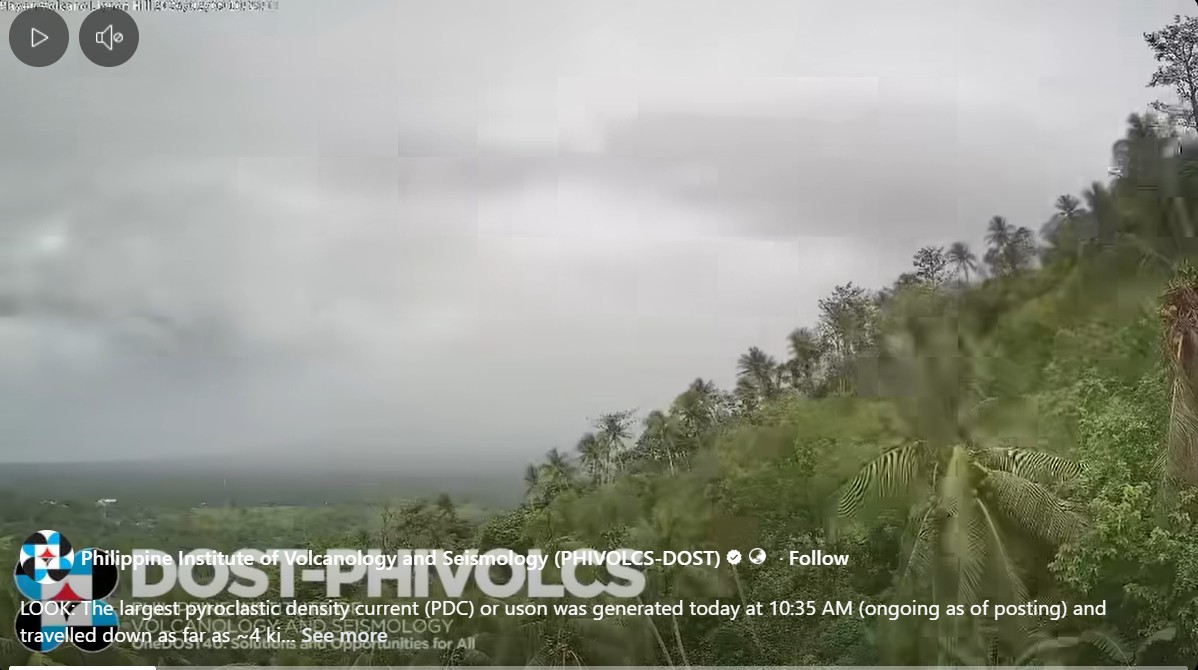
FEBRUARY 10, 2026 — Mayon Volcano once again reminded us why it’s both feared and admired. At 10:35 a.m. on February 9, Phivolcs confirmed that Mayon unleashed its largest pyroclastic density current (PDC) so far this year, locally called ‘uson’. The brownish ash plume shot a full kilometer into the sky and raced down the Mi-isi Gully, stretching up to four kilometers. The southwest drift carried ashfall over several barangays in Camalig and Guinobatan, blanketing homes, roads, and even parts of the Maharlika Highway.
Local officials scrambled to respond. Camalig Mayor Carlos Baldo immediately ordered the distribution of face masks and urged residents to stay indoors whenever possible.
“Visibility along the highway was reduced, so we advised motorists to drive with caution,” he said.
Phivolcs reported at least eight volcanic earthquakes, 469 rockfall events, and 43 PDCs in just one day. With Alert Level 3 still raised, entry into the six-kilometer permanent danger zone remains strictly prohibited. Aircraft are also barred from flying close to the volcano.
For the people of Albay, this is a lived reality. Ashfall means disrupted routines, health risks, and economic strain, especially for farmers whose crops are vulnerable to volcanic debris. Yet, it also highlights the resilience of communities who have long learned to adapt to Mayon’s moods.
Mayon’s activity is a stark reminder of the Philippines’ place in the Pacific Ring of Fire. We live with 24 active volcanoes, and Mayon’s perfect cone is both a tourist magnet and a ticking time bomb. The challenge is balancing admiration with preparedness — because beauty can be deadly when taken for granted.
In the shadow of Mayon, we are reminded that nature’s power demands both respect and readiness. When nature speaks this loud, are we truly listening?
(Image: Screenshot from Philippine Institute of Volcanology and Seismology (PHIVOLCS-DOST) | Facebook)