
San Pedro students learn CPR on Valentine’s Day — Are we teaching life-saving skills early enough?
Robel A. Almoguerra • Ipinost noong 2026-02-16 22:53:02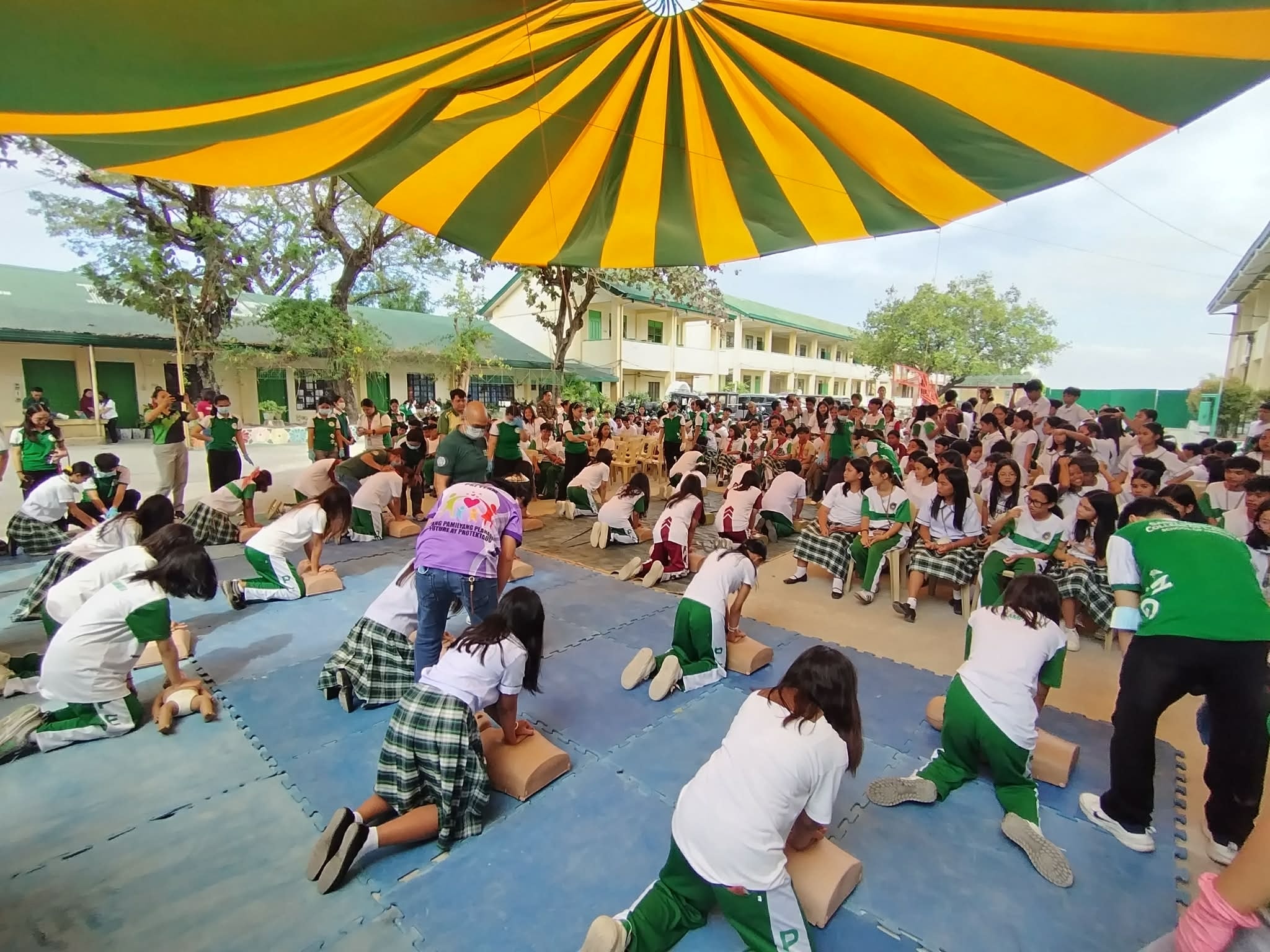
SAN PEDRO CITY, Laguna — On February 14, Valentine’s Day, the San Pedro City Disaster Risk Reduction and Management Office (CDRRMO) conducted a large-scale cardiopulmonary resuscitation (CPR) training for elementary and high school students in San Pedro City, Laguna. Around 1,600 students, along with teachers from Doña Pilar M. Alberto Integrated High School, received hands-on instruction on proper CPR techniques, equipping them with critical life-saving skills in the event of a medical emergency.
According to the CDRRMO, these programs aim to empower young learners to act decisively during emergencies, especially when professional medical assistance is not immediately available. “It is crucial that students know how to respond in critical moments. One life saved can make a difference,” a CDRRMO official said.
The initiative highlights a broader discussion on disaster preparedness and health education in schools. While CPR training is a standard component in some educational systems worldwide, it remains sporadic in the Philippines. By equipping children with practical knowledge early on, communities can foster a culture of immediate response, potentially reducing fatalities in accidents, cardiac incidents, or natural disasters.
Beyond the immediate benefit, such training instills confidence, responsibility, and a sense of civic duty among the youth. Yet, this raises a question: should life-saving skills like CPR become a mandatory part of the school curriculum nationwide? With natural disasters, traffic accidents, and medical emergencies affecting communities daily, can the Philippines afford to leave such knowledge optional? As San Pedro students take these first steps toward becoming young responders, the challenge remains: are we doing enough to ensure every child is prepared to save a life? (Larawan mula: City Government of San Pedro / Facebook)