
Teachers question substitute plans for wellness leave — who fills in?
Margret Dianne Fermin • Ipinost noong 2026-03-03 10:28:24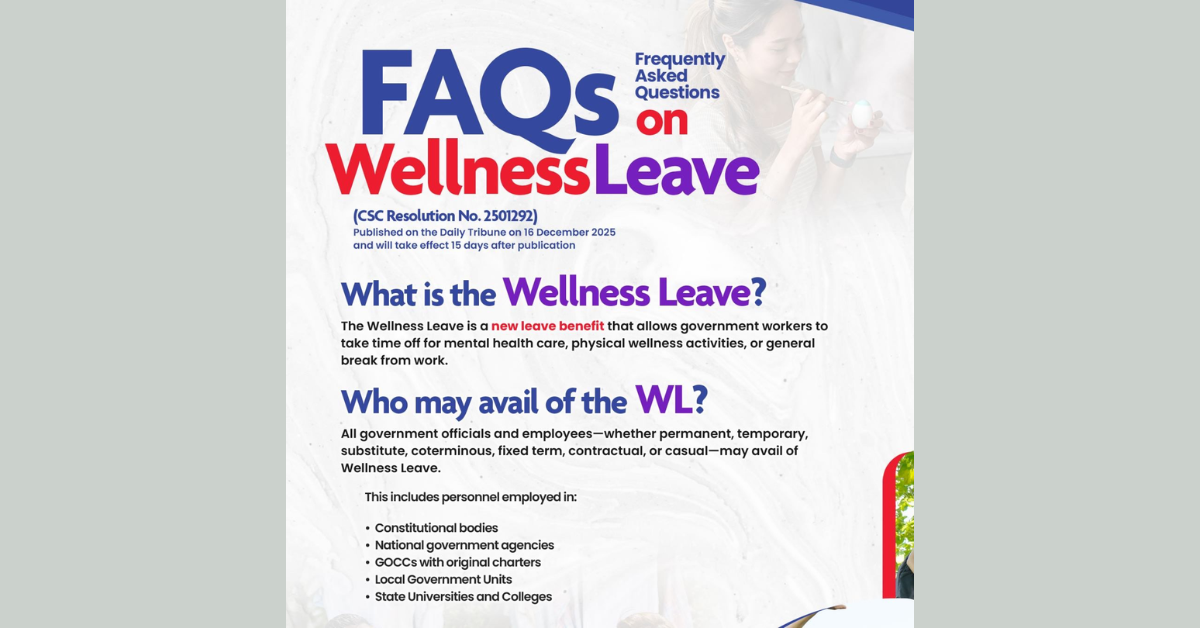
MANILA, Philippines — The Department of Education (DepEd) has officially granted public school teachers and non-teaching personnel up to five days of annual wellness leave, a new benefit aimed at supporting mental health and overall well-being.
The announcement was made in February 2026, with Education Secretary Juan Edgardo “Sonny” Angara emphasizing that the initiative is part of President Ferdinand Marcos Jr.’s directive to strengthen employee welfare across the public sector.
The wellness leave is separate from existing vacation and sick leave entitlements and may be used for rest, physical wellness activities, or mental health care. Teachers are allowed to take up to three consecutive days but cannot use all five days in one stretch.
“Ito ay handog natin sa bawat kawani ng DepEd, mula sa central office hanggang sa mga rehiyon, division offices, paaralan, at community learning centers, at anuman ang kanilang employment status,” Angara said.
However, questions have been raised by educators regarding substitute arrangements when a teacher avails of the wellness leave. During a recent discussion, Usec. Cabral clarified that while the department order on wellness leave does not explicitly mention relievers, existing policies already cover this concern.
Under Department Order No. 5 of 2024, teachers who take on additional classes due to an absent colleague are entitled to teaching overload pay or service credits. “We did not mention that in the department order because there is already a policy that has been implemented for two years now,” Cabral explained.
Concerns were also voiced by teachers who reported that some principals were discouraging them from taking wellness leave unless they could find their own substitutes. Lawmakers stressed that this responsibility lies with school heads, not the teachers themselves.
“Kaya nga mag-wellness yung teacher, paano siya magiging well kung siya pa maghahanap ng babalit sa kanya,” one official pointed out, underscoring that principals must ensure continuity of learning while respecting the right of teachers to rest.
The DepEd acknowledged the need to strike a balance between supporting teachers’ well-being and minimizing disruptions to students’ learning. Officials assured that flexibility will be considered in implementation, but reiterated that the primary responsibility for arranging relievers rests with school administrators.
The wellness leave policy has been welcomed as a progressive step in addressing the growing demands on educators, though its rollout highlights the importance of clear guidelines on substitute teaching and compensation. As the education sector adapts, the measure is expected to provide much-needed relief to teachers while reinforcing the government’s commitment to mental health and employee welfare.