
PH slashes work week as fuel prices explode from Iran war
Marijo Farah A. Benitez • Ipinost noong 2026-03-08 10:19:07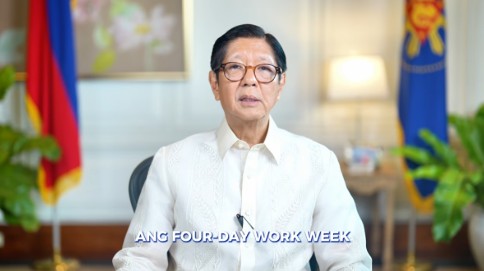
MARCH 8, 2026 — The Philippines is bracing for a painful oil shock as President Ferdinand Marcos Jr. orders a temporary four-day work week in government offices to cushion the blow of skyrocketing fuel prices triggered by the Iran war. Gasoline, diesel, and kerosene are set to surge by double digits, threatening household budgets and transport costs across the country.
Starting March 9, 2026, government offices will shift to a four-day work week. Marcos framed this as a survival measure.
“We are victims of a war that is not of our choosing. But we control how we will protect the Filipino,” he said.
The Strait of Hormuz — through which 20% of the world’s oil supply passes — is effectively closed due to the escalating conflict involving Iran, Israel, and the United States.
For an oil-dependent country like the Philippines, this choke point is a nightmare. Local pump prices are expected to jump by ₱7.48 per liter for gasoline, ₱17.28 for diesel, and ₱32.35 for kerosene.
Belt-tightening measures
Marcos ordered government agencies to cut fuel and power consumption by 10–20%, banned study tours and team-building junkets, and pushed for online meetings instead of in-person gatherings.
He also urged Congress to authorize excise tax reductions if crude breaches $80 per barrel and to amend the biofuels law to allow cheaper bioethanol blends. Meanwhile, fuel subsidies and cash transfers are promised for affected sectors, though details remain vague.
For us, though, the looming reality is harsher: diesel could hit ₱80 per liter, a figure that will squeeze jeepney drivers, delivery riders, and commuters alike.
The war doesn’t just hit our wallets — it endangers the two million overseas Filipino workers (OFWs) in the Middle East, whose safety and job security are now at risk. The government’s measures may soften the blow at home, but the uncertainty abroad adds another layer of anxiety for families relying on remittances.
A four-day work week sounds appealing on paper, but in reality, it’s a band-aid solution to a global wound. Yes, it saves fuel and electricity, but it also compresses workloads, risks service delays, and leaves frontline workers exempted. The bigger question is whether these temporary fixes can hold if oil prices spiral further.
We have always been resilient, but resilience shouldn’t mean endless sacrifice. The government’s quick pivot shows urgency, but it also exposes how vulnerable we remain to external shocks. We import nearly all our oil, and every geopolitical tremor in the Middle East shakes our economy.
Must we always keep absorbing the cost of wars we never chose to fight?
(Image: Philippine Information Agency)