
Updated wage rates released as NCR stays highest at ₱695 — Worker relief or still not enough?
Robel A. Almoguerra • Ipinost noong 2026-04-20 19:46:14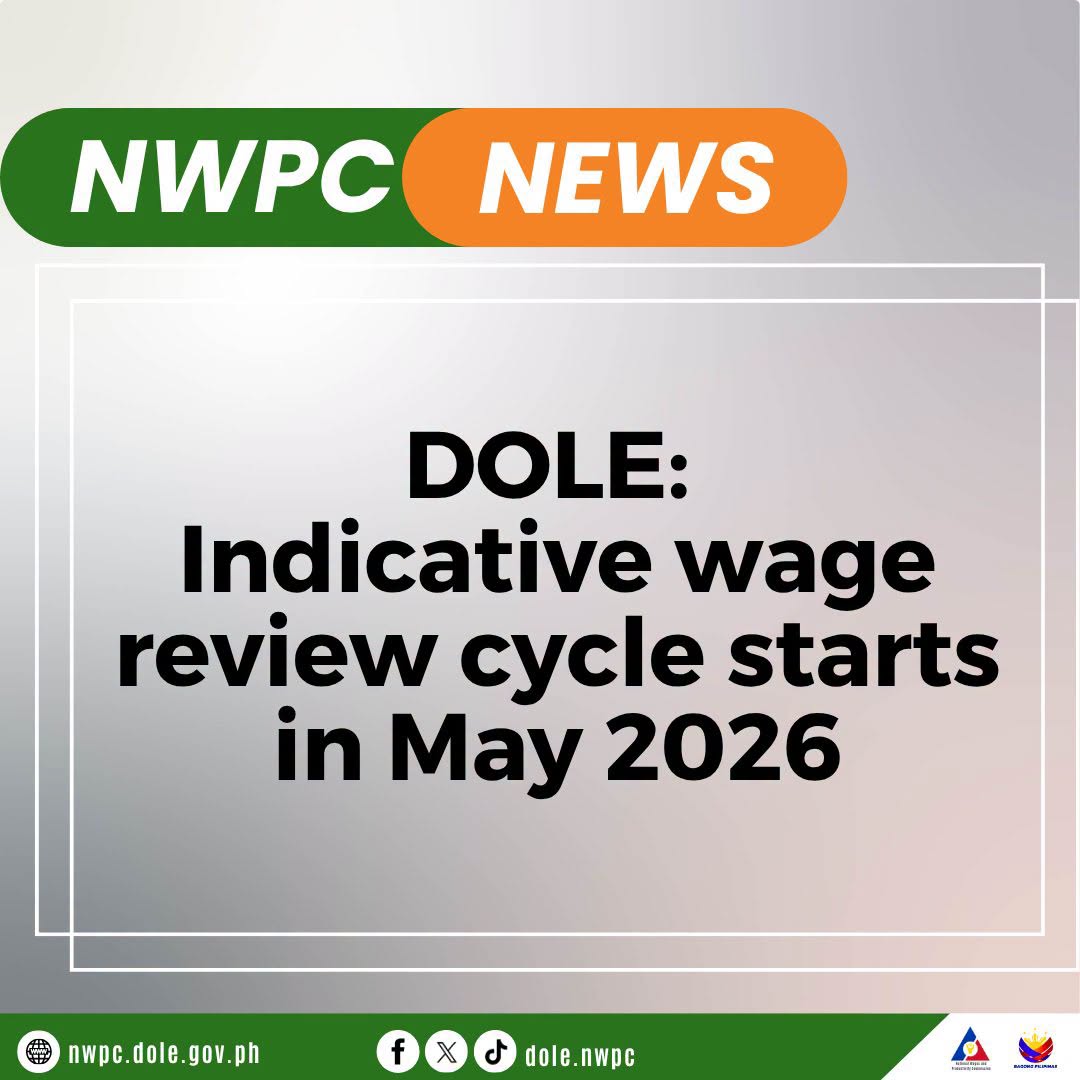
MANILA, Philippines — The National Wages and Productivity Commission has released its updated list of minimum wage rates across the Philippines based on the latest wage orders issued from 2025 to 2026. The data shows that the National Capital Region still holds the highest daily minimum wage in the country at ₱695.
According to the March 2026 report, some of the most recent wage increases were implemented in Bicol Region on April 8 and Davao Region on March 13. Meanwhile, CALABARZON posted the widest range of wage adjustments, with increases reaching as much as ₱100 depending on the sector and type of worker covered.
The next round of minimum wage reviews is scheduled to begin in NCR this May 2026, followed by other key regions such as Central Luzon and CALABARZON in August, then Western Visayas in September. These reviews are expected to assess whether further wage adjustments are necessary based on inflation trends and current economic conditions.
For many workers, wage hikes are welcome news, especially as transportation, food, electricity, and rent continue to rise. However, the central question remains whether increases truly keep pace with the cost of living. A higher nominal wage may look significant on paper, but if prices rise faster than salaries, purchasing power can still shrink.
The regional differences also reveal long-standing inequalities. Workers in lower-wage provinces often face cheaper living costs, but many still struggle with limited opportunities and rising essentials. Meanwhile, businesses—especially small enterprises—argue that abrupt wage hikes can pressure operations and employment.
This ongoing debate shows that wages are not just economic numbers; they reflect dignity, survival, and fairness in the workplace.
If minimum wages keep increasing yet many families still struggle, is the issue the wage itself—or the broader economy surrounding it?
(Larawan mula: NWPC / Facebook)