
NBI collars Jay Sonza over non-bailable cyberlibel rap for spreading ‘fake’ Marcos medical records
Marijo Farah A. Benitez • Ipinost noong 2026-05-01 08:56:35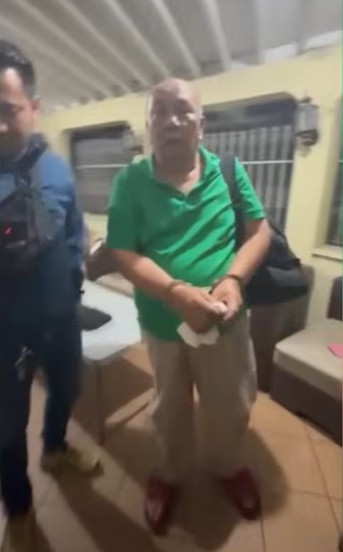
MAY 1, 2026 — Former broadcaster Jay Sonza’s arrest by the NBI over cyberlibel charges has reignited debate on the boundaries of free speech, misinformation, and accountability in the digital age. The case stems from his alleged spread of fake medical records about President Ferdinand Marcos Jr., a move that now places him in custody under a non-bailable offense.
On April 30, 2026, NBI agents arrested Sonza at his residence in Project 8, Quezon City, following an arrest warrant issued by the Pasay City Regional Trial Court.
NBI Director Melvin Matibag explained, “Eto po ay kaugnay sa kaso n’ya ng paglabag ng cyber law natin na may kinalaman po sa pagpapakalat ng maling balita sa atin pong pangulo at paglalabas po ng iba’t ibang peke na balita.”
(This is in connection with charges over violations of the cybercrime law involving the spread of wrong news about the President and other fake news.)
The charges fall under Article 154 of the Revised Penal Code, in relation to the Cybercrime Prevention Act of 2012, which penalizes the unlawful use of publication methods and dissemination of false information that could endanger public order or harm state interests.
Authorities emphasized that the offense is non-bailable, underscoring the gravity of the allegations.
Sonza’s lawyer, Atty. Mark Tolentino, confirmed the arrest but questioned the warrant’s classification as non-bailable. He argued that the alleged offense carries only a minimal penalty, suggesting a possible error in the court’s issuance.
“Actually yung kaso, expected na ito but di namin expected na arestuhin siya today … very minimal na kaso lang iyan … mali yung nakalagay sa warrant of arrest,” Tolentino said.
(Actually, the case was expected, but we didn’t expect him to be arrested today … it’s just a very minimal case … what was written in the warrant of arrest was wrong.)
Despite these objections, Sonza underwent booking procedures and is expected to be presented to the court on May 4, 2026.
This development highlights the growing tension between freedom of expression and the fight against misinformation. Sonza, once a respected broadcaster, now finds himself at the center of a legal battle that could define how far authorities will go in policing online speech. His theatrics and penchant for sensational claims may have once drawn attention, but in today’s digital landscape, such antics carry heavier consequences.
The NBI has made clear this is also a warning to others: “Kaya naman po eto ay isang babala po natin doon sa mga taong nagpapakalat ng mga maling balita na kami po sa NBI ay hahabulin po namin ito.”
(This serves as a warning to those who spread wrong news, that the NBI will run after you.)
Now as we scroll through our feeds, one question must always linger: Where do we draw the line between free speech and reckless misinformation?
(Image: Screengrab from YouTube)