
Leyte priest missing as police look into mental health angle
Margret Dianne Fermin • Ipinost noong 2025-12-30 09:07:37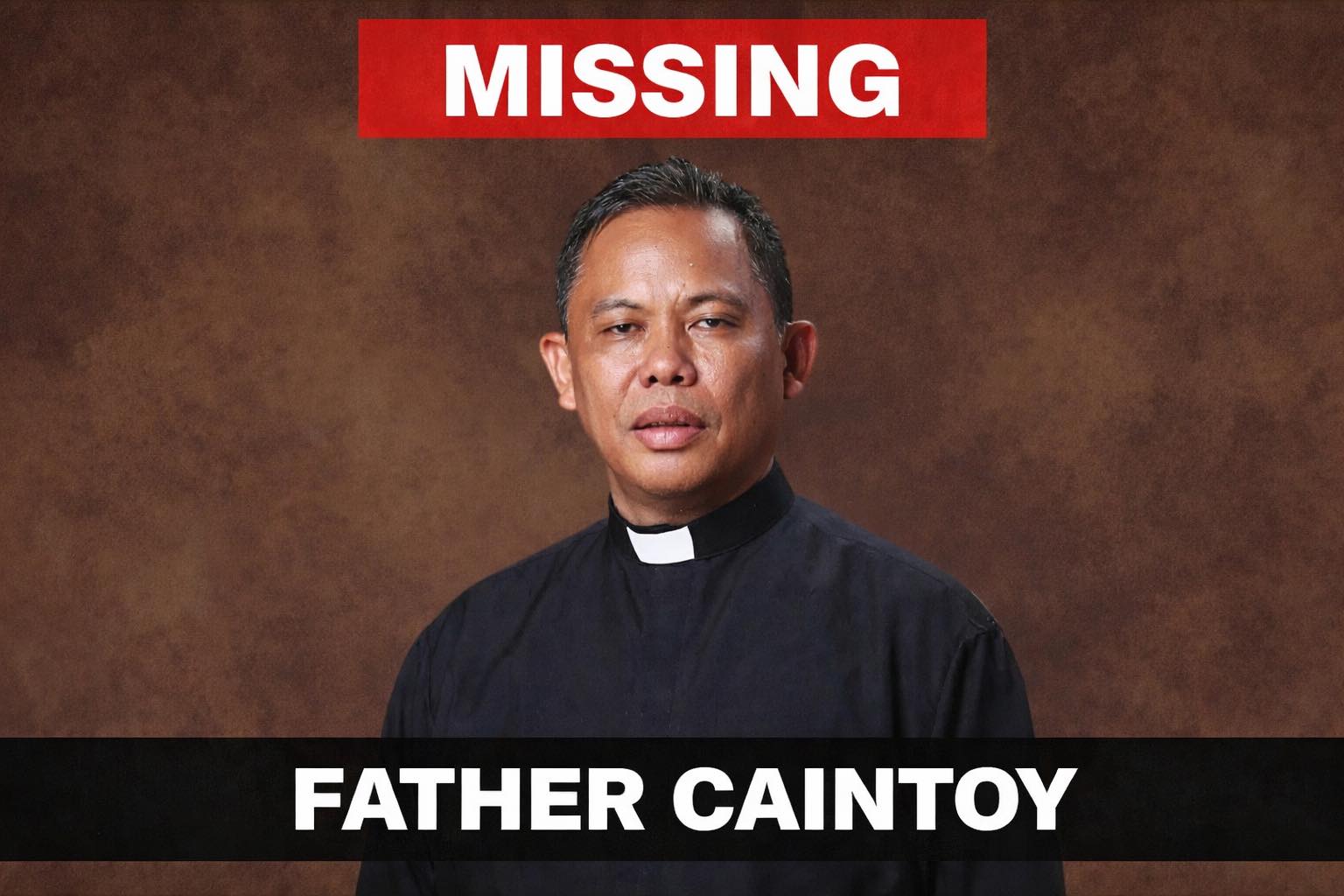
MANILA — Authorities are investigating the disappearance of a Catholic priest in Leyte, with the Philippine National Police (PNP) saying he may have been suffering from depression before he went missing.
Father Edwin “Kutz” Caintoy, 55, parish priest of San Jose de Malibago Parish in Babatngon, Leyte, was last seen on the morning of December 23 in Tacloban City. Police reports said he was captured on closed-circuit television at around 9:52 a.m. walking from VSYS Department Store toward Robinsons North Tacloban. That was the last confirmed sighting of the priest.
PNP officials disclosed that Caintoy had been troubled in the days leading up to his disappearance. Police Regional Office 8 director Brig. Gen. Jason Capoy told reporters, “We are looking into this possibility, that Father Caintoy was experiencing depression.” Investigators learned that the priest was distressed after losing contact with his foster child, who reportedly left home without explanation following a minor offense. The child was later traced to Cavite.
At Camp Crame, PNP public information chief Brig. Gen. Randulf Tuaño echoed the findings, saying, “They are looking at the angle of the possibility that the priest was depressed over whom he called his adopted son. He was under the care of the priest and suddenly left him after a minor disagreement.”
The Archdiocese of Palo confirmed the disappearance and appealed for public assistance. In a statement, it said: “Anyone with information that may assist in locating Fr. Caintoy is kindly requested to contact Rev. Fr. Gwen Lovelino Padagdag at 09282193275.”
Local police reported that Caintoy traveled from Babatngon to Barangay Tagpuro, Tacloban City, on December 23 via motorcycle driven by his sacristan. He then boarded a passenger bus bound for Tacloban, alighting near Our Lady of Guadalupe Church before being seen walking toward Robinsons North.
The case has drawn concern from parishioners and church officials, who described Caintoy as a dedicated priest. Authorities said search operations are ongoing, with coordination between the PNP, the Archdiocese, and local communities.
As of Monday, police said there are still no leads on the priest’s whereabouts. Brig. Gen. Capoy assured the public, “We are exerting all efforts to locate Father Caintoy and bring him back safely.”
Even Those Who Guide Others Can Get Lost
The disappearance of Father Edwin Caintoy reminds us of a truth we often avoid. Those who serve, lead, and care for others are not immune to pain.
Priests are expected to be steady. Strong. Constant. They listen to confessions, comfort grieving families, and carry the burdens of entire communities. Yet when they struggle, their suffering is often quiet, hidden behind duty and faith. Mental health issues do not spare anyone, not even those devoted to spiritual life.
Speculation about depression should be handled with care. It must never turn into judgment or gossip. Instead, it should push society toward empathy and responsibility. Emotional distress is not weakness. It is a human condition that deserves understanding and support.
This case also exposes how limited conversations about mental health remain, especially among men and religious workers. Too often, help is sought only when someone has already gone missing.
As authorities search for Father Caintoy, the public should reflect on what this moment asks of us. Concern, not curiosity. Compassion, not assumptions.
If this leads to deeper attention to mental health care within churches and communities, then something meaningful can still come from uncertainty. No one should have to disappear before being seen.
Image from Breaking News Negros Oriental