
Newborn abductions rattle metro hospitals — DOH tightens watch
Marijo Farah A. Benitez • Ipinost noong 2025-12-30 17:45:01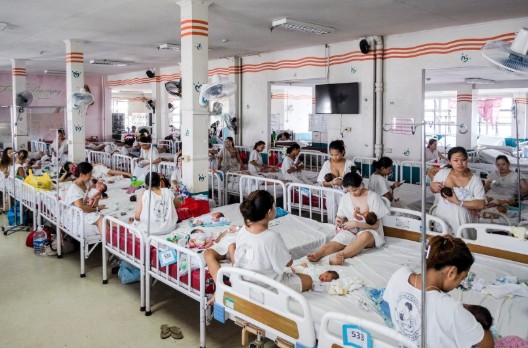
DECEMBER 30, 2025 — Two separate attempts to snatch newborns in Metro Manila have prompted the Department of Health (DOH) to order hospitals nationwide to tighten their security systems, warning that relaxed protocols during the holiday season have left facilities vulnerable.
The latest incident unfolded at Tondo Medical Center just before midnight on December 29, when a woman disguised as medical staff tried to take a baby from its mother under the pretense of a newborn screening. A nurse intervened in time.
“Hawak na po niya [ang bata]. Noong sinita [ng nurse], medyo nataranta yung babae, ibinalik [ang bata] sa nanay, at dali-daling umalis. Sa kabutihang palad po, nahuli yung mismong suspect at ngayon ay nasa custody na ng pulis,” said Dr. Maria Isabelita Estrella, chief of the hospital.
(She was already holding [the baby]. When [the nurse] noticed her, she got alarmed and returned [the baby] to the mother, and immediately tried to escape. The good thing is that the suspect was immediately caught and is now in police custody.)
Police later revealed the suspect had suffered a miscarriage and admitted she attempted the crime out of fear of disappointing relatives who expected her to bring home a child.
Days earlier, on December 26, a newborn was abducted from Amang Rodriguez Memorial Medical Center (ARMMC) in Marikina. CCTV footage showed a woman in a scrub suit posing as a nurse, asking mothers about pending newborn screenings. One mother, caught off guard, handed over her baby along with medical records.
“Siya po ay nagtanong sa mga ina kung sino pa po ang di nakakapag-newborn screening sa mga sanggol at tatlo po ang nagtaas ng kamay,” said Marikina Police Chief Colonel Jenny Tecson.
(She asked the mothers who had not done their newborn screenings with their babies and three mothers raised their hands.)
The suspect escaped through the emergency room, rode a tricycle to a nearby mall, and later transferred to another vehicle. She was eventually identified after hospital staff recalled seeing her without a mask. The baby was recovered days later at the suspect’s home.
DOH response
Health Secretary Teodoro Herbosa announced that hospitals will adopt stricter entry and exit protocols, mandatory ID checks, and enhanced monitoring of patients and visitors. He said the DOH is studying alert systems similar to America’s Amber and Silver alerts, which mobilize law enforcement and media in cases of missing children and vulnerable adults.
“All babies have a tag, all patients have a tag. There is a system in place pero may masasamang tao talaga. Even in the US, mayroon silang amber alert kasi ninanakawan din sila ng bata,” Herbosa said.
(All babies have a tag, all patients have a tag. There is a system in place but there really are bad people. Even in the US, they have amber alert because their children get abducted too.)
He added that the holiday season often leaves hospitals operating with skeletal staff, making them susceptible to impostors.
“Because it’s the time of the year, [people] are physically present but mentally absent because of the holiday season … This is the time mangyayari ang salisi-salisi. We will heighten our measures in the protection,” he said.
(Because it’s the time of the year, [people] are physically present but mentally absent because of the holiday season … This is the time where imposter incidents occur. We will heighten our measures in the protection.)
Herbosa also directed the National Center for Mental Health to examine the suspects’ psychological state, noting that mental health issues may have played a role.
While authorities confirmed the two incidents were isolated, police acknowledged that organized abduction groups exist. The revelation has sparked public concern, with many parents questioning whether hospitals are truly safe spaces for newborns.
The idea of an “Amber Alert” in the Philippines raises questions as well about feasibility, coordination among agencies, and the role of technology in protecting children.
The suspects face charges of kidnapping and failure to return a minor, but the larger issue is how hospitals and government agencies will prevent future attempts. The DOH insists vigilance must extend beyond public hospitals to private and local government-run facilities.
No mother should carry the burden of second‑guessing who walks into a ward. Families, already stretched thin in moments of exhaustion, cannot be tasked with policing hospital corridors. The duty to safeguard patients rests squarely on institutions. Verified IDs, monitored entry points, and firm visitor rules are not luxuries — they are the backbone of trust and safety.
Hospitals that cannot guard their own doors cannot expect parents to sleep in peace. Furthermore, a mother’s trust should not be tested by the very place meant to protect her child.
(Image: UNFPA in the Philippines | X)