
Case filed against female police general for flaunting P70K Balenciaga shoes
Margret Dianne Fermin • Ipinost noong 2026-01-07 14:22:09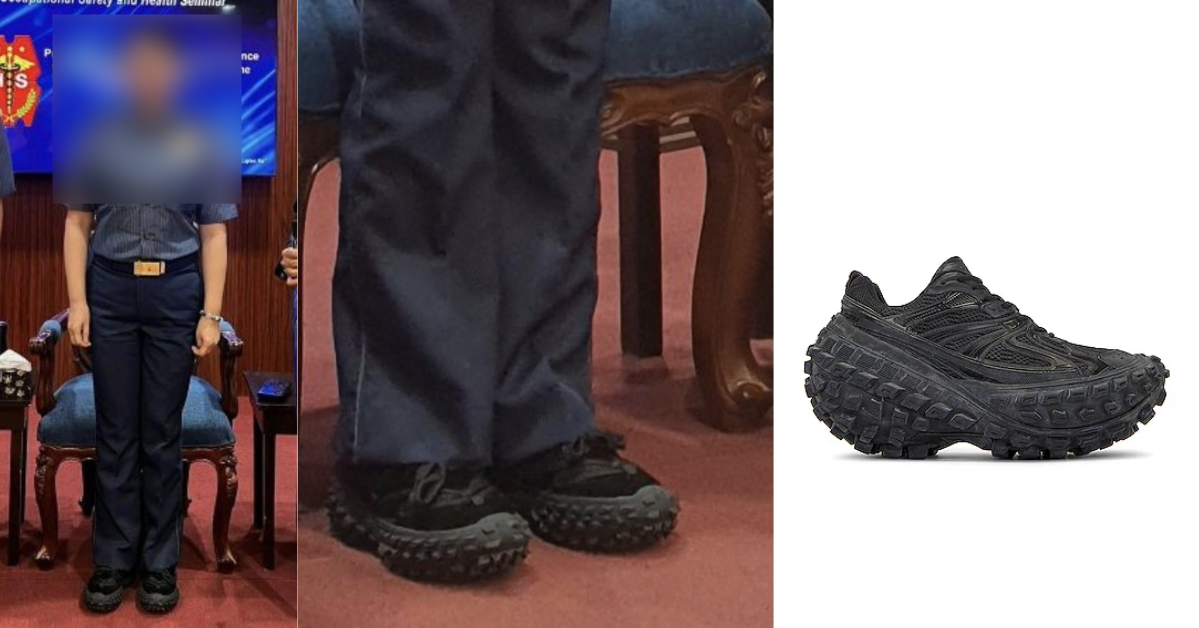
MANILA — The National Police Commission (NAPOLCOM) has filed administrative charges against Police Brigadier General Jezebel Imelda Medina, former director of the Philippine National Police (PNP) Health Service, for alleged disobedience and conduct unbecoming of a police officer, including the public display of luxury footwear worth ₱70,599.
NAPOLCOM Vice Chairperson and Executive Officer Rafael Vicente Calinisan explained that Medina failed to comply with a directive to submit the psychiatric and psychological evaluation report of a Quezon City patrolman accused of engaging in seditious vlogging.
“She willfully failed to comply with the directive to submit the PPE report, which is a clear case of less grave neglect of duty,” Calinisan said.
In addition, Medina was cited for wearing luxury shoes during official functions, which NAPOLCOM said violated ethical standards expected of police officers.
“The public display of luxury items by a police general undermines the integrity of the service and erodes public trust,” Calinisan added.
Ethical Standards and the Image of the Police
The case against Medina is not merely about footwear; it strikes at the heart of police discipline and public perception. The Revised PNP Code of Conduct and Ethical Standards (PNP Memorandum Circular No. 2017-013) requires police officers to maintain modesty, propriety, and integrity in public.
It explicitly prohibits “ostentatious display of wealth” that undermines public trust. Wearing ₱70,000 Balenciaga shoes in official functions can therefore be interpreted as a violation of this ethical standard.
This provision exists for a reason. In a country where many citizens live below the poverty line and rank-and-file policemen struggle with modest salaries, the sight of a general flaunting luxury items sends a damaging message. It reinforces perceptions of elitism and erodes the moral authority of the police force.
The controversy also comes at a time when the PNP is under pressure to rebuild credibility. Allegations of corruption, abuse of power, and selective enforcement have long plagued the institution. Public trust remains fragile, and every misstep by senior officials risks reinforcing the narrative that the police are disconnected from the realities of ordinary Filipinos.
For ordinary citizens, the issue is not about fashion but about fairness: why should the public trust a police force whose leaders appear to flaunt wealth while ordinary officers and citizens struggle?