
PNP steps up war against cigarette smuggling; on guard against the deadly “tuklaw”
Marijo Farah A. Benitez • Ipinost noong 2026-01-08 12:30:52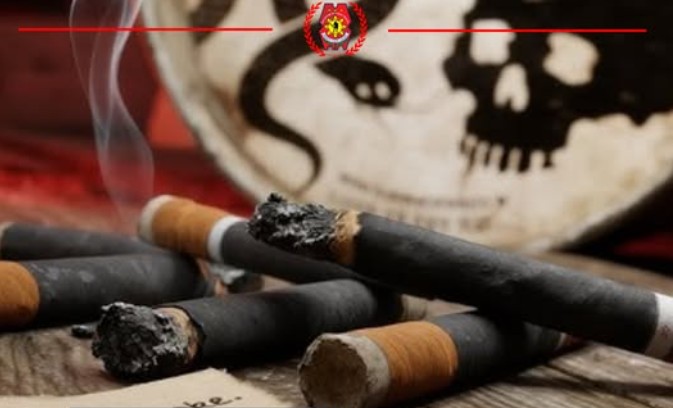
JANUARY 8, 2026 — The Philippine National Police (PNP) is sounding the alarm on “Thuoc Lao,” more infamously called “tuklaw” or black cigarette, after a string of smuggling busts across the country. Acting PNP chief Lt. Gen. Jose Melencio C. Nartatez Jr. minced no words: “We have seen the effects of this black cigarette and it is alarming. We are working closely with other law enforcement agencies to prevent its entry and proliferation in the country.”
Why is it alarming? Because “tuklaw” is no ordinary cigarette. Imported illegally from Northern Vietnam, it packs a nicotine punch of up to nine percent — three times stronger than the usual sticks Filipinos puff daily. Some versions are even laced with synthetic cannabinoids.
Imagine teenagers lighting up, only to end up with seizure-like symptoms, body jerks, and uncontrollable twitching.
This isn’t just a vice anymore — it’s a health crisis waiting to explode.
Recent cigarette seizures tell us how massive the problem could become. From Bacoor to Zamboanga, Batangas to Malabon, authorities have intercepted shipments worth billions. Just this January, a boat carrying 332 master cases of undocumented cigarettes valued at over ₱21 million was stopped off Manalipa Island.
Tuklaw could easily clip through the crack, straight into the lungs of Filipinos.
The true price of smoking
We all know what smoking can do — lung cancer, heart problems, even strokes. We’ve seen it happen: a dad who can’t catch his breath just climbing the stairs, a mom stuck with a never-ending cough, a teenager collapsing after trying “tuklaw.” And yet, cigarettes still find their way into people’s lives.
For some, it’s the go-to stress reliever. For others, it’s the barkada bonding ritual. And for many, it’s simply a habit that’s too hard to shake off.
The truth is, those health warnings often get drowned out by cravings, culture, and the cheap thrill of lighting up. You see, smuggled cigarettes aren’t just dangerous to the smoker — they’re dangerous to all of us. They slip past regulations, dodge taxes, and ignore health standards. That means they don’t just wreck lungs; they rob the country of revenue, weaken public health campaigns, and put our kids at risk of substances far deadlier than they realize.
They say change starts with each individual. So why not make our homes the first battleground against the deadly lure of smoking?
(Image: Tobacco Reporter)