
Finally, faster internet for Filipino students! But can we really catch up?
Marijo Farah A. Benitez • Ipinost noong 2026-01-07 12:18:40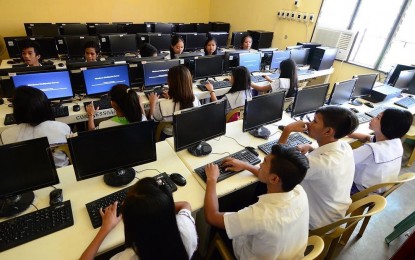
JANUARY 7, 2026 — It’s about time! After years of lagging behind, the Philippines is finally taking a bold step to strengthen internet connectivity in higher education. The Department of Information and Communications Technology (DICT) and the Commission on Higher Education (CHED) have signed two major agreements that promise faster internet and wider digital access for universities and colleges nationwide.
The first pact, Konektadong CHED: Fiberization and Connectivity Acceleration Program, will roll out fiber-based internet across CHED offices, state universities and colleges, and local universities. The second, Bayanihan SIM for Higher Education Learners, will provide SIM-based mobile data and internet allowances to students in underserved and remote areas.
In short, this is not just about faster Wi-Fi in classrooms — it’s about giving every Filipino student a fighting chance to compete globally.
DICT Secretary Henry Aguda underscored the urgency.
“Ang utos ng Pangulo ay walang maiiwang Pilipinong offline. Dahil pag may connectivity, sa panahon ng bagyo at sakuna, mayroon tayong lifeline; sa panahon ng pag-aaral, meron tayong online education; at sa panahon ng pandemya, meron tayong online health. Ito’y isang hakbang tungo sa katuparan ng utos ng ating Pangulo,” he said.
(The President’s directive is that no Filipino should be left offline. With connectivity, we have a lifeline during storms and disasters; we have online education during times of learning; and online health services during a pandemic. This is a step toward fulfilling the President’s directive.)
CHED Commissioner Shirley Agrupis echoed this, saying, “Makakatulong ito sa expanded tertiary program ng CHED dahil utos ng Presidente ay matulungan ang bawat Pilipino, hindi lang dito sa ating bansa, kundi saan mang panig ng mundo.”
(This will help CHED’s expanded tertiary program, as the President’s directive is to assist every Filipino — not only here in our country, but wherever they may be in the world.)
These moves tie directly to President Marcos’ new connectivity law, which opens the country to more options for digital access.
Still buffering …
Sure, this is good news. But, realistically speaking, Filipino students have been stuck with slow, unreliable internet for years. Some places don’t even have a signal at all. Imagine trying to study or attend online classes when your connection keeps dropping. So frustrating!
So how can our students keep up with their peers abroad, especially now that artificial intelligence has already begun shaping the future of education, work, and innovation? While others are moving forward with AI-powered learning, many of our kids are still stuck waiting for a page to load.
Connectivity isn’t a luxury anymore — it’s the bare minimum if you want to survive in today’s digital-first world. That’s why people can’t help but ask, Why only now? The rest of the world has been upgrading their digital infrastructure for years, and we’re just starting to catch up.
Yes, this is progress. But the real test is whether these programs will actually reach the far-flung communities that need them most.
Will students finally be able to log in without worrying about disconnection, or will they still be left buffering while the rest of the world speeds ahead?
(Image: Philippine News Agency)