
Rep. Pulong Duterte urges SC to halt ICC cooperation — Can international justice stay impartial?
Robel A. Almoguerra • Ipinost noong 2026-01-07 00:30:47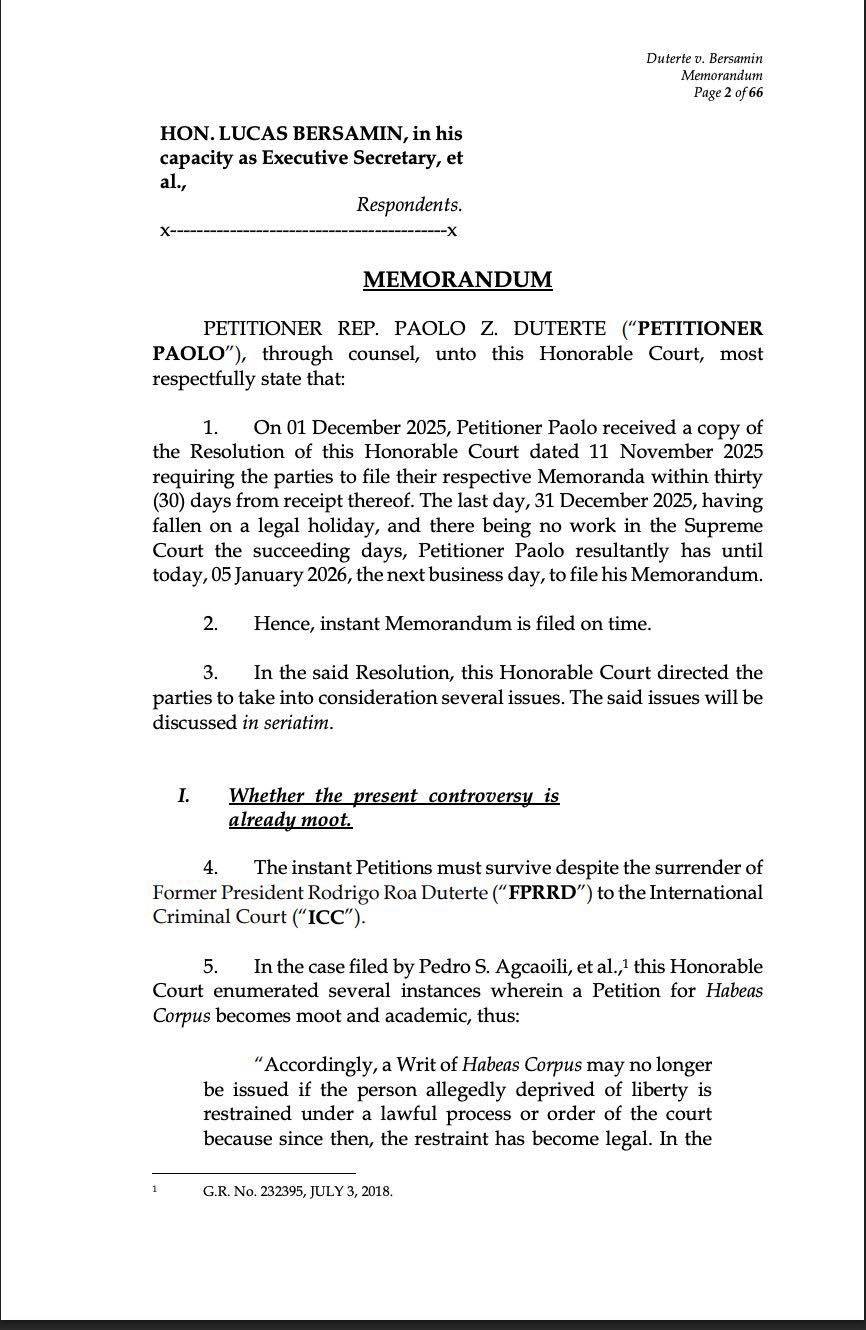
DAVAO CITY, Philippines — Davao City 1st District Representative Paolo “Pulong” Duterte has urged the Supreme Court to prohibit the Philippine government from further cooperating with the International Criminal Court (ICC) and the International Criminal Police Organization (Interpol) concerning the application of the Rome Statute.
The move comes in the wake of the March 11, 2025, ICC-issued arrest warrant against former President Rodrigo Duterte, father of the congressman, sparking intense debate over the country’s obligations to international law versus national sovereignty. In a 66-page memorandum filed through legal counsel Atty. Harry Roque, Rep. Duterte argued that the petitions challenging government cooperation “should survive,” emphasizing that the legal issues surrounding his father’s arrest are not moot and remain active points of contention.
This development underscores the tension between domestic political interests and international legal obligations. While the ICC operates to ensure accountability for alleged crimes against humanity, the Duterte family’s stance highlights concerns over national autonomy and the perception of political bias in international justice mechanisms. Observers note that such petitions, particularly when involving prominent political figures, often blur the line between legal principle and political strategy.
The case raises broader questions about the role of national courts in international law and the influence of politics in shaping public perception of justice. While legal arguments unfold in the Supreme Court, the situation also invites reflection on the balance between accountability, sovereignty, and the potential for political interests to influence international legal processes.
In an era where domestic politics intersects with global legal institutions, one must ask: can international justice remain impartial when high-profile political figures are involved, or will national influence always tip the scales? (Larawan: Facebook)