
Malacañang slams fake Marcos medical records, St. Luke’s confirms hoax — gossip machine in overdrive!
Marijo Farah A. Benitez • Ipinost noong 2026-01-29 09:06:03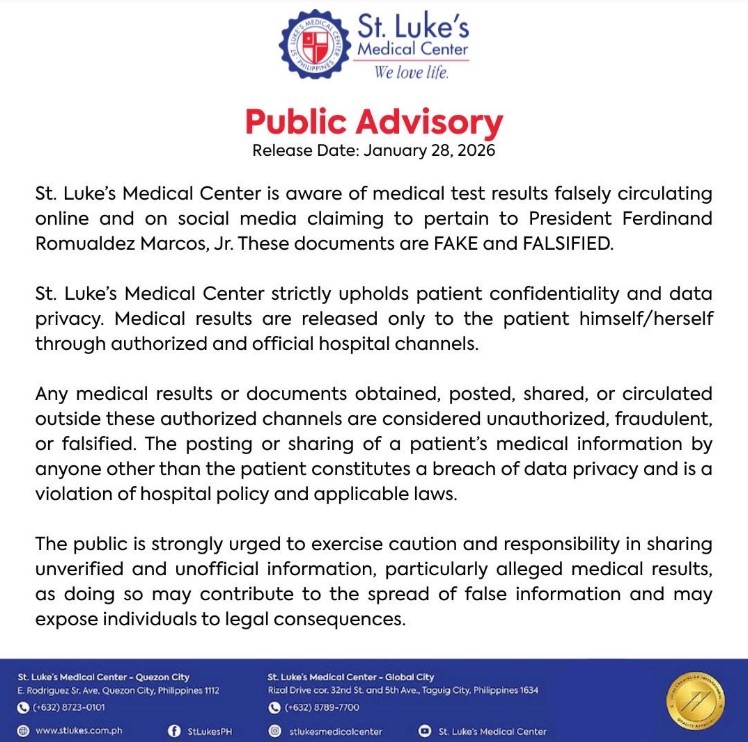
JANUARY 29, 2026 — The Palace isn’t mincing words: those medical records claiming President Ferdinand Marcos Jr. is in dire condition? Fake. Fabricated. A hoax. Malacañang blasted the documents making the rounds online, calling them “malicious” and warning of possible legal action against those spreading them. And just to hammer the point home, St. Luke’s Medical Center itself stepped in, confirming the so-called test results were “FAKE and FALSIFIED.”
So why does this matter? Because in the Philippines, rumors spread faster than jeepneys on EDSA. One forwarded email, one viral Viber message, and suddenly the President is being accused of drug use and life-threatening complications. The gossip machine went into overdrive, and once again, the line between fact and fiction blurred in the public eye.
Palace fights back
The Presidential Communications Office (PCO) was firm, saying, “The document being circulated is FAKE. It did not originate from any legitimate medical examination of the President and does not reflect his current health condition.”
The Palace stressed that Marcos “is well, fully capable of discharging his official responsibilities, and continues to actively perform his duties.”
But the damage was already done. Screenshots and forwarded messages painted a picture of a President supposedly deteriorating. One email from a certain “Naman S. Puri” even claimed Marcos’ condition had worsened due to drug use, citing “formation of a cyst” and “clear signs of perforation.”
None of it true, but juicy enough for critics to latch onto.
Hospital shuts down the lies
St. Luke’s Medical Center issued its own advisory, cutting through the noise: “These documents are FAKE and FALSIFIED.”
The hospital reminded the public that medical results are released only through authorized channels, and anything else is “unauthorized, fraudulent, or falsified.”
Translation: stop believing random screenshots!
They also warned that sharing patient information without authority is a breach of data privacy and could lead to legal consequences. In other words, spreading fake medical records isn’t just reckless — it could get you sued.
Marcos speaks up
President Marcos himself tried to calm the frenzy. In a video message, he assured the public: “Binigyan lang ako ng mga gamot at patuloy pa rin yung aking antibiotics. Pero okay na ako.”
(I was just given medication, and I’m still on antibiotics, but I’m okay now.)
He even lightened the mood by sharing that he’s back to eating solid food: “Ngayon pwede na. Kanina kumain na ako ng hamburger.”
(Now I can. Earlier I ate a hamburger.)
Marcos said he has already presided over key meetings, including the 7th Economic and Development Council session, and thanked Filipinos for their concern.
When lies spread faster then truth
So why are so many Filipinos quick to believe whatever pops up online? Is it distrust in government? Is it the thrill of scandal? Or is it simply the speed of social media, where gossip travels faster than official statements?
But to be blunt, some people harbor ill will toward Marcos and will grab any chance to smear him. Others, meanwhile, share unverified content without thinking twice. Both feed the toxic cycle of misinformation. And in the end, it’s not just the President’s reputation at stake — it’s the public’s right to truth.
How about you? Did you jump on the bandwagon and believe the hoax, or did you stop to question the noise?
(Image: St. Luke's Medical Center | Facebook)