
A rare morning flight in Puerto Princesa — Are we doing enough to protect the Philippine Cockatoo?
Robel A. Almoguerra • Ipinost noong 2026-02-01 23:38:36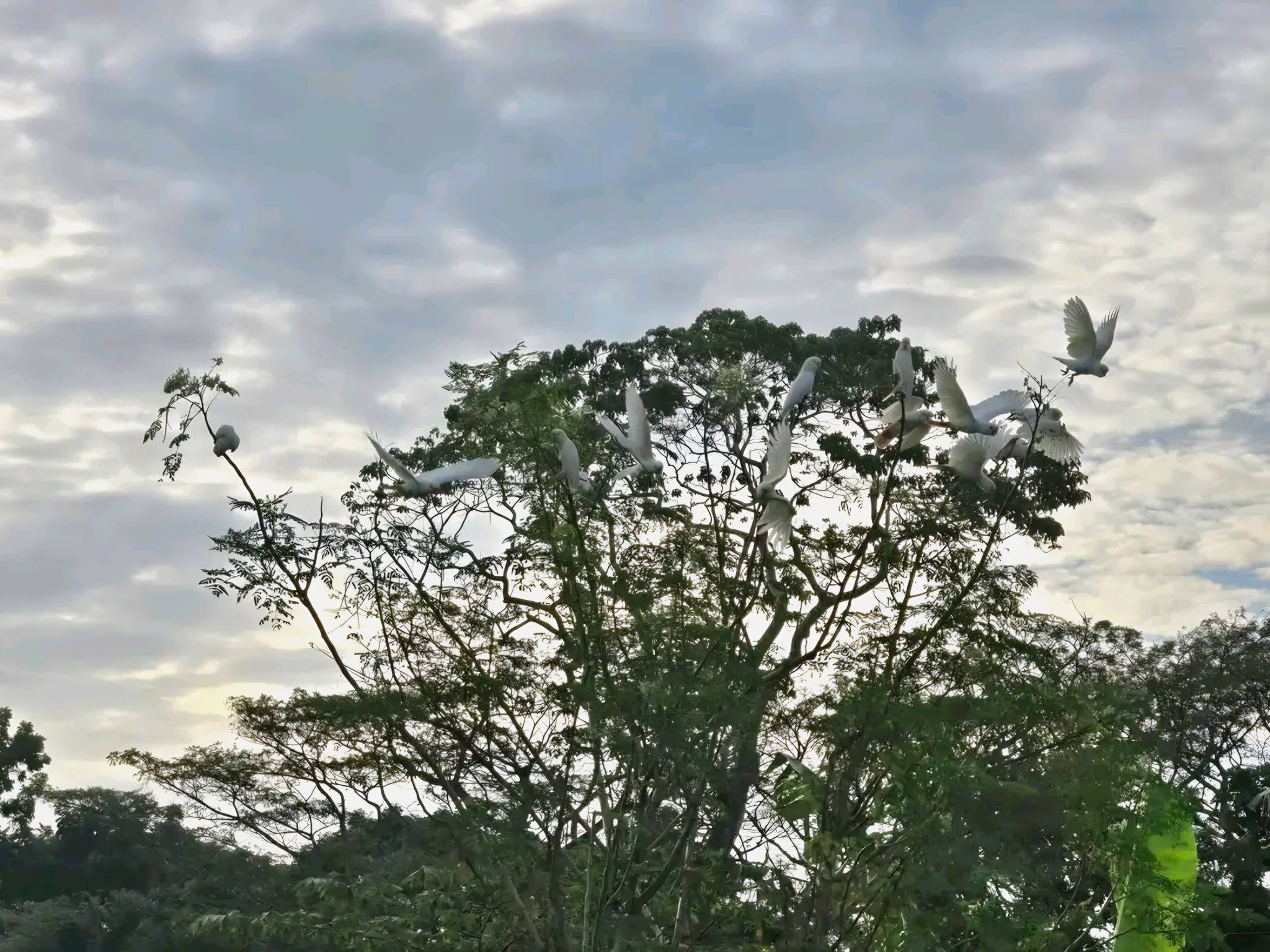
PUERTO PRINCESA, Palawan — A rare and heartening wildlife sighting greeted residents of Barangay San Pedro, Puerto Princesa City on the morning of January 31, when a group of katala or Philippine cockatoos was photographed flying freely after feeding on malunggay trees around 7:23 a.m. The images, captured and shared by local resident Joshua Lean Comia Alisuag, quickly drew attention for showcasing one of the country’s most endangered yet iconic bird species in a community setting.
Alisuag shared that he often hears the distinct calls of the cockatoos before actually seeing them. According to him, their familiar huni has become a signal to step out onto his balcony and look for the birds, which sometimes circle the area or perch on nearby trees. His account reflects a growing connection between people and wildlife—one built not through zoos or sanctuaries, but through everyday coexistence.
The Philippine cockatoo is an endemic species, found only in the Philippines, and is classified as critically endangered due to habitat loss, illegal wildlife trade, and declining forest cover. Experts note that sightings like this are not just visually striking; they are meaningful indicators of a healthy local ecosystem. The presence of katala suggests that the surrounding environment still provides adequate food sources and relatively safe habitat conditions.
However, this moment of wonder also carries an underlying challenge. While it is encouraging to see endangered species returning or remaining visible in communities, it also places greater responsibility on residents and local governments. Urban expansion, noise, and unregulated development could quickly turn these safe spaces into threats if conservation awareness is not sustained. The sighting in Puerto Princesa reminds us that environmental protection is not an abstract concept—it happens in backyards, balconies, and neighborhood trees. As we celebrate the beauty and resilience of the katala, we are also confronted with a crucial question: will these sightings become more common symbols of successful conservation, or fleeting reminders of what we stand to lose if protection efforts fall short? (Larawan mula sa: Joshua Lean Comia Alisuag / Facebook)