
Fake rabies vaccines seized in Aurora raid after child’s death — Are regulatory gaps putting lives at risk?
Robel A. Almoguerra • Ipinost noong 2026-02-12 23:19:35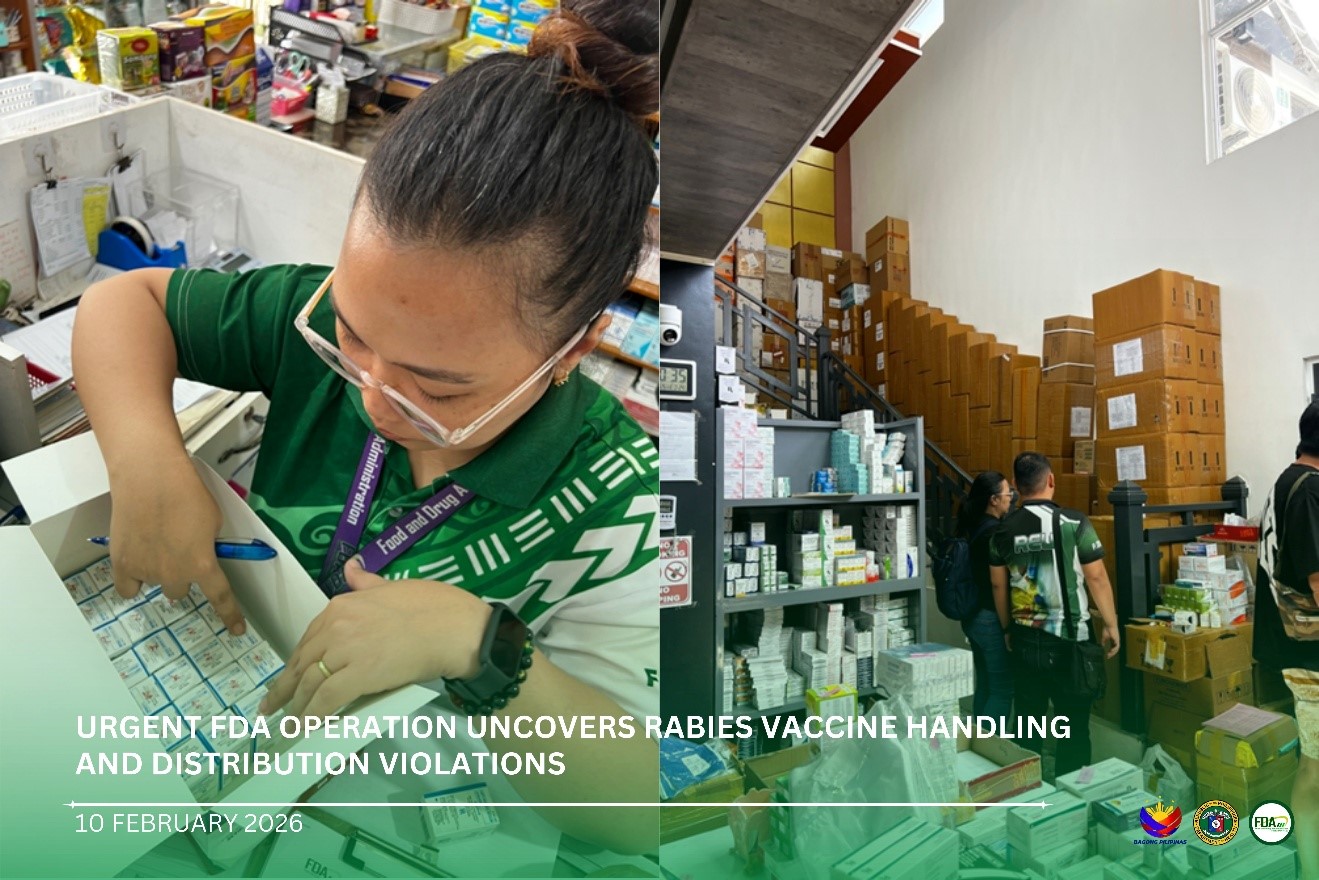
BALER, Aurora — The Food and Drug Administration (FDA) conducted a series of raids on Tuesday targeting several pharmacies located outside a hospital in Baler, Aurora, following the discovery of allegedly counterfeit anti-rabies vaccines being sold to the public.
The operation comes in the wake of the tragic death of an eight-year-old child who was reportedly bitten by a dog. Authorities confirmed that the child had indeed been bitten, but the animal was killed by its owner the following day, preventing proper observation for rabies. The incident prompted heightened scrutiny over the vaccines administered and their source.
During the inspection, the FDA identified vaccines labeled “Equirab” that are suspected to be fake. Several pharmacies were unable to present documentation proving the authenticity and legal procurement of their vaccine supplies. Others were found operating without proper authorization to sell vaccines at all. Inspectors also discovered that some of the products were stored in ordinary household refrigerators alongside unrelated items, rather than being maintained under the strict cold chain conditions required for high-risk biological products. The questionable vaccines were immediately confiscated for further laboratory examination.
On Wednesday, the FDA tracked down the alleged distributor in Nueva Ecija. However, the distributor likewise failed to produce valid documentation or demonstrate the use of appropriate storage equipment necessary for handling vaccines safely.
The FDA reiterated its warning to the public about the grave dangers of counterfeit vaccines. Fake or improperly stored anti-rabies vaccines can render post-exposure treatment ineffective, potentially leading to fatal outcomes. The agency strongly advised consumers to purchase vaccines only from authorized establishments and to ensure administration by licensed healthcare professionals.
Beyond enforcement, this case raises troubling questions about regulatory oversight and public awareness. In life-and-death situations such as rabies exposure, access to safe and legitimate vaccines is not optional—it is critical. As investigations continue, the public is left to ask: How many more lives could be endangered before tighter monitoring and accountability mechanisms fully close the gaps in the pharmaceutical supply chain? (Larawan mula sa: FDA)