
Teachers slam DepEd’s trimester plan: no to ‘trial-and-error’ education
Marijo Farah A. Benitez • Ipinost noong 2026-02-15 17:59:10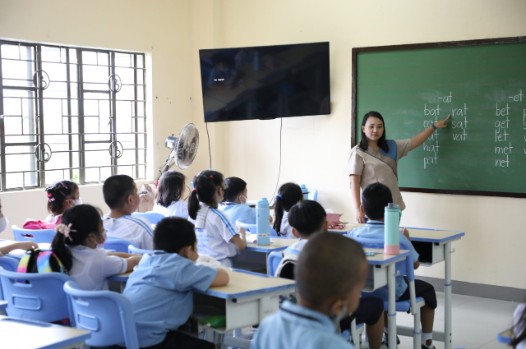
FEBRUARY 15, 2026 — The Department of Education (DepEd) has once again stirred the pot with its latest proposal: shifting the country’s academic calendar from four quarters to a trimester system starting SY 2026–2027. On paper, the idea is meant to “improve curriculum implementation, reduce teacher workload, and protect instructional time.” But teachers aren’t buying it. And frankly, neither should we, until the government can prove this isn’t just another experiment at the expense of our students.
The Alliance of Concerned Teachers (ACT) Philippines minced no words in its February 14 statement, warning that educators and learners risk being treated like “lab rats” in yet another round of trial-and-error reforms.
ACT Chairperson Ruby Bernardo bluntly said, “Kung may pag-aaral na basehan ang panukalang ito, dapat malinaw itong inilalahad at sinusuri kasama ang mga guro”
(If this proposal is based on a study, it should be clearly presented and examined together with teachers).
That’s not just a demand — it’s actually common sense. Why gamble with the future of millions of Filipino students without showing the evidence first?
DepEd Secretary Sonny Angara may have announced the plan with good intentions, but the glaring absence of clear research or consultation results raises eyebrows. ACT insists that the trimester proposal doesn’t even touch the real roots of the education crisis: overcrowded classrooms, low teacher salaries, error-filled textbooks, endless administrative work, and yes, hungry students who can barely focus on lessons.
Bernardo hit the nail on the head when she said, “Kung seryoso ang gobyerno na tugunan ang learning crisis, dapat unahin ang pagpuno sa mga kakulangang ito”
(If the government is serious about addressing the learning crisis, it must prioritize filling these gaps).
So let’s pause here. Do we really believe that changing the school calendar will magically fix decades of systemic neglect? Or is this just another shiny reform meant to distract us from the hard truths? Because if you ask teachers, the problem isn’t the calendar — it’s the conditions under which they’re forced to teach.
Operational concerns also loom large. Teachers already struggle to meet requirements under the four-quarter system. Compressing workloads into three semesters sounds less like relief and more like a recipe for burnout. And what about grading? The current system is structured around four quarters with diverse assessments.
Bernardo herself asked, “Paano iaangkop ang grading system na matagal nang nakahati sa apat, na may iba’t ibang anyo ng assessment at criteria?”
(How will the grading system, long divided into four parts with different forms of assessment and criteria, be adapted?)
That’s not a minor technicality but a fundamental disruption to how learning is measured.
ACT isn’t rejecting reform outright. They’re calling for reforms that are evidence-based, participatory, and grounded in reality. Release the studies. Consult the teachers. Fund the classrooms. Pay the educators a livable wage.
Because as Bernardo sharply put it, “Hindi kalendaryo ang ugat ng krisis sa edukasyon.”
(The school calendar is not the root of the education crisis)
And she’s right. The crisis is about resources, priorities, and political will. It’s about whether the government is willing to invest in the basics — chairs, books, food, salaries — before tinkering with schedules.
Filipinos have seen this movie before: reforms rolled out without preparation, leaving teachers scrambling and students confused. The classroom becomes a testing ground, and the casualties are real — lost learning, wasted time, and demoralized educators.
So what’s your take? Is DepEd's trimester proposal a bold step forward, or just another band-aid slapped on a bleeding wound? Because if the government keeps treating education like a laboratory experiment, then the question isn’t whether students will learn — it’s whether they’ll survive the system at all.
Are we willing to let our children’s classrooms become testing grounds for unproven experiments?
(Image: DepEd)