
Slipping through the cracks: why Tawi-Tawi’s ‘backdoor exits’ should worry us all
Marijo Farah A. Benitez • Ipinost noong 2026-02-23 19:34:26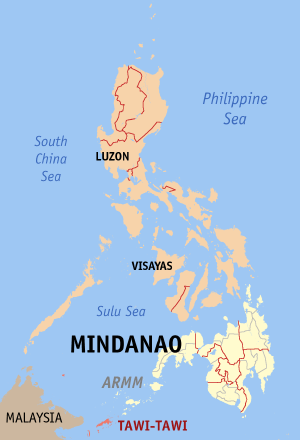
FEBRUARY 23, 2026 — The Bureau of Immigration (BI) is sounding the alarm again — this time on Tawi-Tawi, the country’s southernmost province that has quietly become a favorite escape hatch for those who want to dodge the law. BI Commissioner Joel Anthony Viado admitted during a Senate hearing that monitoring the area is a “challenge,” despite upgrades in intelligence and manpower.
His words cut straight to the point: “Internally sa Bureau of Immigration, in-upgrade po namin ang status ng Tawi-Tawi. We consider that port of entry and exit. So ibig sabihin … may intelligence na po diyan and additional manpower. But kulang pa rin po ‘yun.”
(Internally, we upgraded Tawi-Tawi’s status. We now consider it a port of entry and exit. That means we already have intelligence and additional manpower there. But it’s still not enough.)
Tawi-Tawi is not just another province — it sits just a few dozen kilometers from Sabah, Malaysia. Its Bongao seaport is a bustling hub of trade and travel, but it’s also a tempting backdoor for those who want to slip out unnoticed. And we’re not just talking about ordinary folks; senators have raised concerns that high-profile personalities — names like Alice Guo, Arnie Teves Jr., Harry Roque, and even gambling magnate Atong Ang — have allegedly used these routes to evade authorities.
Senator Sherwin Gatchalian even said, “All of the personalities are escaping the arms of the law by slipping through the backdoor.”
And this isn’t just about geography — it’s about governance.
Viado floated solutions: tighter coordination with LGUs, better internet connectivity, drones for surveillance, and even swift passport cancellations for those caught attempting illegal departures. He also pushed for stronger laws to criminalize backdoor exits, pointing out that BI has fewer than 100 regular personnel nationwide handling intelligence operations.
Imagine that — less than a hundred people tasked to guard a country of over 7,000 islands.
Recent incidents prove this isn’t theoretical. Just last week, BI operatives intercepted two Chinese nationals attempting to leave via Tawi-Tawi’s “backdoor,” underscoring how foreign nationals also exploit these weak points in our borders.
Clearly, this is not just a local headache but a national security issue.
Now, here’s where it hits home for us. Every time someone slips through these exits, it chips away at our trust in the system. It tells us that if you have money, influence, or connections, you can bend the rules and vanish. And while the BI is trying to plug the holes, the reality is that resources are thin, and the terrain is vast.
Tawi-Tawi’s waters are not just borders — they’re lifelines for communities who rely on trade and fishing. Stricter measures must balance security with livelihood, or else ordinary residents will bear the brunt of policies meant to catch the powerful.
So, what’s the takeaway? This isn’t just about catching fugitives. It’s about proving that the law applies to everyone, whether you’re a small-time traveler or a big-name politician. If backdoor exits remain open, then justice itself risks becoming optional. And that’s a dangerous precedent for any democracy.
The truth is, how can ordinary Pinoys trust the rule of law if the powerful can simply walk out the backdoor?
(Image: Wikimedia Commons)