
Marcos rolls out ₱5k fuel subsidy — quick cash but gone before the next price hike?
Marijo Farah A. Benitez • Ipinost noong 2026-03-11 17:34:19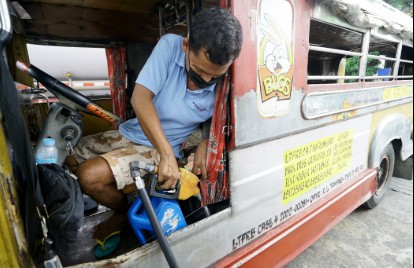
MARCH 11, 2026 — President Ferdinand “Bongbong” Marcos Jr. has ordered the release of a one-time ₱5,000 fuel subsidy for public transport drivers, a move meant to cushion the blow of rising oil prices triggered by tensions in the Middle East. Executive Secretary Ralph Recto, after meeting with Metro Manila mayors, stressed that coordination with local governments is key.
“Bilang mayors, kayo ang higit na nakakaalam sa tunay na sitwasyon at bilang ng mga tricycle at jeepney drivers sa inyong mga lungsod. Kaya mahalaga ang ating pagtutulungan,” he said.
(As mayors, you know best the real situation and the number of tricycle and jeepney drivers in your cities. That’s why cooperation is important.)
The rollout will begin next week in Metro Manila, with tricycle drivers prioritized, followed by jeepney operators, TNVS drivers, UV Express, and bus drivers. Transportation Secretary Giovanni Lopez explained that the Department of Transportation and the Department of Social Welfare and Development (DSWD) will jointly handle the distribution, backed by LTFRB’s master list of beneficiaries.
DSWD Secretary Rex Gatchalian assured that while NCR will kick things off, other regions will follow in quick succession.
“Ikikick-off lang natin sa Metro Manila pero sunod-sunod na ho 'yan, hindi 'yan magtatagal,” was his assurance.
(We’ll just kick it off in Metro Manila, but it will follow one after the other, it won’t take long.)
Metro Manila Council president and San Juan Mayor Francis Zamora welcomed the subsidy, noting that it covers not just tricycle drivers but the wider transport sector.
“Ito po ay malaking tulong po talaga sa amin … hindi lamang po ito para sa tricycle drivers, ganon din sa jeepney drivers, sa TNVS drivers, sa UV Express drivers, sa bus drivers,” he said.
(This is really a big help for us … not only for tricycle drivers, but also for jeepney drivers, TNVS drivers, UV Express drivers, and bus drivers.)
Well, ₱5,000 sounds like a decent relief, but is it really enough? With diesel prices hovering around ₱70 per liter, that subsidy barely covers a few weeks of fuel for jeepneys that run daily routes. For tricycle drivers, it might stretch a bit longer, but the reality is that this is a temporary band-aid on a recurring wound. Oil prices are volatile, and every spike sends shockwaves through the wallets of drivers and commuters alike.
The government’s quick response deserves credit, though — coordination with LGUs, master lists, and phased rollouts show a level of preparedness. But the bigger question is sustainability.
Will this subsidy be a one-off gesture, or will it evolve into a structured safety net for the transport sector? Because let’s be honest - every time global oil prices surge, Filipino drivers are left scrambling, and commuters end up shouldering fare hikes.
This move also highlights the delicate balance between national policy and local implementation. By tapping mayors and TODAs, the Palace recognizes that the success of such programs depends on grassroots coordination. Still, transparency in distribution will be crucial. Drivers need assurance that the aid won’t get lost in bureaucratic cracks or political maneuvering.
For the riding public, the subsidy is a welcome relief. If it helps keep fares stable, even temporarily, that’s a win. But we know too well that subsidies don’t last forever.
What happens when the ₱5,000 runs out? Will there be another round, or will drivers be left to fend for themselves again?
(Image: Philippine News Agency)