
Heat index hits 39°C in Iloilo — Are we facing a public health emergency in rising temperatures?
Robel A. Almoguerra • Ipinost noong 2026-03-30 21:38:43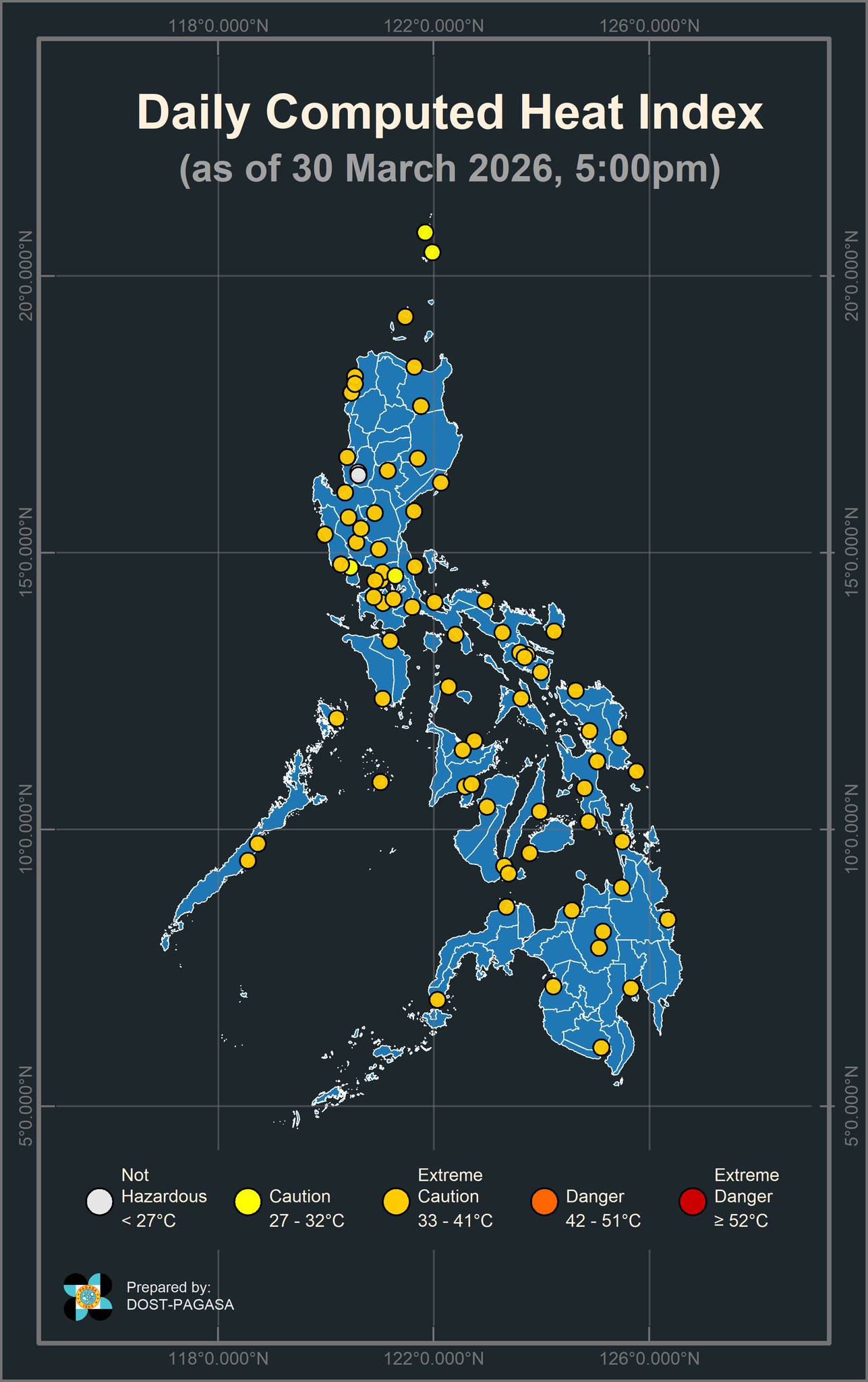
ILOILO CITY, Philippines — Residents of Iloilo City are currently enduring dangerously high heat conditions, with the heat index reaching up to 39°C as of March 30, 2026. According to PAGASA, surrounding areas have recorded even higher “feels-like” temperatures, ranging from 37°C to over 40°C, with projections suggesting it could climb as high as 46°C in the coming weeks.
The heat index, which measures how hot it feels when humidity is factored in with air temperature, has frequently entered the “extreme caution” to “danger” categories—especially between 11:00 AM and 3:00 PM. During these hours, the risk of heat exhaustion and heat stroke significantly increases, posing serious health threats to the public.
Weather patterns indicate generally sunny and windy days, but the combination of direct sunlight and humid air continues to intensify discomfort. With April and May expected to bring even higher temperatures, authorities are raising alarms about the potential escalation of heat-related illnesses.
Local advisories emphasize the importance of staying hydrated, recommending at least 10 glasses of water daily. Residents are also urged to wear light and breathable clothing, avoid prolonged exposure to direct sunlight, and monitor vulnerable individuals such as children, the elderly, and those with pre-existing health conditions.
Beyond immediate safety, this situation raises broader concerns. Is this simply a seasonal spike, or a reflection of a warming climate that is becoming increasingly difficult to ignore? The frequency and intensity of such heat conditions suggest a pattern that may require stronger long-term responses—from improved urban planning to climate adaptation strategies.
While precautionary measures can reduce immediate risks, the growing severity of heat indices points to a deeper issue that extends beyond weather forecasts.
As extreme heat becomes more frequent and intense, are we treating it as a temporary inconvenience—or recognizing it as a serious and growing public health crisis?
(Larawan mula: DOST-PAGASA)