
Palace pleads with manufacturers as price hike storm looms after April 16
Marijo Farah A. Benitez • Ipinost noong 2026-04-01 11:53:33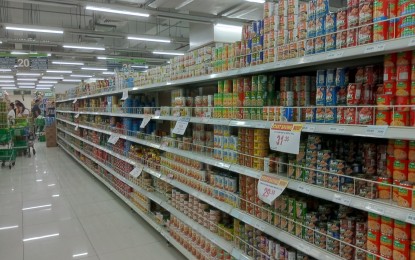
APRIL 1, 2026 — The government has assured Filipinos that prices of basic goods will remain stable until April 16, but beyond that date, increases may be inevitable. Malacañang and the Department of Trade and Industry (DTI) are now appealing to manufacturers to extend their commitment, citing global tensions — particularly in the Middle East — as a major factor that could push costs upward.
The calm before the storm?
For now, the Palace says we can breathe easy: no price hikes until April 16, 2026. Manufacturers have pledged to hold off, and Trade Secretary Cristina Roque has promised weekly monitoring to keep things in check.
But here’s the catch — after April 16, the government admits it cannot guarantee stability.
Palace Press Officer Claire Castro explained, “Nangako po ang mga manufacturers na hindi nga po magkakaroon ng price increase hanggang April 16, 2026. Pero nangako rin po si Secretary Cris Roque na weekly ay magmo-monitor po sila.”
(Manufacturers have committed not to implement any price increases until April 16, 2026. Secretary Cris Roque also assured that they will conduct weekly monitoring.)
Why the uncertainty?
The Middle East conflict is the elephant in the room.
Castro herself admitted, “May mga pagkakataon po talaga na hindi natin kakayaning pigilan dahil sa nangyayaring sigalot sa Middle East.”
(There are really instances when it may be beyond our control to prevent increases, especially due to the ongoing conflict in the Middle East.)
Global oil prices and supply chain disruptions could ripple straight into our grocery baskets. And while the government insists it will do everything possible to cushion the blow, the reality is that external shocks are hard to tame.
For ordinary households, this is about whether the next trip to the store will stretch the budget thinner. The assurance until April 16 is welcome, but it also feels like a ticking clock. After that, we may be facing the familiar cycle of rising costs, tighter belts, and louder complaints.
This situation exposes how vulnerable the Philippines remains to global shocks. Our dependence on imported fuel and raw materials means that even distant conflicts can dictate the price of sardinas, noodles, or rice here at home.
The government’s appeal to manufacturers is a band-aid solution—but the deeper issue is structural.
If we want real stability, shouldn’t we be talking about stronger local production, alternative energy sources, and better safety nets for Filipinos?
(Image: Philippine News Agency)