
Faith and filth: eco group slams pilgrims turning sacred shrines into dumping grounds
Marijo Farah A. Benitez • Ipinost noong 2026-04-06 11:50:29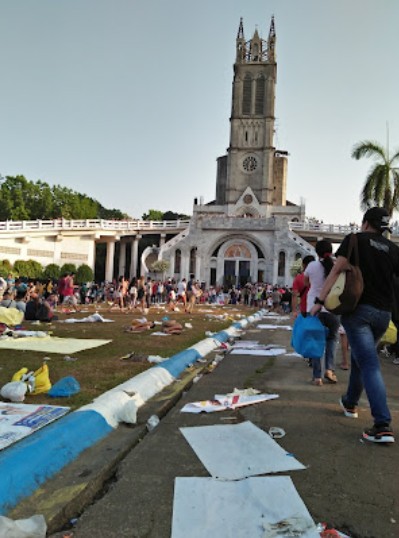
APRIL 6, 2026 — Every Holy Week, millions of Filipinos walk, kneel, and pray their way through the country’s most sacred shrines. And every year, EcoWaste Coalition finds itself repeating the same lament: the faithful leave behind not just footprints, but mountains of trash.
This year was no different. From Antipolo to Quiapo, from San Jose del Monte to Mandaluyong, the group’s “Basura Patrollers” spotted litter scattered across pilgrimage sites.
Six million devotees joined penitential walks to Antipolo City, but many left behind plastic bottles, food wrappers, and even discarded religious pamphlets. Tikling Junction became a hotspot of garbage, while the patio of Antipolo Cathedral was strewn with waste on Good Friday morning.
In Quiapo, the 13-hour procession of the Black Nazarene drew half a million devotees — and left Quezon Boulevard and Recto Avenue littered with trash.
At the Lourdes Grotto Shrine in Bulacan, pilgrims performing the Way of the Cross left overflowing bins and rubbish along Calvary Hill.
EcoWaste’s Ochie Tolentino lamented, “Despite the oft-repeated reminders to leave only footprints, rampant littering again tarnished the Holy Week as if it has become a tradition in itself.”
He added, “As old habits die hard, we urge everyone, especially our faith leaders and the faithful, to persevere in promoting shared responsibility towards ecological conversion, so we dispose of practices that disrespect and harm Mother Earth.”
The irony is hard to miss. We gather to honor Christ’s sacrifice, yet desecrate the very environment we claim to protect. Faith leaders preach humility and discipline, but the sight of garbage-strewn shrines tells another story: devotion without responsibility.
Still, there were bright spots. EcoWaste cited several churches that stood out for cleanliness, including the Cathedral-Shrine and Parish of St. Joseph in Bataan, the Minor Basilica of St. Martin of Tours in Batangas, and Santo Domingo Church in Quezon City. The Holy Spirit Chapel at the SVD Seminary in Tagaytay was singled out for strictly enforcing ecological solid waste management in line with Republic Act 9003.
These places prove that discipline and faith can coexist — and that ecological conversion is possible when leaders take it seriously.
The bigger question is cultural. Why do we treat littering as a normal part of mass gatherings? Is it laziness, lack of bins, or simply utter disregard? Filipinos are known worldwide for their religious fervor, but we’re also notorious for our plastic waste problem.
When six million pilgrims leave trash behind, it’s not just a sanitation issue — it’s a reflection of how we practice faith in public.
Local governments, church workers, and volunteers deserve credit for cleaning up after the crowds. But should they really be the ones carrying the burden of our negligence? Faith is supposed to transform us, yet our Holy Week rituals often end with garbage trucks hauling away the evidence of our indifference.
If we can walk barefoot for hours in penitence, why can’t we carry our trash until we find a bin? If we can endure the heat and crowds for devotion, why can’t we endure the discipline of ecological responsibility?
The truth is, littering during Holy Week has become a tradition in itself — a shameful one. And unless we break it, our pilgrimages will remain tainted by the very waste we leave behind.
Next Holy Week, can we prove that our faith is strong enough to keep our shrines clean? Worshipping with our hearts while trashing with our hands seems too hypocritical.
(Image: Ecowaste Coalition)