
Quezon completes child budget tracking orientation — Real protection for children or another bureaucratic exercise?
Robel A. Almoguerra • Ipinost noong 2026-04-23 21:27:16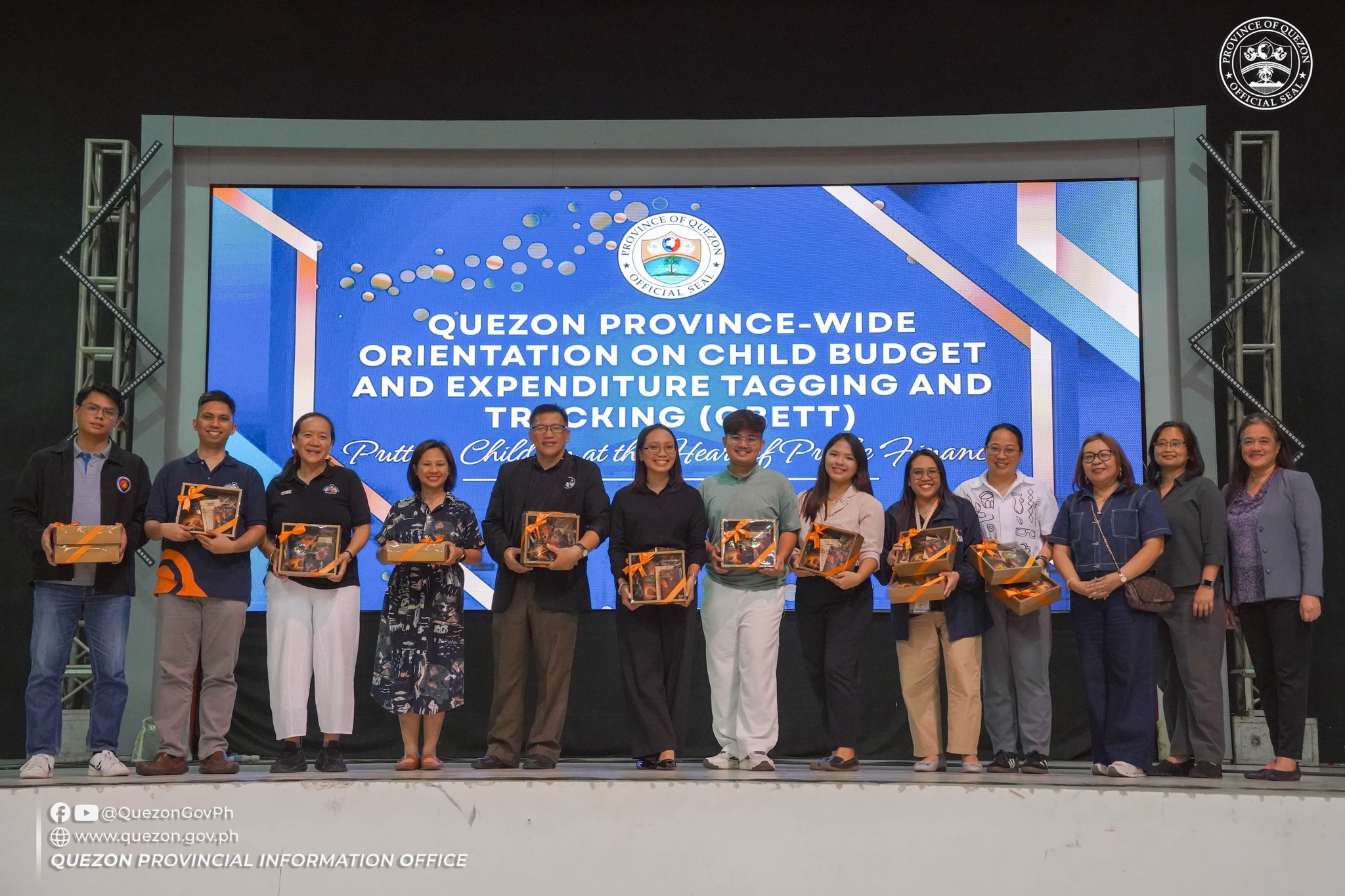
LUCENA CITY, Quezon — The final day of the Quezon Province-wide Orientation on Child Budget and Expenditure Tagging and Tracking (CBETT) was successfully held on April 22 at the Quezon Convention Center in Lucena City. The initiative aims to ensure that funds intended for children are directed to the right programs and genuinely contribute to their welfare and development.
CBETT focuses on helping local government units plan, allocate, monitor, and evaluate budgets that affect children. Topics discussed during the orientation included public finance for children, strengthening subnational child-focused budgeting systems, oversight committee roles, implementation roadmaps, local government experiences, best practices, challenges, and 2026 strategic targets.
The activity was led by the Provincial Social Welfare and Development Office under the leadership of Sonia Leyson, with participation from provincial officials and representatives from UNICEF Philippines, the Council for the Welfare of Children, and Social Watch Philippines.
At its best, child budgeting is more than accounting. It is a recognition that children often depend entirely on public systems—schools, nutrition programs, health services, child protection units, and safe communities. If budgets overlook them, the consequences may last for years.
However, programs like CBETT also face a common public challenge: translating technical workshops into visible outcomes. Citizens rarely judge success by orientations or frameworks alone. They judge it by fewer malnourished children, safer schools, better health access, stronger anti-abuse systems, and real support for vulnerable families.
Budget tagging can improve transparency and accountability, but only if data is accurate and spending is followed by results. Otherwise, it risks becoming another administrative label without measurable change.
Still, the focus itself matters. When governments intentionally track spending for children, it signals that youth welfare is not an afterthought but a budget priority.
When officials improve systems for child-focused spending, does progress begin in planning rooms—or only when children’s lives visibly improve in their communities?
(Larawan mula: Provincial Government of Quezon / Facebook)