
‘You shouldn’t be there in the first place’ — Teodoro’s sharp words stir debate after Negros clash
Marijo Farah A. Benitez • Ipinost noong 2026-04-23 16:36:35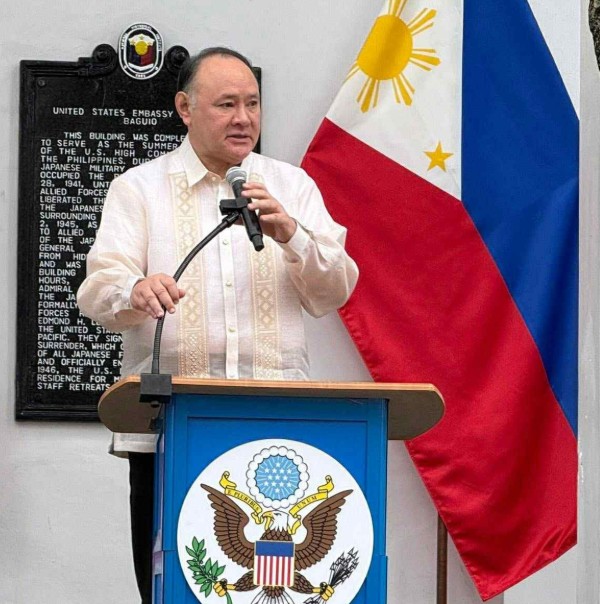
APRIL 23, 2026 — Defense Secretary Gilberto Teodoro Jr.’s blunt words — “You shouldn’t be there in the first place” — has become the lightning rod in the fiery aftermath of the April 19 clash in Toboso, Negros Occidental, where 19 people were killed. The military insists they were all armed members of the New People’s Army (NPA). Families, student groups, and rights advocates say some were civilians: a journalist, a student leader, and social workers.
The clash has now exploded into a national debate about truth, accountability, and the blurred line between insurgency and civilian life.
The battle began before dawn in Barangay Salamanca. Troops from the 79th Infantry “Masaligan” Battalion moved in after reports of armed men in the area. What followed was a 12‑hour firefight that forced more than 600 residents from Toboso and 200 from nearby Escalante to flee.
By nightfall, 19 were dead, 24 firearms were seized, and the Army declared a major blow against the NPA’s Northern Negros Front.
But among the dead were names that didn’t fit the rebel mold. RJ Nichole Ledesma, regional coordinator of Altermidya, was said to be documenting farmer struggles against renewable energy projects. Alyssa Alano, a UP Diliman student council officer, was reportedly in Negros to learn about farming communities.
Their deaths ignited outrage online and on campuses, with groups accusing the military of human rights violations.
The military’s defense
The Armed Forces pushed back hard.
“Bakit sila nasa mismong encounter site, armado, at nakikipagbarilan sa mga sundalo?” the Army asked in a statement.
(Why were they at the encounter site, armed, and exchanging fire with soldiers?)
Teodoro echoed the same line: “Eh kung nasa engkwentro talaga kasama ng armado, eh di talagang madadamay. Anong ginagawa ng estudyante doon — kung estudyante man talaga iyon sa engkwentro? Bakit kasama ng NPA?”
(If they were really in that encounter with armed men, then of course they would be involved. What was a student doing there — if that was really a student — in the encounter? Why were they with the NPA?)
He added, “Whether or not NPA ‘yun, sa engkwentro, you shouldn’t be there in the first place.”
For the AFP, the operation was legitimate, carried out under rules of engagement and international humanitarian law.
Army spokesperson Col. Louie Dema‑ala added, “Kung sinasabi nilang mga estudyante lang sila doon, ano ang ginagawa nila sa encounter site na may hawak na baril at makipagbarilan sa ating mga sundalo?”
(If they claim those were just students, then why were they at the encounter site holding guns and exchanging fire with our soldiers?)
Grief, outrage, and unanswered questions
Altermidya insists Ledesma was killed away from the clash site. Student groups say Alano was unarmed and doing immersion work. Families demand independent investigations.
Meanwhile, the military warns against “trial by social media,” saying complex security incidents shouldn’t be oversimplified.
San Carlos Bishop Gerardo Alminaza weighed in saying, “Violence does not arise in a vacuum. It takes root where poverty persists, where injustice is endured, where trust between people and institutions has been broken.”
His words cut to the heart of Negros, a province long scarred by insurgency and counterinsurgency.
This clash is more than a firefight — it’s a mirror of the country’s unresolved tensions. On one side, the state claims victory against armed rebels. On the other, communities mourn what they see as the silencing of young voices and grassroots workers.
Was this truly a triumph against insurgency, or another tragedy where the line between civilian and combatant was erased in gunfire?
How many more young and innocent lives must be lost before we confront the deeper wounds of poverty, injustice, and broken trust that seem to fuel this endless war?
(Image: Philippine Information Agency)