
DAR launches climate-resilient program for farmers — But is it enough for the crisis ahead?
Robel A. Almoguerra • Ipinost noong 2026-04-28 23:51:24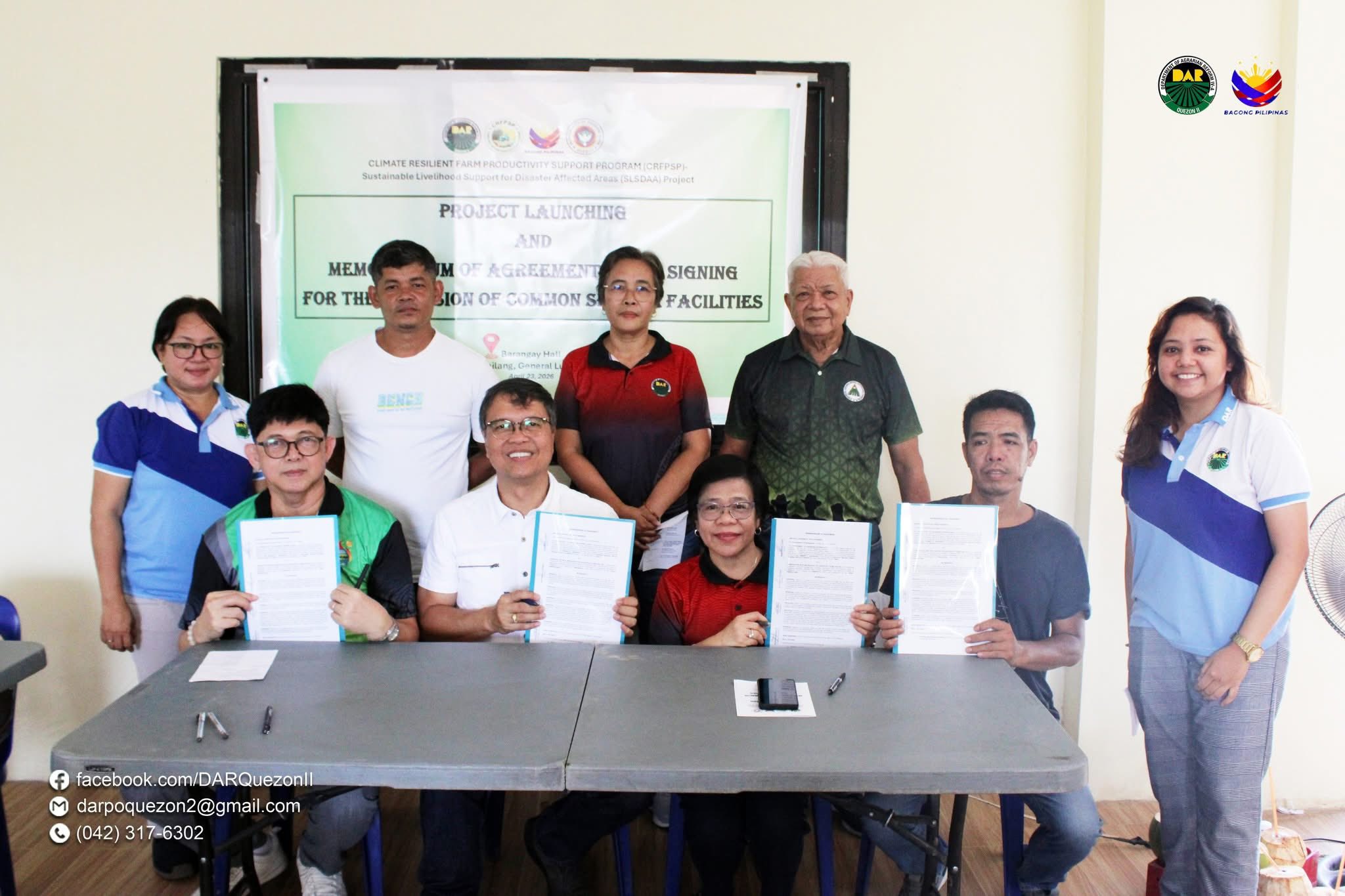
APRIL 28, 2026 — The Department of Agrarian Reform (DAR) Quezon II Provincial Office has officially launched a climate-resilient livelihood program aimed at helping farmers in General Luna adapt to worsening environmental challenges. On April 23, the Climate Resilient Farm Productivity Support Program – Sustainable Livelihood Support for Disaster Affected Areas (CRFPSP-SLSDAA) was introduced for members of the Samahan ng Magsasaka ng Barangay Sumilang (SAMAKALANG) Inc.
The initiative seeks to strengthen the ability of Agrarian Reform Beneficiaries (ARBs) to face the growing effects of climate change through modern farming methods, practical training, and strategies focused on adaptation, mitigation, and gender-responsive agricultural solutions.
A Memorandum of Agreement was signed among DAR Quezon II, led by OIC-PARPO II Ma. Gemma Esguerra, the Local Government of General Luna under Mayor Jose Stevenson Sangalang, and SAMAKALANG represented by President Noli Padilla. Under the agreement, DAR will oversee the project implementation while the local government will provide institutional support.
As part of the program, SAMAKALANG members will undergo lectures and hands-on training on modern agricultural technologies and climate-smart farming practices. The organization will also receive around ₱300,000 worth of farm machinery and equipment to improve productivity and income.
This development reflects a growing reality: climate change is no longer a future concern—it is already reshaping the lives of Filipino farmers today. Droughts, unpredictable rainfall, and extreme heat have become economic threats, especially for communities dependent on agriculture.
Programs like this are encouraging because they focus not only on relief after disasters, but preparation before the next one arrives. That shift in mindset matters. Instead of treating farmers as victims waiting for aid, it empowers them as producers capable of resilience.
Still, one important question remains: if climate-resilient farming is clearly necessary, why are such programs still limited to only a few organizations while thousands of farmers continue to struggle?
(Larawan mula: DAR Quezon II / Facebook)