
Metro Manila air poisoned: study finds toxic lead persists, children most at risk
Marijo Farah A. Benitez • Ipinost noong 2026-05-01 18:56:53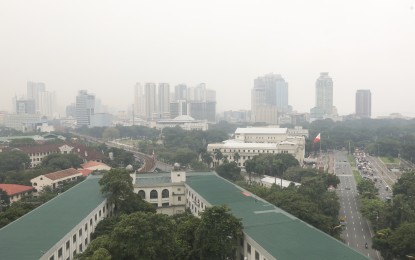
MAY 1, 2026 — Toxic lead continues to linger in Metro Manila’s air, with new research showing that industrial activities and fossil fuel combustion now drive pollution decades after the phaseout of leaded gasoline. Experts warn that children and vulnerable communities remain at risk, while the Philippines has not updated its national monitoring in nearly 20 years.
An international team of researchers, including scientists from Ateneo de Manila University’s Department of Physics and the Manila Observatory, has confirmed that toxic lead persists in Metro Manila’s atmosphere. Using lead isotope fingerprinting on aerosol samples from 2018–2019, the study found that despite the global ban on leaded gasoline, the capital’s air remains contaminated.
Industrial processes such as e-waste recycling and smelting contribute 45–62% of atmospheric lead, while fossil fuel use — including diesel and trace elements in unleaded gasoline — adds another 30–45%.
“There are now contemporary sources of lead, mainly from industrial activities such as e-waste processing and fossil fuel combustion such as from diesel use and unleaded gasoline combustion. Indeed, trace amounts of lead may still come from unleaded gasoline,” said Ateneo physics professor Maria Obiminda Cambaliza.
Lead is concentrated in fine particulate matter (PM2.5), which penetrates deep into the lungs and bloodstream. The danger is especially severe for children, who face risks of lasting developmental and neurological harm. Globally, one in three children already has elevated blood lead levels, yet the Philippines has not updated its national monitoring system in nearly two decades.
The study also warns that rising global oil prices could worsen the situation by delaying the transition to clean energy, discouraging proper vehicle maintenance, and increasing exposure to toxic emissions. Metro Manila’s pollution is largely local and persistent year-round, unaffected by seasonal wind shifts — meaning residents breathe this toxic mix daily.
This revelation is sobering. For many Filipinos, pollution is already part of everyday life — jeepney drivers navigating smoky roads, street vendors inhaling fumes, and children walking to school under a haze. The persistence of lead in our air shows how urban growth and industrial activity embed toxic emissions into the very fabric of daily living.
The Philippines once celebrated the phaseout of leaded gasoline as a public health victory. But without updated monitoring and stronger environmental policies, those gains are at risk of being undone.
This is not just about science — it’s about accountability, governance, and the right of every Filipino to breathe clean air.
With every breath carrying hidden poison, how much longer can we afford to ignore what’s in the air? And if the gains of the past are apparently slipping away, will we really let toxic lead rewrite the future of our children?
(Image: Philippine News Agency)