
Trump’s billion-dollar bid for Greenland: Can you really buy a nation?
Marijo Farah A. Benitez • Ipinost noong 2026-01-09 13:02:31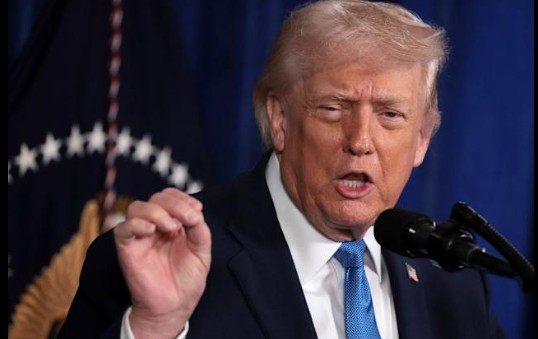
JANUARY 9, 2026 — Can the freedom of a nation be bought? That’s the question now swirling around Washington after reports revealed that US officials under President Donald Trump have floated the idea of paying Greenlanders lump sums — anywhere from $10,000 to $100,000 each — to convince them to break away from Denmark and potentially join the United States.
Imagine that: a population of just 57,000 people, offered billions of dollars collectively, in exchange for their sovereignty.
Greenland’s Prime Minister Jens-Frederik Nielsen minced no words: “Enough is enough ... No more fantasies about annexation.”
His frustration reflects the sentiment of many Greenlanders who, while open to independence from Denmark, are not keen on becoming part of the US.
Money talks, sovereignty walks
Doesn’t this sound eerily familiar to us in the Philippines? How often have we seen powerful nations dangle money, aid, or military support to sway smaller countries into their orbit? Whether it’s infrastructure loans, military agreements, or trade deals, the underlying message is the same: money talks, sovereignty walks.
Trump’s argument is straightforward: Greenland is rich in minerals vital for advanced military applications, and its location is “so strategic.”
He even told reporters aboard Air Force One, “We need Greenland from the standpoint of national security, and Denmark isn’t going to be able to do it.”
The US, he insists, must expand its geopolitical influence in the Western Hemisphere.
But Europe isn’t buying it. France, Germany, Italy, Poland, Spain, Britain, and Denmark issued a joint statement this week, stressing that only Greenland and Denmark can decide their future. NATO allies are clearly uncomfortable with Washington’s transactional approach.
And transactional it is. Think about it: $100,000 per person. That’s roughly ₱5.6 million each. Who wouldn’t be tempted, right?
But what does it mean for identity, culture, and self-determination? Can a nation’s soul be priced like a commodity?
For Filipinos, this raises uncomfortable questions. If a superpower offered every Filipino a lump sum to change allegiance, would we take it? Would we trade our national identity for a quick payday? Or would we, like Greenland’s leaders, say “Enough is enough”?
The US has used similar tactics before. The Compact of Free Association (COFA) agreements with Micronesia, the Marshall Islands, and Palau essentially gave Washington military access in exchange for financial support and services.
Greenland, however, is not an independent country — it’s a territory of Denmark. For Trump’s plan to work, Greenland would first need to secede.
Also, payments could be used to push voters toward independence, but surveys show most Greenlanders don’t want to be part of the US.
Trump’s administration reportedly gained confidence after its daring capture of Venezuelan leader Nicolas Maduro last weekend. Sources say aides are eager to ride that momentum toward other geopolitical goals, Greenland included.
Does freedom come with a price tag?
Filipinos don’t need a history book to know how heavy foreign influence can be. From colonizers of the past to today’s global powers, we’ve seen time and again how outsiders try to steer our future.
That’s why this Greenland story hits close to home. It’s a reminder that freedom isn’t something you can just slap a price tag on — whether through aid, loans, or outright cash.
Sure, money talks. But really, does Trump think people will just grab the cash, nod along, and hand over their homeland like it’s a bargain sale?
A nation’s freedom is never for sale, no matter how high the bid.
But let’s flip the scenario. If someone waved millions in your face, would you walk away from your own country just to wear another nation’s flag?
(Image: Yahoo! Finance Canada)