
Venezuela defies Trump: no foreign power runs our country — Are we as gutsy?
Marijo Farah A. Benitez • Ipinost noong 2026-01-07 19:36:10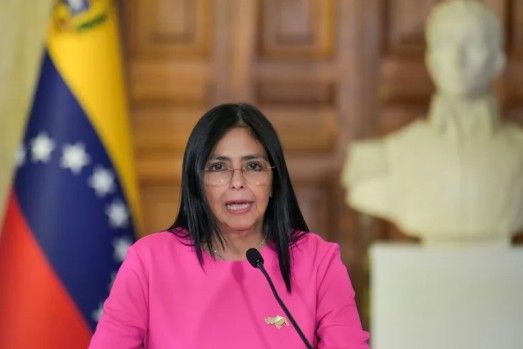
JANUARY 7, 2026 — When Venezuela’s interim leader Delcy Rodriguez stood before her people and declared, “The government of Venezuela is in charge in our country, and no-one else. There is no foreign agent governing Venezuela,” it was more than just a defiant statement. It was a rallying cry for sovereignty, a reminder that even smaller nations have the right to resist the heavy hand of global powers.
Contrast that with Donald Trump’s blunt announcement that Venezuela “will be turning over between 30 and 50 MILLION Barrels of High Quality, Sanctioned Oil” to the United States, with profits “controlled by me.” The audacity is staggering. Here we see a superpower openly dictating terms, treating another nation’s resources as if they were already in its pocket.
Rodriguez’s stance — “We are a people that does not surrender, we are a people that does not give up” — resonates far beyond Caracas. It echoes in Manila, Cebu, Davao, and every corner of the Philippines where ordinary citizens know too well the feeling of being caught between the interests of bigger nations.
Sovereignty versus bullying
Trump’s words are not just about oil. They set a dangerous precedent. If one powerful country can openly seize another’s resources under the guise of “cooperation,” what stops them from doing the same elsewhere? What stops them from eyeing the West Philippine Sea, or dictating terms to nations like ours that are rich in natural resources but politically vulnerable?
Venezuela’s refusal to bow down is a reminder that sovereignty is not negotiable. It’s not a bargaining chip to be traded for temporary relief or promises of aid. It’s the backbone of a nation’s dignity.
The Filipino parallel
Here in the Philippines, we’ve seen how foreign powers flex their muscles — whether in military presence, trade agreements, or territorial disputes. The question is, do we have the same courage to say “no foreign power runs our country”? Or are we too quick to bend, too eager to appease, too afraid to stand firm?
Rodriguez’s defiance should spark a conversation among Filipinos: How much control do we really have over our own destiny? When foreign ships patrol our waters, when foreign investors dictate the terms of our industries, when foreign governments pressure us on policy — are we truly free?
The human cost
Let’s not forget the price Venezuela is paying. Twenty-three troops, including five generals, were killed in US strikes. Havana confirmed 32 Cuban military personnel dead. Dozens of civilians also lost their lives.
Sovereignty comes at a cost, and Venezuela is mourning its martyrs.
But even as Maduro’s downfall is celebrated by some, fear of repression keeps many Venezuelans silent. The interim government faces challenges, hardliners still hold sway, and journalists continue to be detained.
Yet amid all this, the message remains clear — Venezuela refuses to surrender its identity to Trump’s agenda.
Why this matters to us
Filipinos should pay attention. This is not just Venezuela’s fight but a global struggle between smaller nations and the bullying tactics of superpowers.
If Venezuela can stand up and say “no,” why can’t we? Why do we hesitate to assert our rights in the West Philippine Sea? Why do we allow foreign interests to dictate the pace of our development?
Rodriguez’s words should embolden us. They should remind us that sovereignty is not just a legal concept but a lived reality. It’s about who controls our land, our seas, our resources, and ultimately, our future.
When push comes to shove, can we do the same when our own sovereignty is on the line?
(Image: Yahoo)