
Four moons over St. Petersburg?
Robel A. Almoguerra • Ipinost noong 2026-02-02 22:41:41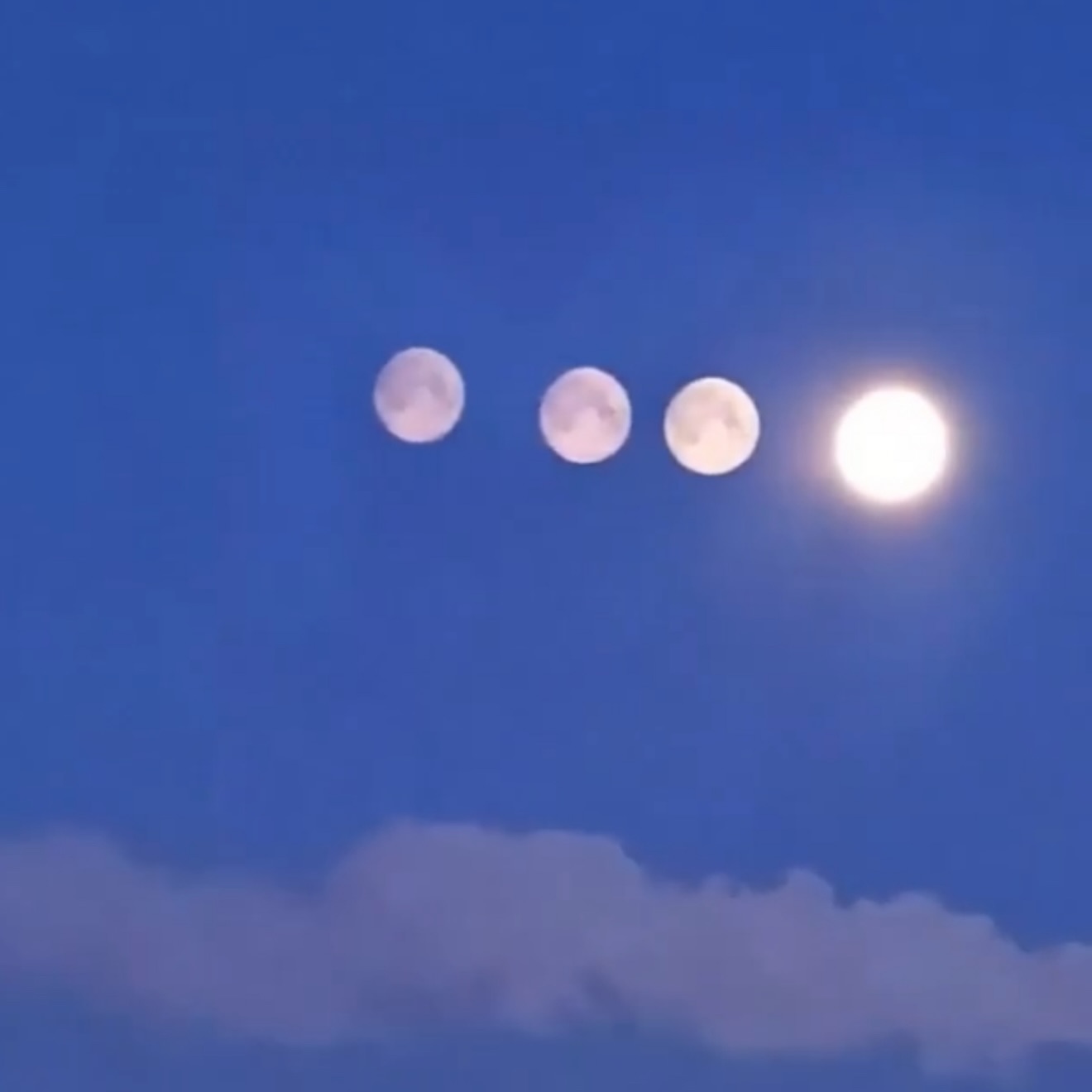
ST. PETERSBURG, Russia — Residents of St. Petersburg, Russia were left in awe on the night of February 1 after an unusual celestial sight appeared to show four moons glowing simultaneously in the sky. Photos and videos of the phenomenon quickly spread across social media, drawing amazement, confusion, and speculation from netizens around the world.
Experts were quick to clarify that the rare-looking event was not astronomical in origin, but rather an atmospheric optical illusion known as paraselene, more commonly referred to as a “mock moon.” This phenomenon occurs when moonlight is refracted by tiny ice crystals suspended in high-altitude clouds. As the light bends, it creates bright reflections or halos on either side of the real moon, giving the illusion of multiple moons appearing at once.
Meteorologists explained that paraselene is more commonly observed in regions with cold climates, such as Russia, particularly during winter months when ice crystals are abundant in the atmosphere. Similar to the more familiar “sun dog,” where the sun appears to have glowing companions, paraselene simply replaces the sun with the moon as the light source.
While scientists emphasized that there is only one true moon, the event captured public imagination and reignited interest in natural sky phenomena. Many residents paused to document the moment, while online audiences reacted with fascination, humor, and, in some cases, wild theories. The rapid spread of the images highlights how easily rare but natural events can blur the line between science and speculation in the digital age.
Beyond the spectacle, the incident underscores the importance of scientific literacy and responsible sharing of information. Extraordinary sights often invite extraordinary claims, but understanding the science behind them allows people to appreciate their beauty without drifting into misinformation.
As stunning images of “four moons” continue to circulate, one question lingers in the public discourse: in an era of viral visuals and instant reactions, are we more captivated by the mystery of nature—or by the stories we create around what we don’t immediately understand? (Larawan mula sa: Thread)