
Red skies over Western Australia — A natural phenomenon or a warning sign of a changing climate?
Robel A. Almoguerra • Ipinost noong 2026-03-28 20:35:16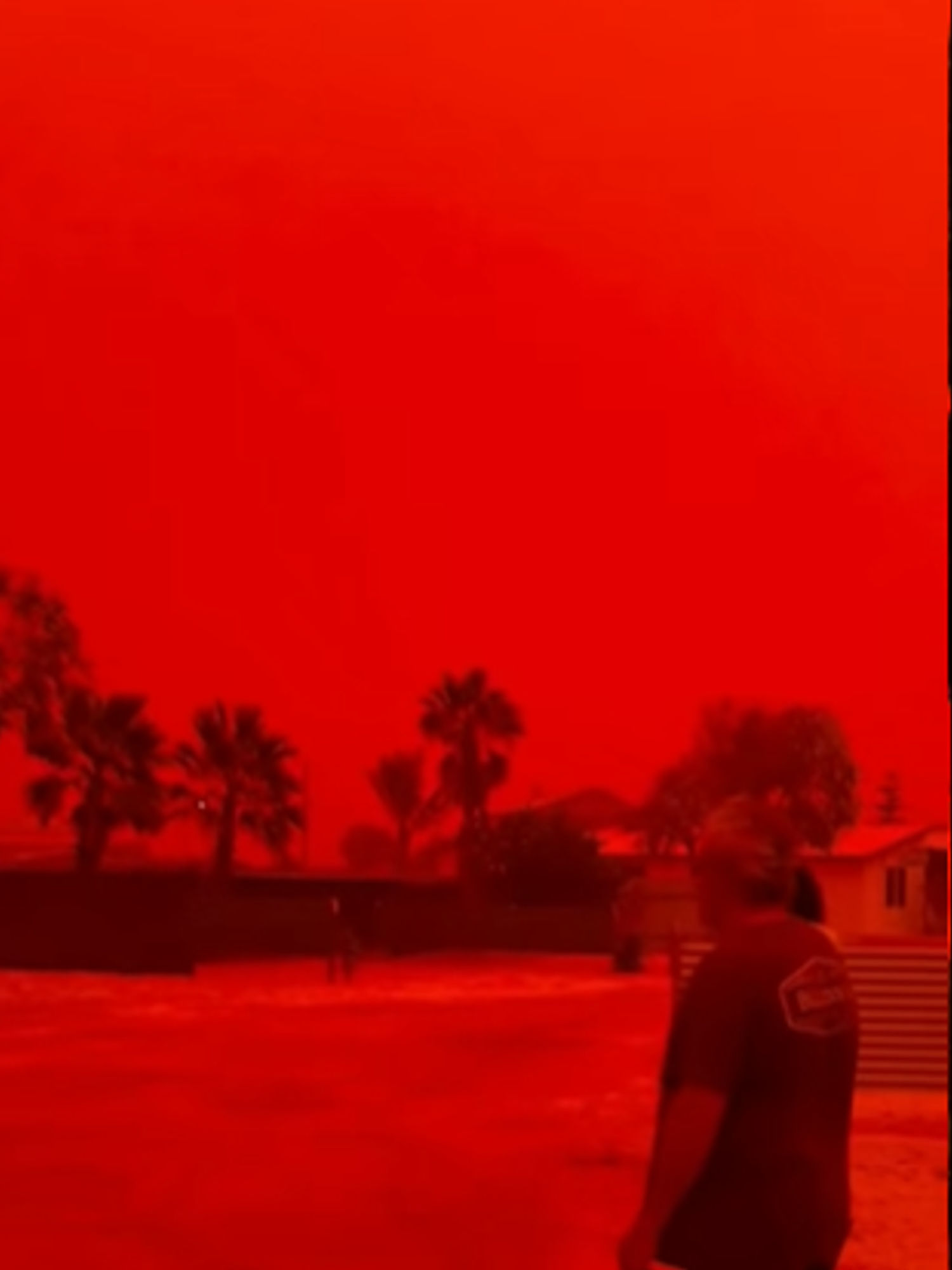
WESTERN AUSTRALIA — Residents in parts of Western Australia witnessed an eerie transformation of the sky as thick red haze engulfed towns following the landward movement of Tropical Cyclone Narelle on March 27, 2026.
According to reports from The New Daily, areas such as Carnarvon and Shark Bay appeared almost “apocalyptic” as the sky turned shades of red and orange. The unusual दृश्य was caused by powerful winds lifting massive amounts of fine dust from the region’s dry terrain and suspending it in the atmosphere.
This phenomenon, while visually striking, is rooted in atmospheric science. When dust particles fill the air, they scatter sunlight differently—filtering out shorter wavelengths like blue and allowing longer wavelengths such as red and orange to dominate. The result is a dramatic shift in sky color that can make entire landscapes appear surreal and otherworldly.
However, beyond its scientific explanation, the event raises broader environmental questions. Extreme weather systems like tropical cyclones interacting with increasingly dry land conditions may intensify such occurrences. The combination of strong winds and parched soil creates the perfect conditions for large-scale dust events, which can also affect air quality, visibility, and public health.
While no immediate casualties were reported, the incident serves as a reminder of how dynamic and sometimes unpredictable natural systems can be. It also reflects how environmental changes—whether seasonal or long-term—can amplify the intensity and frequency of unusual weather phenomena.
As images of red skies circulate and captivate global attention, one thought lingers: Are these rare spectacles simply natural occurrences, or are they subtle signals of a planet undergoing deeper environmental shifts?
(Larawan mula: The New Daily)