
Iran won’t budge on reopening Hormuz, accuses US of ‘blatant violation of the ceasefire’
Marijo Farah A. Benitez • Ipinost noong 2026-04-23 08:27:59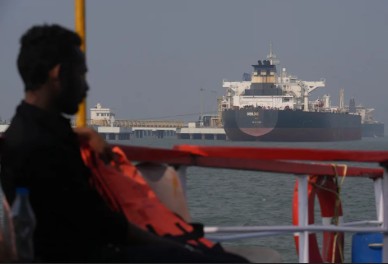
APRIL 23, 2026 — Iran has slammed the door shut on the Strait of Hormuz once again, refusing to reopen the vital waterway until the US lifts its naval blockade. The move has already rattled global oil markets, and for us Filipinos, it signals another looming wave of fuel price hikes and inflation headaches.
On Wednesday, Iran’s Revolutionary Guards announced they had seized two container ships — the Panama-flagged MSC Francesca and the Liberia-flagged Epaminondas — after accusing them of violating restrictions in the Strait of Hormuz. A third vessel, the Panama-flagged Euphoria, was also fired upon and stopped.
UK maritime monitors confirmed gunboat attacks on commercial vessels northeast of Oman, damaging one ship’s bridge but causing no casualties.
Iran’s parliament speaker Mohammad Bagher Ghalibaf was blunt in saying, “Reopening the Strait of Hormuz is not possible amid a blatant violation of the ceasefire.”
For Tehran, the blockade is proof that Washington is undermining the truce, and closing the strait is its trump card.
Washington’s blockade and Trump's defiance
US President Donald Trump has doubled down, insisting the blockade “will remain in full force” until Iran agrees to a deal. He dismissed Tehran’s tactics as “blackmail” and claimed that peace talks were still possible, with Pakistani mediators working to arrange another round within days. Trump even told the New York Post via text message, “It’s possible!” when asked about the likelihood of renewed negotiations.
But Iran isn’t budging. Its new supreme leader, Ayatollah Mojtaba Khamenei, declared the navy stands “ready to inflict bitter defeats on its enemies.”
Pakistan steps in, but talks stall
Pakistan has tried to play peacemaker, with Foreign Minister Ishaq Dar saying his country is working to “bridge differences.” Yet Iran’s deputy foreign minister Saeed Khatibzadeh accused the US of “risking the global economy through miscalculations.”
Meanwhile, the war has already spilled into Lebanon, where Israeli strikes killed four people this week, and French officials confirmed the death of a second soldier in an ambush against UN peacekeepers.
The conflict is widening, and Hormuz remains the flashpoint.
Here in the Philippines, the Strait of Hormuz may feel far away, but its closure hits us directly. Remember: one-fifth of the world’s oil passes through that narrow waterway. Every time Iran shuts it down, global supply tightens, prices surge, and countries like ours — already struggling with high fuel costs — feel the squeeze.
Jeepney drivers, delivery riders, and commuters will be the first to absorb the shock. Higher fares, pricier goods, and another round of inflation could follow.
Think about it: the war began on February 28, and since then, thousands have died across Iran, Lebanon, Israel, and the Gulf states. Yet here in the Philippines, the ripple effect shows up in our gas stations and grocery bills. Ordinary Pinoys, who have no stake in this geopolitical tug-of-war, end up paying the price.
What strikes me most is how leaders treat oil routes like bargaining chips, while ordinary people — from Tehran to Manila — are left to shoulder the consequences. Iran insists it won’t reopen Hormuz until the blockade ends. The US insists the blockade stays until Iran bends. Both sides are locked in a dangerous game of chicken, and the rest of the world is stuck in the middle.
The Strait of Hormuz is more than a distant headline — it’s a reminder that global conflicts don’t stay “out there.” They ripple into our jeepney fares, our grocery bills, and our national mood.
Can we still keep absorbing the costs of wars we didn’t start, fought in straits we’ll probably never see?
(Image: Yahoo)