
With the 2026 Barangay and SK elections timeline set, are Filipinos ready for grassroots democracy to be tested again?
Robel A. Almoguerra • Ipinost noong 2026-01-30 23:46:23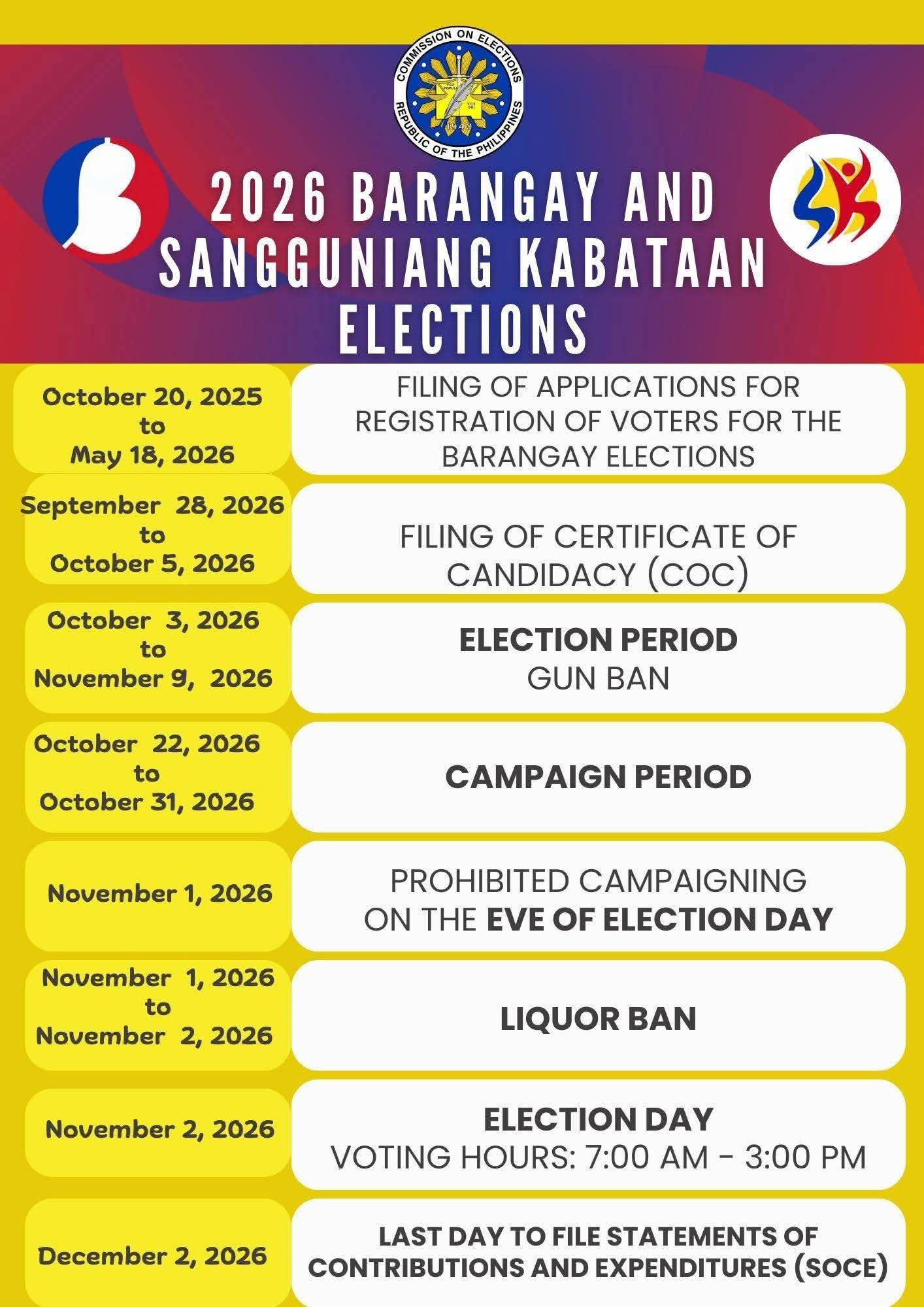
MANILA, Philippines — The Commission on Elections (COMELEC) has officially released the full schedule for the 2026 Barangay and Sangguniang Kabataan (SK) Elections, laying down the critical dates that will shape the country’s most localized yet most personal democratic exercise. From voter registration to campaign periods and election day itself, the timeline signals the formal start of political activity at the community level.
According to COMELEC, voter registration for the barangay elections runs from October 20, 2025, to May 18, 2026—giving Filipinos ample time to ensure their participation in choosing leaders closest to their daily lives. The filing of Certificates of Candidacy is set from September 28 to October 5, 2026, followed closely by the official election period from October 3 to November 9, which includes the implementation of the nationwide gun ban.
Campaigning will be allowed from October 22 to October 31, with November 1 declared as a strict no-campaign day. A liquor ban will be enforced from November 1 to November 2, while election day itself is scheduled for November 2, 2026, with voting hours from 7:00 a.m. to 3:00 p.m. Candidates will then have until December 2, 2026, to submit their Statements of Contributions and Expenditures (SOCE).
Beyond the dates and deadlines, the announcement highlights the enduring importance of barangay and SK elections in shaping governance at the grassroots. Barangay officials and youth leaders are often the first responders to community concerns—from peace and order to disaster response and social services. Yet these elections are also frequently marred by allegations of vote-buying, political dynasties, and apathy among voters.
The structured timeline offers an opportunity not just for orderly elections, but for renewed public engagement. It challenges both citizens and institutions to prove that democracy does not begin and end at the national level, but thrives—or fails—within neighborhoods and youth councils. As the countdown begins, the question remains: will the 2026 Barangay and SK Elections strengthen genuine community leadership, or will they once again expose the deep-rooted problems of local politics? (Larawan mula sa: Commission on Elections (COMELEC) / Facebook)