
PCG investigates boat operator over illegal Taal Volcano entry — How did foreign tourists enter the PDZ of Taal Volcano?
Robel A. Almoguerra • Ipinost noong 2026-02-09 22:55:36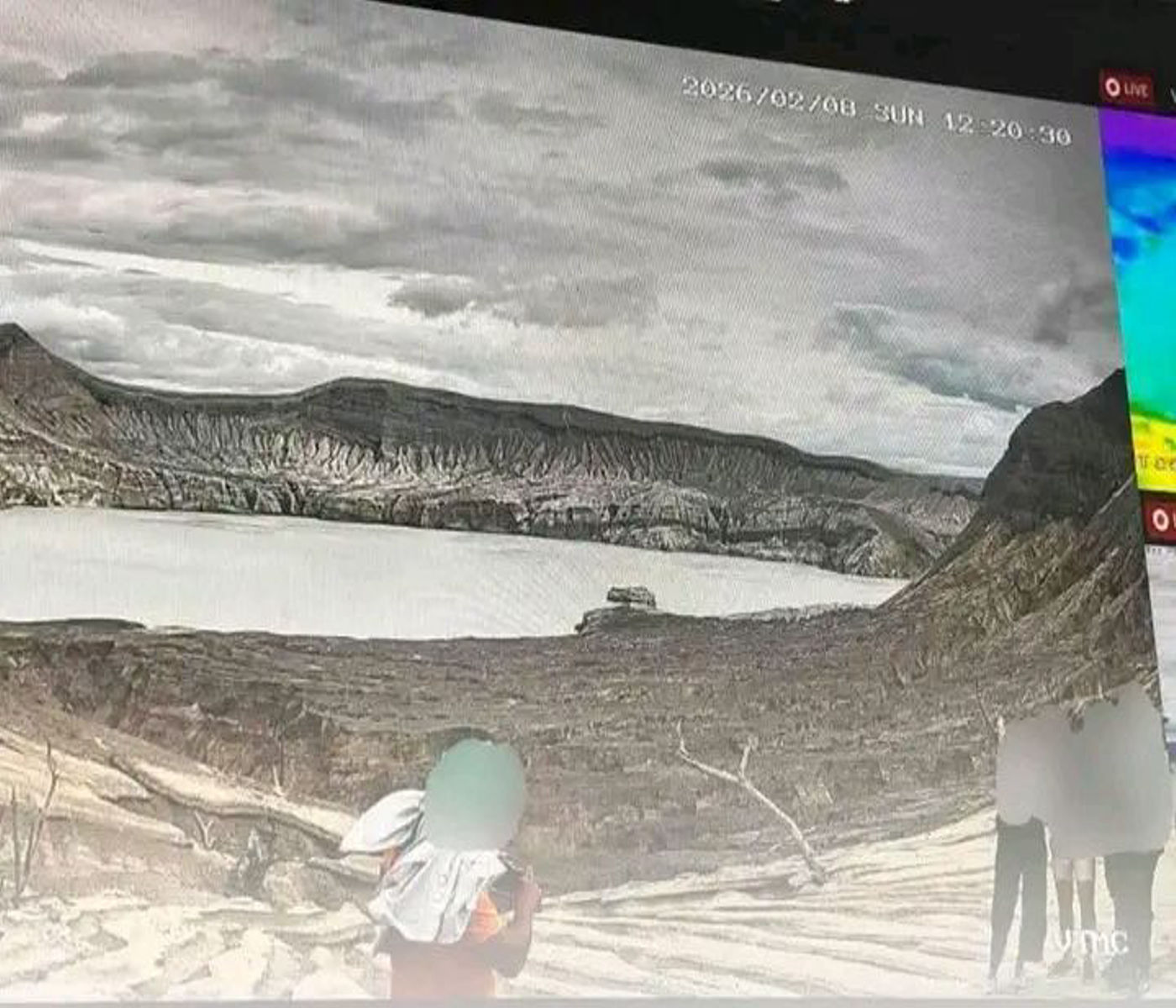
TAAL, Batangas — The Philippine Coast Guard (PCG) has launched an investigation after four foreign tourists were caught illegally entering the Permanent Danger Zone (PDZ) of Taal Volcano on Sunday, February 8, 2026—an area strictly off-limits due to its high risk of sudden volcanic activity. According to the PCG District Southern Tagalog, the tourists were spotted near the crater itself, as captured on CCTV footage around midday. Authorities later traced the group back to a motorbanca that reportedly ferried them into the prohibited zone.
The boat owner and operator were immediately identified and interviewed. They claimed they were unaware that entry into the area was strictly forbidden, insisting that the tourists merely wanted to take photos and videos of the volcano. While ignorance may explain the action, it does not excuse the danger posed—not only to the tourists themselves but also to potential rescuers who could be forced into harm’s way should an emergency occur.
Taal Volcano is one of the most active volcanoes in the country, with a history of sudden eruptions and toxic gas emissions. The establishment of a Permanent Danger Zone was meant to prevent loss of life, following hard lessons from previous volcanic events. This incident, however, raises serious questions about the enforcement of safety regulations, the accountability of local boat operators, and the role of tourism in high-risk natural areas.
Beyond being a simple case of rule-breaking, the situation highlights a deeper issue: are safety warnings being communicated clearly and enforced consistently? And as tourism rebounds, are economic pressures causing some to gamble with public safety?
The PCG reiterated its warning that civilians—locals and foreigners alike—are strictly prohibited from entering the PDZ for their own protection. Yet incidents like this suggest that rules alone are not enough without strong enforcement and shared responsibility.
In a country prone to natural disasters, where one wrong decision can cost lives, the question remains: who must be held accountable to ensure that safety zones are respected—before tragedy strikes? (Larawan mula sa: Philippine Coast Guard District Southern Tagalog / Facebook)