
Aftermarket mufflers and the law — If a motorcycle passes the noise test, why can it still be penalized?
Robel A. Almoguerra • Ipinost noong 2026-03-05 22:44:53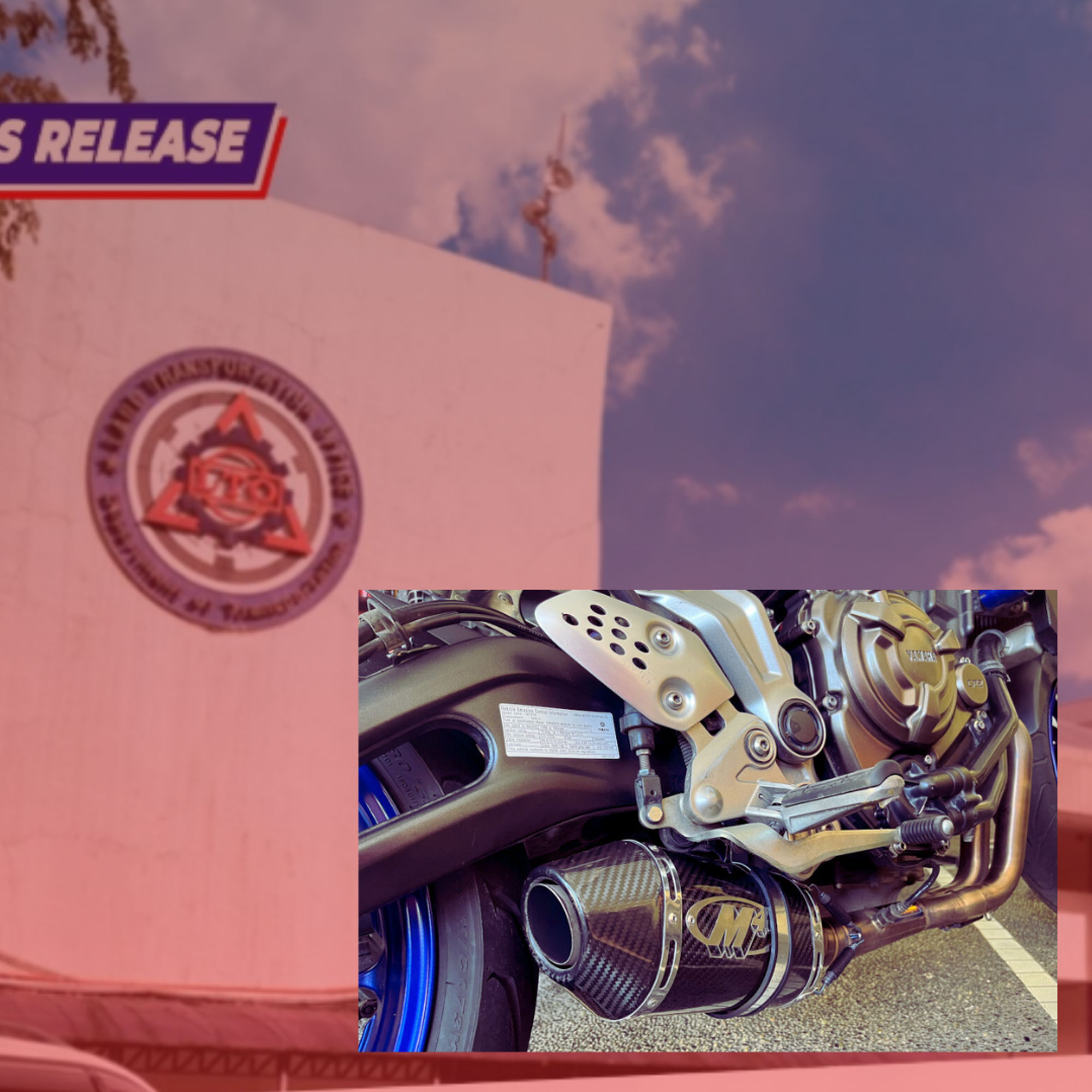
MANILA, Philippines — The Land Transportation Office (LTO) has released a clarification addressing growing confusion among motorcycle owners regarding the legality of aftermarket mufflers and the role of vehicle inspections conducted by Private Motor Vehicle Inspection Centers (PMVICs).
The statement comes after persistent questions from the riding community about whether passing a sound level test during vehicle inspection automatically means that an aftermarket muffler is legal. According to the LTO, this is a common misconception.
Under the agency’s Memorandum Circular No. 2020-2240, PMVICs are mandated to conduct sound level testing as part of the vehicle inspection process, ensuring that motorcycle exhaust noise does not exceed the allowable limit of 99 decibels. However, the LTO clarified that passing this test only confirms that the vehicle’s noise emissions fall within acceptable limits—it does not serve as legal approval for the use of aftermarket mufflers.
The LTO explained that PMVICs are responsible only for checking the roadworthiness of vehicles and measuring exhaust noise levels. They do not determine whether a muffler complies with manufacturer specifications or with modification regulations set by the agency. As a result, the Motor Vehicle Inspection Report issued after inspection does not certify the legality of any aftermarket component installed on the motorcycle.
Because of this distinction, a motorcycle that passes the decibel test may still be apprehended if authorities determine that its muffler has been replaced or modified with an unapproved aftermarket version.
Enforcement agencies such as the LTO and the Philippine National Police – Highway Patrol Group are tasked with ensuring compliance with national regulations, including Republic Act No. 4136, also known as the Land Transportation and Traffic Code. Riders may be required to present documentation proving that any modification meets safety and regulatory standards.
The clarification highlights a broader issue in the country’s road regulations: the gap between technical compliance and legal compliance. For many riders, passing an inspection feels like proof that their motorcycle meets the rules. But when enforcement operates under separate standards, confusion—and frustration—can arise.
In a country where motorcycles are a primary mode of transportation for millions, clearer communication between regulators, inspection centers, and riders may be just as important as the regulations themselves.
After all, if a vehicle passes the official inspection test yet can still be penalized on the road, the question remains: Is the problem the modification itself—or the system that leaves riders unsure of what truly counts as legal?
(Larawan mula: LTO Philippines / Facebook, MotoDeal)