
After the NLEX incident, the animal rescuer speaks out — Where should the line be drawn?
Robel A. Almoguerra • Ipinost noong 2026-03-06 23:29:14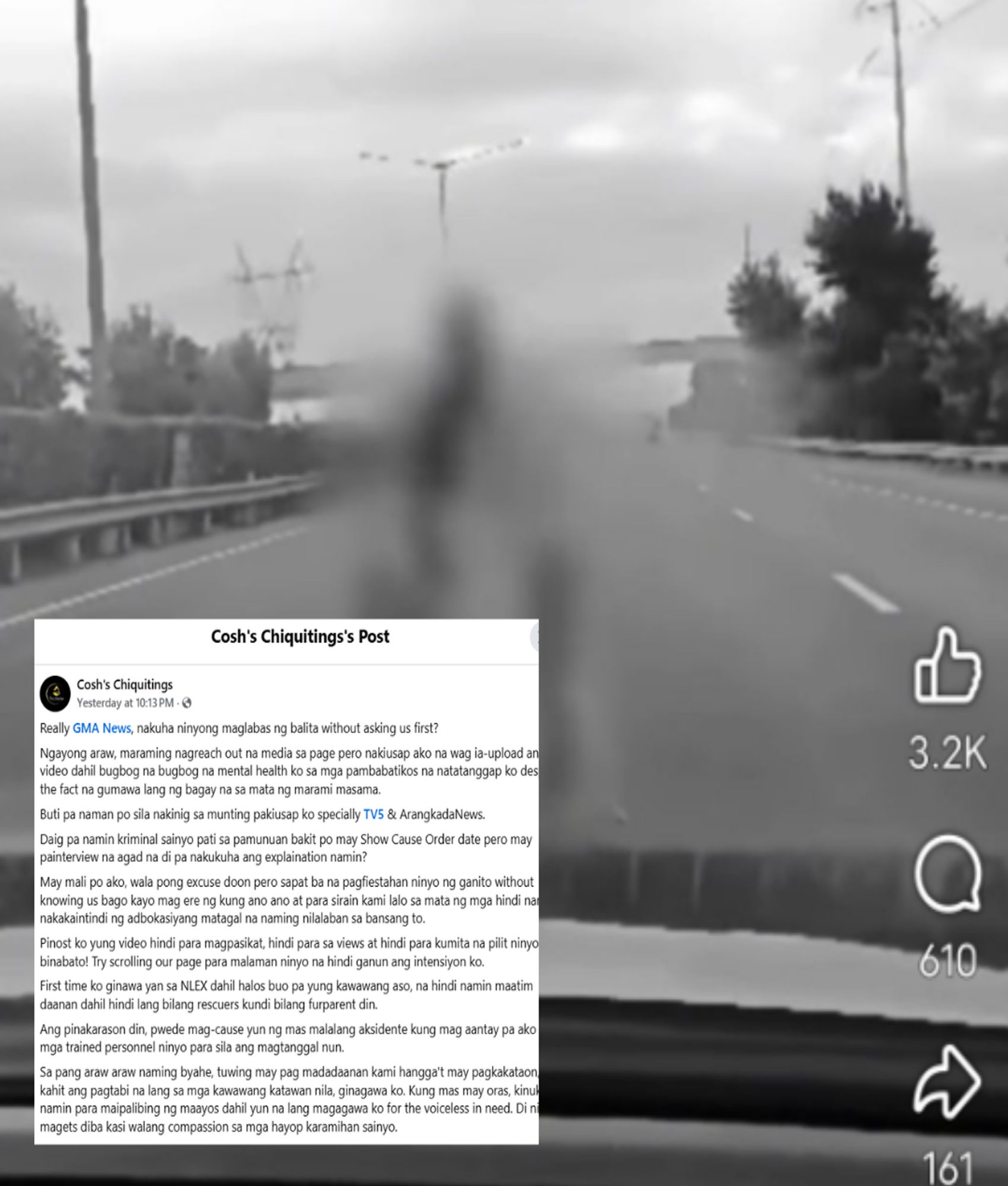
MANILA, Philippines — A woman who recently received a show cause order from the Land Transportation Office (LTO) after stopping along the North Luzon Expressway (NLEX) to remove the body of a dead dog has spoken out following intense criticism online and in the media.
The incident gained attention after a video circulated on social media showing the woman stopping her vehicle on the expressway to remove the animal from the road. Authorities later issued a show cause order asking her to explain the action, citing possible violations of expressway safety regulations.
In her statement, the woman expressed frustration with how the story was reported, particularly after it was aired by GMA News without her side being heard first. She said several media outlets had reached out for comment, but she asked them not to publish the video yet due to the emotional toll the backlash had already taken on her mental health.
According to her, the decision to stop was not meant for attention, profit, or online engagement. Instead, she explained that she and her group have long been involved in animal welfare efforts—often rescuing injured animals or at least moving their remains from roads to prevent further accidents and to give them a proper burial.
She admitted that her action may have been wrong under traffic rules, but insisted that her intention was driven by compassion. The dog, she said, was still largely intact and could have posed a hazard to passing motorists if left on the highway. Waiting for trained personnel, she believed, might have taken longer and increased the risk of another crash.
The situation has sparked mixed reactions online. Some criticized the act as reckless and potentially dangerous on a high-speed expressway, where sudden stops could lead to serious accidents. Others defended her, saying that compassion for animals and the willingness to act when authorities are not immediately present should not be dismissed so quickly.
The controversy highlights a difficult tension between two important values: public safety and empathy. Expressways are designed for uninterrupted traffic flow, where any sudden stop can endanger lives. At the same time, the growing movement for animal welfare has pushed society to reconsider how animals—living or dead—are treated in public spaces.
This incident has opened a broader conversation about responsibility: Should individuals intervene when they see something harmful on the road, or should they always wait for official responders—even if that delay could create other risks?
In the end, the debate may not only be about traffic rules or compassion for animals. It may also reflect how society balances law, empathy, and judgment in the age of viral social media.
So when compassion and safety collide on the road, which responsibility should come first—and who should decide? (Larawan mula: Cosh's Chiquitings / Facebook)